
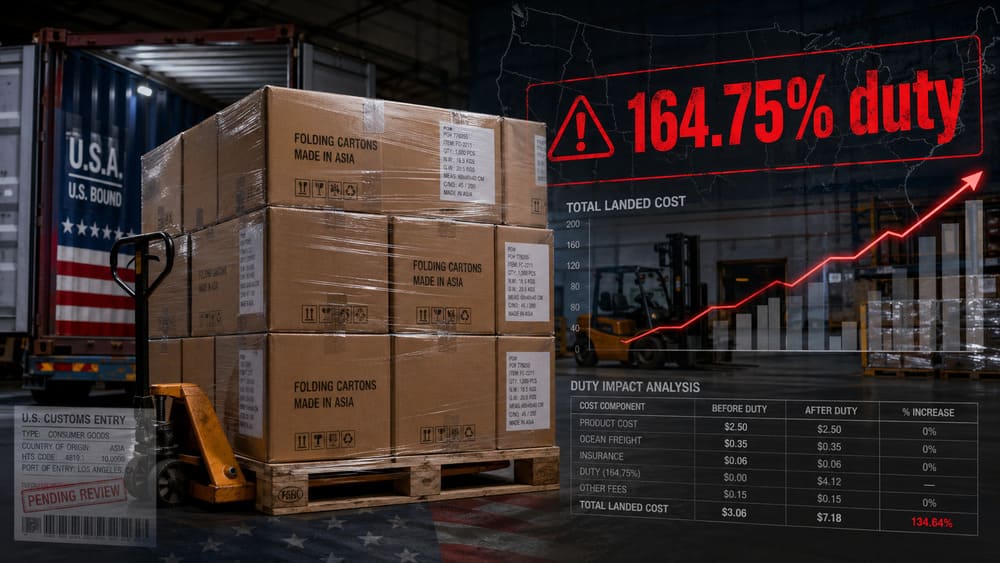
Navigating the anti-dumping duty folding cartons (A-570-866) regulation is critical for any U.S. buyer sourcing from China.
Under A-570-866, duty can reach 164.75%—and many importers misjudge it.
This guide explains how to avoid anti-dumping duty on folding cartons under A-570-866.
Table of Contents
Quick Check: Does This Apply to Your Packaging?
This applies only if ALL conditions are true:
- Importing from China to the United States
- Product is a folding carton (paperboard box)
- Made from non-corrugated paperboard (typically ≤0.8 mm)
- Commonly classified under HTS 4819.20.0040
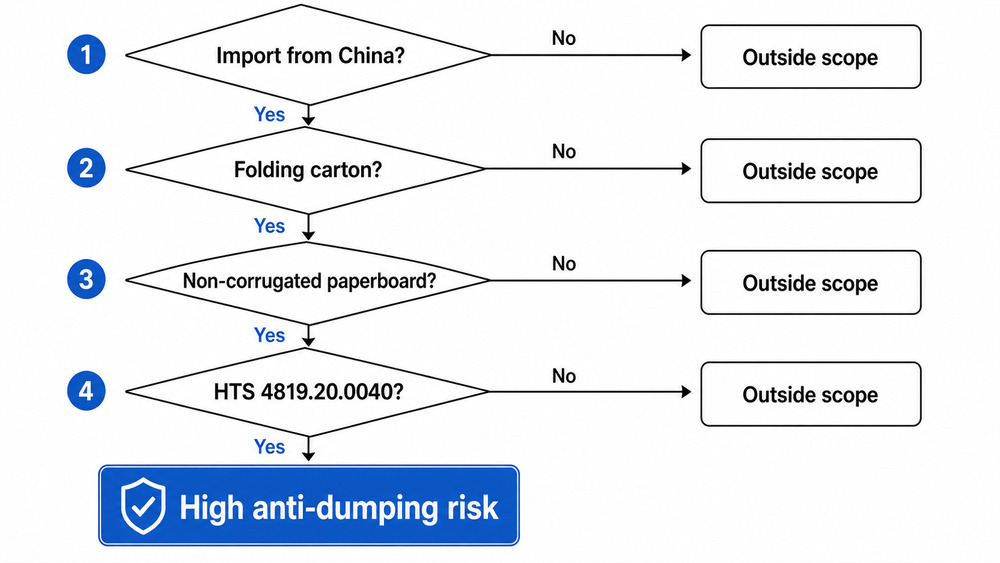
If one condition does not match, your anti-dumping risk is likely different.
This is a quick screening step for anti-dumping duty packaging risk—not a final determination.
This rule is based on physical characteristics, not usage.
If you evaluate based on application instead of structure, you may assess the wrong risk.
Why This Matters: The Real Cost Impact
If your folding carton fits the conditions above, this is a high-risk import decision.
Under A-570-866 anti-dumping duty order, anti-dumping duty can reach 164.75%—on top of other U.S. import duties.
That can wipe out your margin.
By then, the boxes are already produced and shipped.
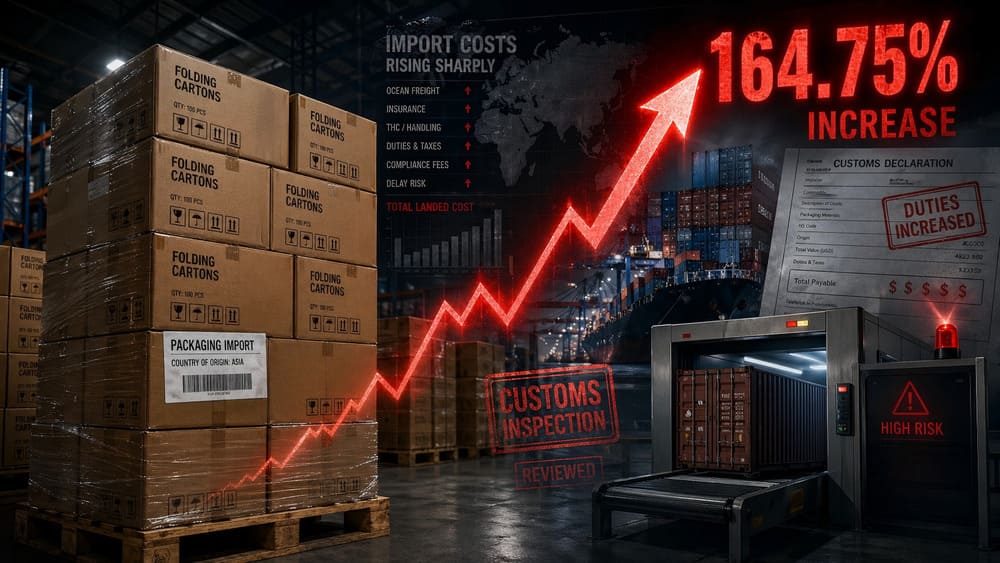
The risk often does not show up when you place the order.
It shows up later—during customs review or liquidation.
If your design is inside scope, the shipment may still clear.
But the loss is already locked in.
The Rule Most Importers Get Wrong: Scope Overrides HTS Classification
Anti-dumping duty exposure is usually decided by physical characteristics—not packaging use, marketing claims, or supplier descriptions.
HTS 4819.20.0040 does not decide whether anti-dumping duty applies.
It is only a reference classification.
What matters is the written scope of the A-570-866 anti-dumping duty order.
CBP does not rely on declared usage or supplier statements.
They look at physical characteristics—structure, material, and construction.
That is the deciding factor.
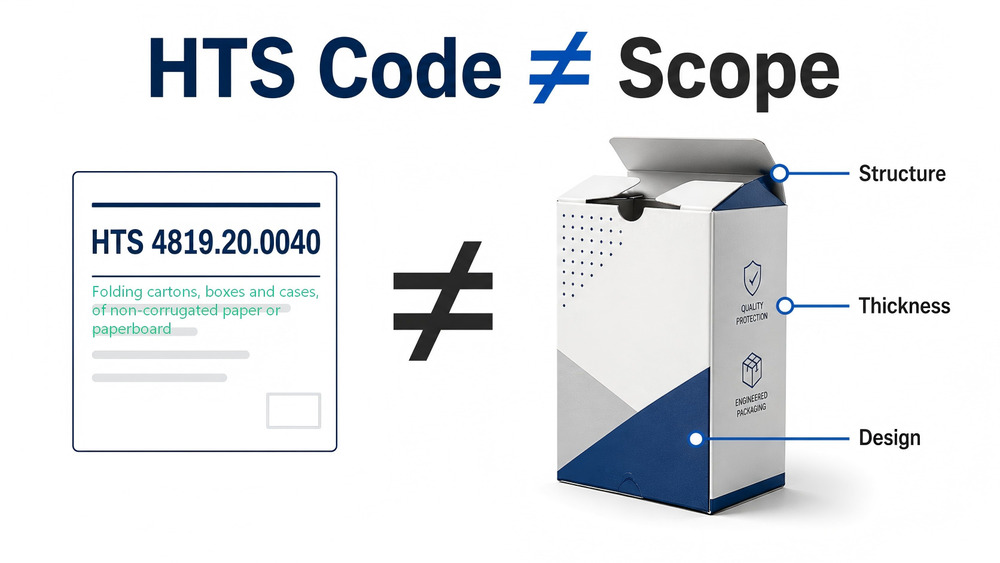
A carton can be correctly classified and still fall inside scope.
Or look similar—but be treated differently.
This is where most import decisions go wrong.
Many importers assume that changing the declared use or product description can avoid anti-dumping duty.
In reality, CBP focuses on the physical characteristics of the packaging, not how it is described or intended to be used.
Important Principle: Exclusion Is Not Automatic
Meeting an exclusion condition does not guarantee acceptance.
Nothing is pre-approved.
You do not submit proof upfront.
But if CBP questions the shipment, you must prove it.
And that usually happens after production—or even after arrival.
At that point, the boxes are already made.
You cannot change the structure anymore.
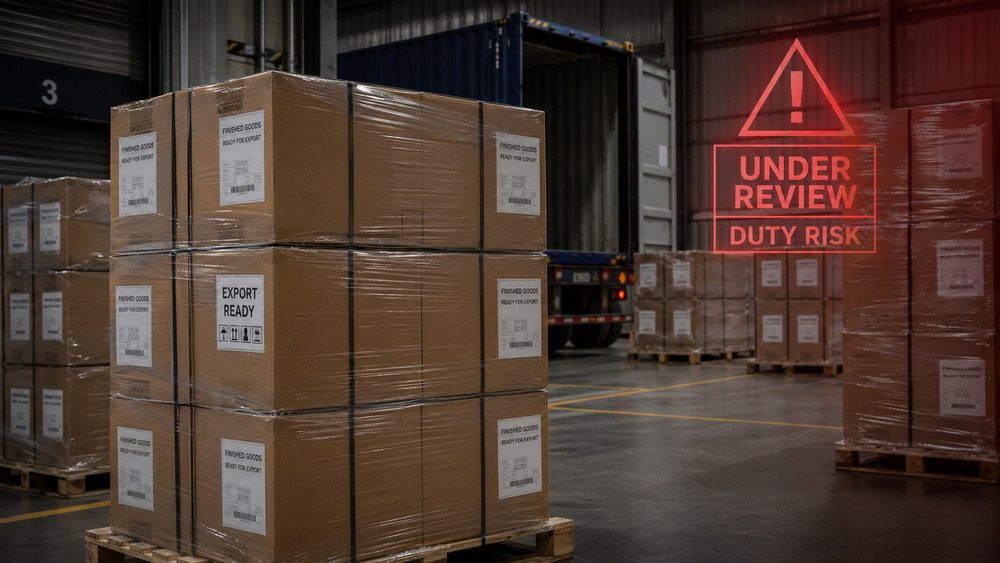
If your documentation is not ready or not clear, the exclusion may not be accepted.
Then the duty applies.
If you cannot clearly explain and document your exclusion logic, you should assume the risk still exists.
The 5 Recognized Exclusion Pathways (How to Avoid Anti-Dumping Duty on Folding Cartons)
Not all exclusion paths are equally reliable.
In real projects, engineering-based solutions are usually preferred because they are easier to defend during customs clearance.
There are multiple ways to stay outside the anti-dumping duty scope.
But they do not carry the same level of certainty.
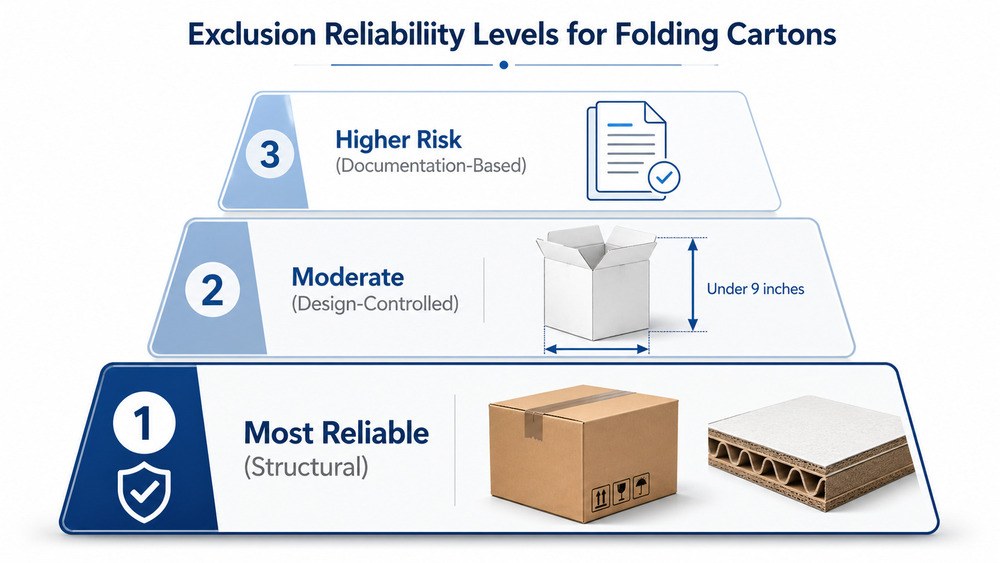
In practice, most import losses come from choosing the wrong pathway.
Most Reliable (Engineering-Based)
1. Corrugated structure
Clearly outside scope. Widely accepted.
2. Board thickness > 0.8 mm
Common in rigid or reinforced constructions.
→ These are structural decisions.
→ Measurable. Easier to defend.
Moderate Reliability (Design-Controlled)
3. All assembled sides under 9 inches
Requires precise control of final assembled dimensions.
→ Small deviations can invalidate the condition completely.
Higher Risk (Documentation / Interpretation-Based)
4. “Not for Resale” retailer program
Relies on end-use. Difficult to prove consistently.
5. Single-color printing with no individual wrapping
Strict conditions. Often misinterpreted.
→ These rely on documentation and interpretation.
→ More likely to be challenged.
Structural solutions are more stable.
Documentation-based approaches are easier to challenge.
Before you confirm your next packaging order, validate your risk first.
Common Mistakes That Push Products Back Into Scope
Most issues do not come from obvious mistakes.
They come from designs that look compliant—but fail under review.
These are the mistakes that cause otherwise compliant designs to fail.
Using dieline measurements instead of confirmed assembled dimensions
Design decisions are often based on drawings or estimates.
But CBP evaluates the final assembled size.
→ If the assembled dimensions are not verified, the condition may not hold.
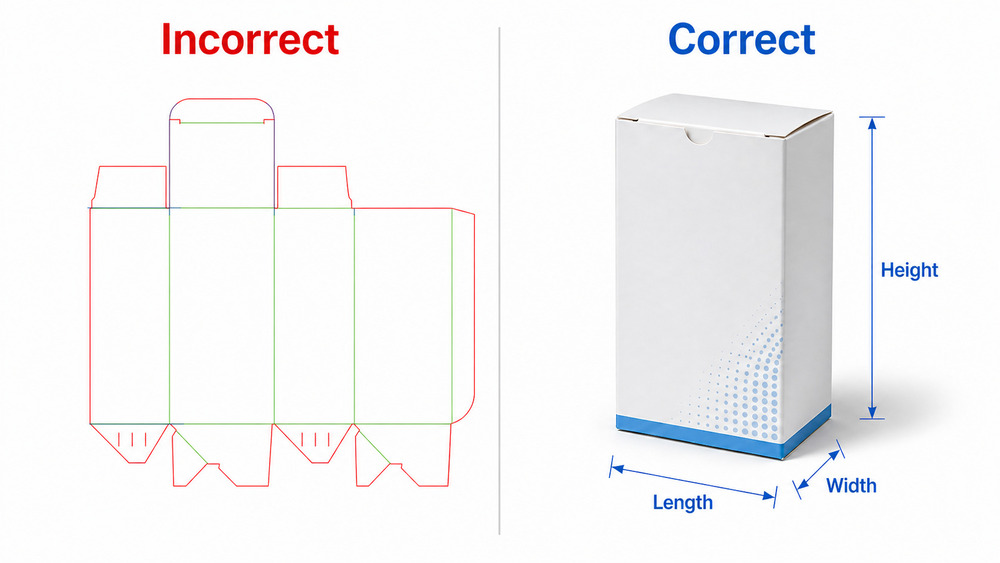
Misreading the 9-inch threshold
It is not “most sides under 9 inches.”
It is every side, after assembly.
→ One side over is enough to trigger duty.
Assuming printing creates exclusion
A printed carton is not automatically excluded.
Conditions are specific—and often misapplied.
Mixing different exclusion conditions
Part of one rule + part of another does not work.
→ CBP evaluates each pathway independently.
Checking compliance after production starts
By the time you review, the structure is fixed.
→ The risk is already built into the shipment.
Most failures happen at the edge.
Designs that are “almost compliant” are the ones most often challenged—and rejected first.
Why This Must Be Solved at the Design Stage
This is decided at the design stage—not later.
1. Structure defines the risk
Material and construction determine whether you are inside scope.
2. Dimensions decide compliance
Even small dimension changes can shift the result.
3. After production, it is too late
Structure cannot be changed. Fixes become costly or impossible.
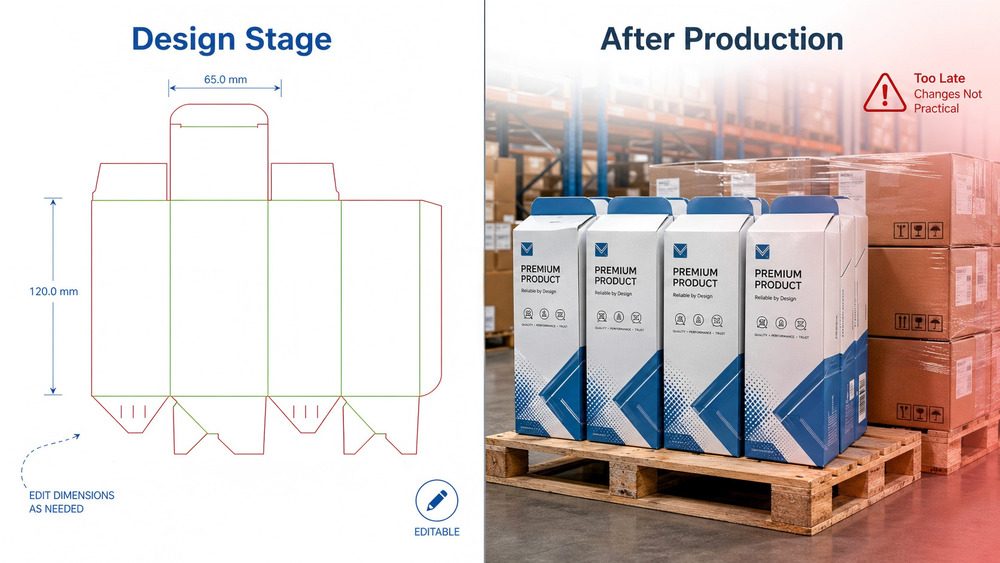
Fixing a wrong design after production often costs more than redesigning it upfront—and sometimes the loss cannot be recovered.
What Your Broker Will Need: Scope Memo & Evidence Pack
When a shipment gets flagged, the situation changes immediately.
Clearance slows down.
The broker starts asking questions.
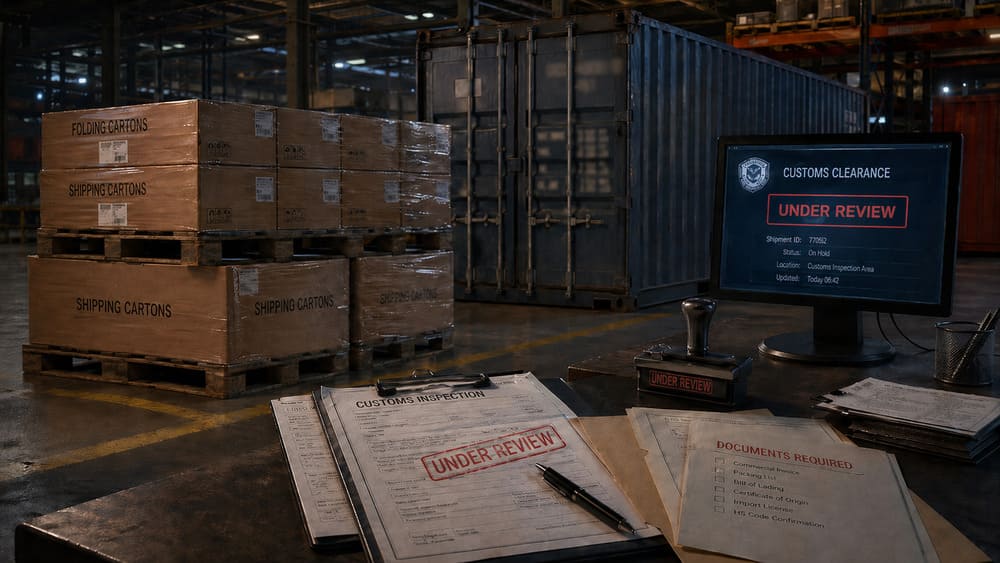
Not about what you planned—
only what you can prove.
1. Scope memo
A short explanation of why the product is outside scope.
In many cases, this is created only after the shipment is already under review.
2. Material specifications
Board type, thickness, and structure.
If these details are incomplete, the claim is difficult to defend.
3. Assembled dimensions
Final size after folding—not the dieline.
This is often checked early in the review.
4. Drawings and actual photos
Dieline, structure drawings, and real product photos.
If they do not match, the review usually goes deeper.
By the time these questions come up, the shipment is already in process.
Production is done.
Shipping is in motion.
At that point, you are no longer making design decisions.
You are responding to risk.
Most problems do not start with the design.
They start when the proof is not ready.
A Practical Pre-Production Decision Checklist
Before you approve production, check this once.
If any point is unclear, the risk is not controlled.
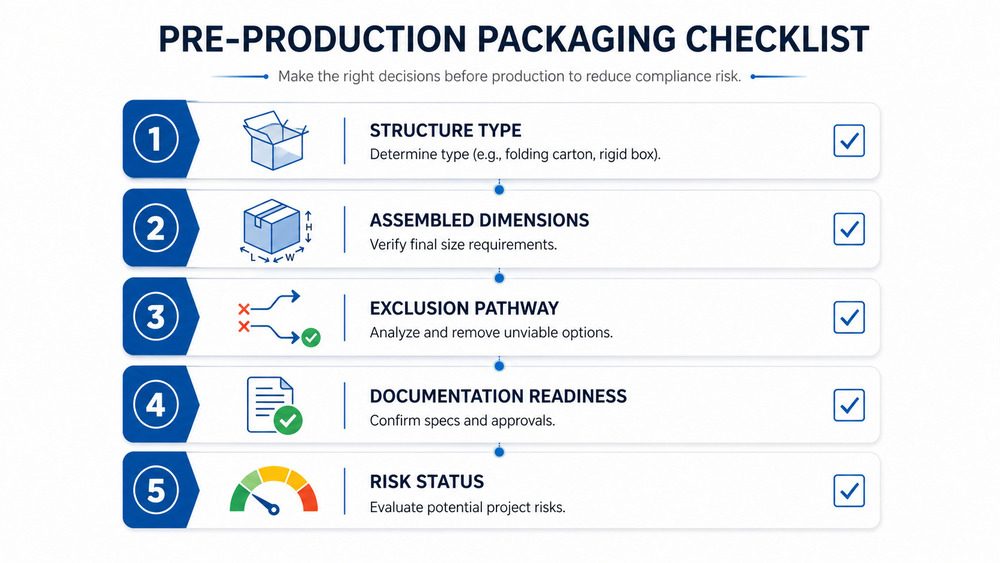
- Structure type — corrugated or non-corrugated
- Assembled dimensions — final size, not dieline
- Exclusion pathway — one clear path, not mixed conditions
- Supporting proof — specs, drawings, and photos must align
- Unclear = high risk — do not assume it will pass
If a design cannot be clearly aligned with one exclusion pathway,
it should not proceed to production.
Not sure if your packaging falls within scope?
Send us your specs—we’ll help you confirm the risk before production.
Quick Questions Buyers Still Ask
These questions usually come up—often late in the process.
Does A-570-866 apply to all folding cartons from China?
No. It depends on structure, material, and construction.
Many standard folding cartons fall within scope.
How do I know if my packaging falls within scope?
Check structure, material, dimensions, and the exclusion pathway.
If any of these is unclear, the risk is not controlled.
What is the most reliable way to avoid anti-dumping duty?
Structural solutions—such as corrugated design or thicker board—are the most stable.
If structure cannot be changed, dimension control becomes critical.
Keeping all assembled sides under 9 inches is a commonly used pathway, but it must be verified after assembly.
Documentation-based approaches are the least stable and more likely to be challenged.
If one side exceeds 9 inches, can it still be excluded?
No. All sides must meet the condition after assembly.
One side over is enough to trigger duty.
Do anti-dumping duties apply on top of Section 301 tariffs?
Yes. They are applied separately.
This is why total landed cost can increase significantly.
Can changing the product description remove anti-dumping duty risk?
Usually no. CBP focuses on physical characteristics and written scope definitions rather than marketing descriptions or intended use.
What if production has already started?
Options are limited.
At that point, you are managing risk—not preventing it.
Who confirms compliance—the supplier or the customs broker?
Neither makes the final decision.
CBP determines scope.
Suppliers and brokers only support with data.
Can CBP challenge my exclusion claim after import?
Yes. Duty assessment may change during review or liquidation.
This is why documentation must be ready before shipment.
If these questions are unclear, your risk is not controlled.
We focus on structure, feasibility, and compliance—not just pricing.