
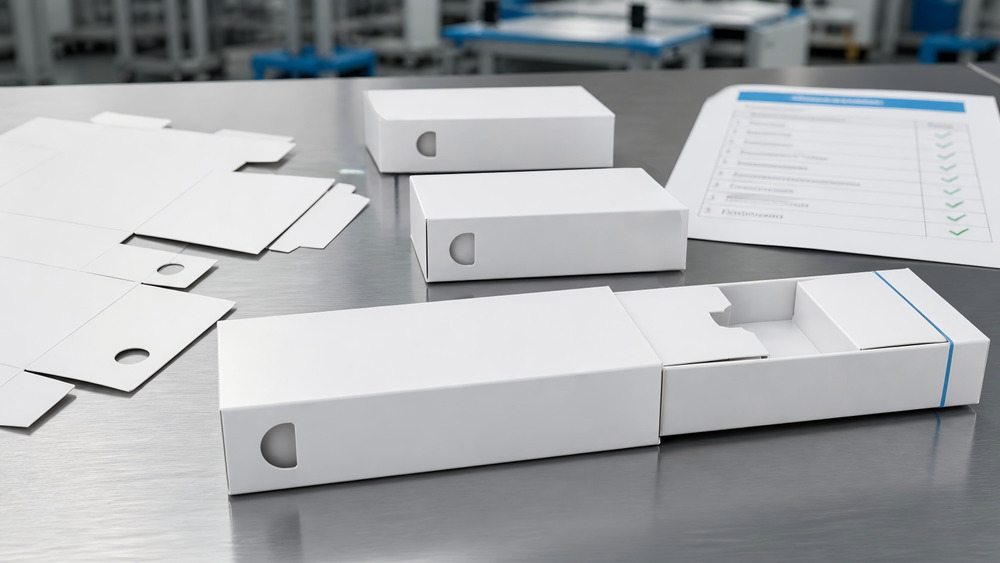
In this packaging cost reduction case study, we share how Klong Packaging used origin-side pre-assembly, functional QC, and landed-cost engineering to reduce U.S. assembly risk — without making certification claims.
Table of Contents
Packaging Cost Reduction Case Study: Project Snapshot for 300,000 Cartons
What the Client Needed
A U.S. launch.
300,000 folding cartons.
But this was not a standard carton.
- Child-resistant-style locking structure
- Regulated product category
- Required consistent locking performance
- Had to arrive ready for filling
If the structure failed at the filling line, the cost would not be small.
It would slow down the entire operation.
The Main Business Problem
At first, flat shipping looked cheaper.
Lower volume. Lower freight.
But the real numbers told a different story.
- Extra freight for pre-assembly: about RMB 0.3 per unit
- U.S. assembly cost: about RMB 1.7 per unit
- Net saving: about USD 0.2 per carton
And this was only the direct cost.
It did not include:
- Assembly supervision
- Sorting and rework
- Filling-line delays
The real issue was not shipping.
It was where the cost and risk were happening.
The Result
The project shifted assembly and functional QC to origin.
- 30% lower total landed cost (based on a ~USD 0.68 per unit baseline)
- Eliminated U.S. assembly stage
- Faster transition to filling
- Functional performance controlled before shipment
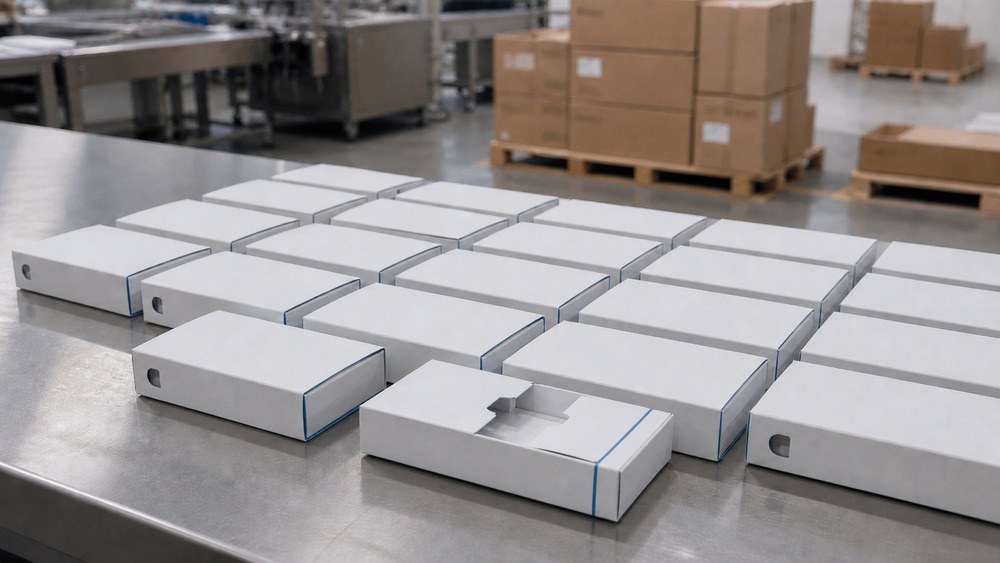
The cartons arrived ready to use — not ready to fix.
For function-sensitive cartons, assembly is not just labor. It is cost and risk control.
Paying slightly more freight while removing high-cost U.S. labor is often the better decision.
Most buyers compare unit price and shipping. Few calculate where defects and delays actually happen.
What Made This Project Different — Functional Structure, Not a Standard Folding Carton
What This Packaging Was
This was a function-sensitive carton.
Not a normal folding carton.
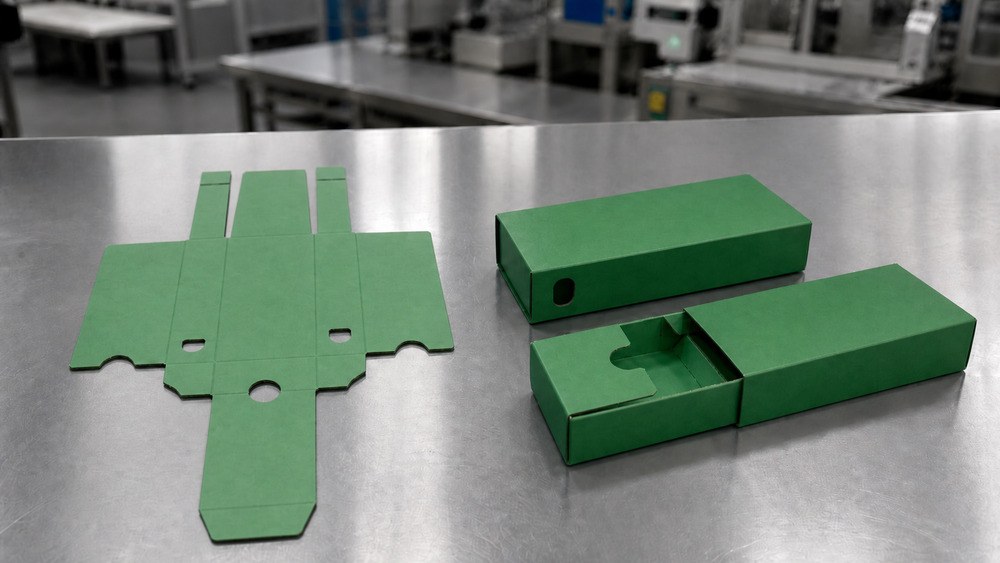
- Pre-assembled folding carton
- Child-resistant-style locking structure
- Locking function affected by folding and alignment
- Ready-to-fill format for the U.S. operation
The box did not only need to look correct.
It had to work correctly.
What It Was Not
This was not sold as certified child-resistant packaging.
That boundary matters.
- Not a certified child-resistant packaging claim
- Not a CPSC-approved packaging claim
- Not a customs classification decision
- Not a universal solution for every carton
Klong controlled the structure, assembly, and production quality.
We did not claim certification status.
Why This Distinction Matters
A factory can make the structure.
But certification depends on the final product, target market, usage claim, and applicable testing rules.
If formal testing is required, the buyer or importer normally handles that process with the relevant testing body or compliance team.
Klong supports that work by providing:
- Production-equivalent samples
- Structural details
- Material and dimension information
- Batch and QC documentation when needed
This keeps the project honest.
It also prevents a common mistake: treating manufacturing capability as regulatory approval.
“Can manufacture the locking structure” and “certified child-resistant packaging” are not the same thing.
A reliable supplier should make that clear early.
The clearer the boundary, the lower the risk for the buyer.
Where Flat Shipping Failed — When Lower Freight Did Not Mean Lower Total Cost
Flat Shipping Usually Works for Simple Cartons
For standard cartons, flat shipping is usually the cheaper option.
- Lower CBM
- Lower freight
- Faster loading
- Easier warehouse storage
Use flat shipping when local assembly is simple, fast, and economical.
For many standard folding cartons, that approach works well.
This Project Changed the Cost Balance
This structure required more assembly work.
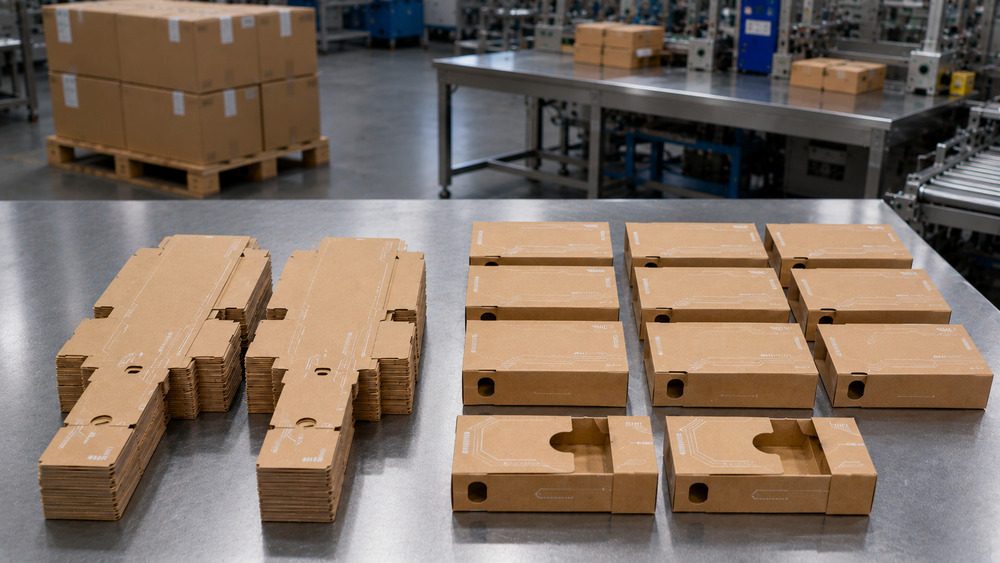
The child-resistant-style locking mechanism needed controlled folding before filling.
- Folding sequence mattered
- Alignment affected locking performance
- Assembly time per unit increased
Pre-assembly increased freight by about RMB 0.3 per carton.
But local assembly in the U.S. was about RMB 1.7 per carton.
The labor difference alone was already much higher than the added freight.
And that did not yet include:
- Line-side preparation
- Additional handling
- Sorting after assembly
- Delays before filling
At that point, freight was no longer the main cost.
The Costs That Were Easy to Miss
Most extra costs appeared after the cartons arrived.
Not before shipment.
- Assembly labor
- Warehouse handling
- Operator time
- Filling-line delay
- Functional checks after assembly
- Rework after import
Freight was visible.
The operational cost showed up later.
When a packaging structure requires more manual assembly, that cost must be included early in the landed cost calculation.
Freight is only one part of the equation.
What matters is the total landed cost — the final amount you actually spend to get the packaging ready for use.
The Process — Why Origin-Side Pre-Assembly Reduced Downstream Work
The Project Was Reviewed Before Production
The first question was not, “Can this carton be made?”
The question was:
Where should the assembly work happen?
That decision affected labor, freight, handling, and launch readiness.
Before production started, the review focused on:
- Would flat shipping still make sense?
- Would local assembly add extra labor and warehouse work?
- Would the locking structure require tighter assembly control?
- Would pre-assembly reduce downstream operational work?
The team also checked:
- Folding sequence
- Glue position
- Locking points
- Folding tolerance
For this project, shipping format became part of the cost decision.
Not just a logistics decision.
Assembly Was Moved to the Manufacturing Side
This structure required more forming work than a standard carton.
So the assembly work moved to origin.
Not because freight was cheaper.
Because the total operation became simpler.
- Packaging assembly efficiency was higher at origin
- Assembly cost per unit was lower
- Assembly was completed before export, instead of becoming another operation after import
- No separate U.S. assembly workflow was needed
Pre-assembly added about RMB 0.3 in freight per carton.
But U.S. assembly cost was about RMB 1.7 per carton.
The added freight was much smaller than the labor and operational cost saved after arrival.
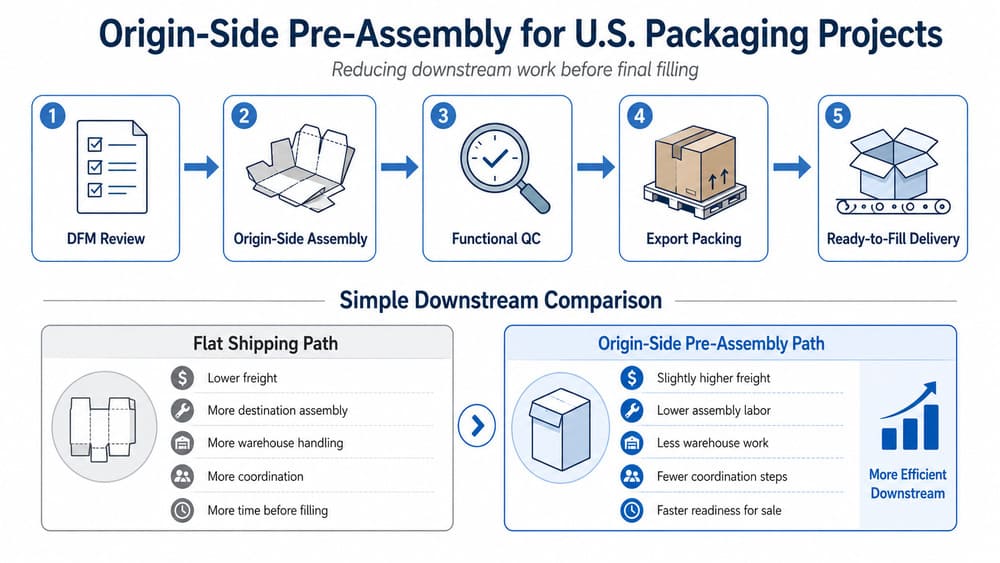
QC Was Completed Before Import
Assembly was treated as part of process control.
Not a separate task after import.
After assembly:
- Locking points were checked
- Critical positions were reviewed
- Defective units were isolated before packing
- Cartons were confirmed ready for filling before shipment
The buyer did not receive parts that still needed work.
They received packaging that had already passed assembly and checking.
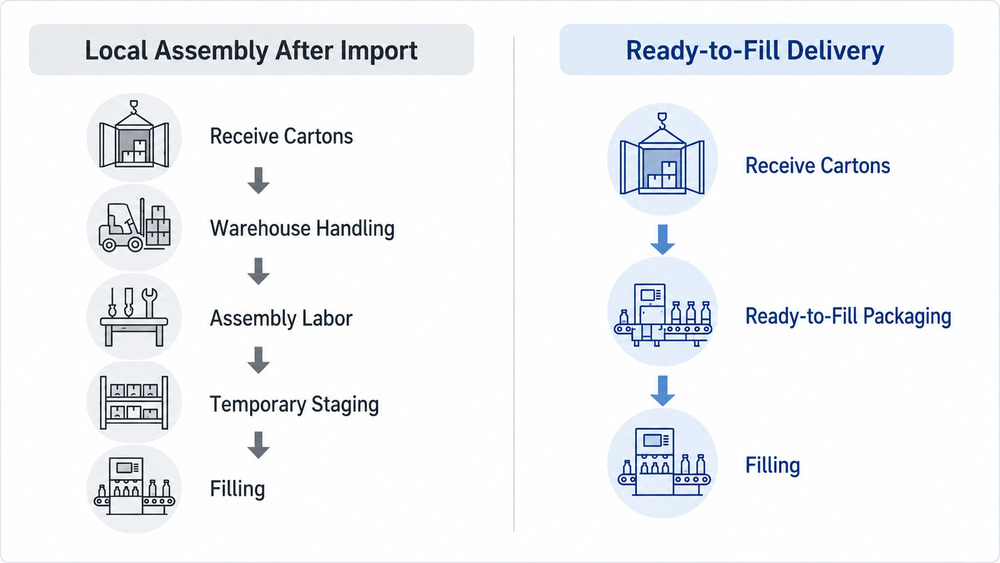
Ready-to-Fill Delivery Reduced Launch Friction
The cartons arrived pre-assembled and ready for filling.
That removed a full stage of local work.
The buyer did not need to:
- Arrange a separate assembly process
- Allocate warehouse space for forming work
- Coordinate temporary labor
- Manage another packaging operation after arrival
The cartons moved faster toward filling after customs clearance.
Ready-to-fill packaging removed extra work before launch.
Choose the Shipping Format by Total Operating Cost
Choose origin-side pre-assembly when:
- Assembly cost at destination is high
- The structure takes more time to form
- Added freight is lower than saved labor cost
- Filling speed matters
- Functional checks should happen before shipment
Use flat shipping when:
- The carton structure is simple
- Local assembly is fast and low-cost
- The structure needs minimal forming control
- Freight savings are larger than added local operation cost
The right format is not the one with lower freight.
It is the one that creates less work and lower total operating cost after delivery.
Origin-side pre-assembly did more than reduce labor cost.
It removed a second packaging operation after arrival.
That saved labor, warehouse space, coordination work, and time before launch — while helping the buyer reach a lower total landed cost.
Key Decisions That Changed Cost, Risk, and Outcome
Decision 1: Where Should the Work Happen?
For this project, the main question was not:
“Which shipping format costs less?”
The real question was:
Who will handle the work after the cartons arrive?
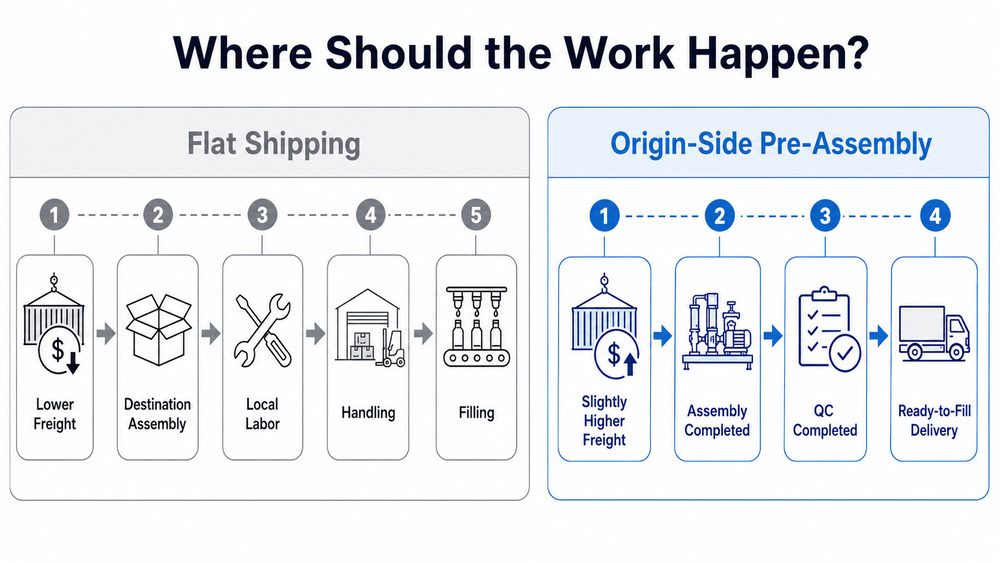
Flat shipping usually works when:
- The carton structure is simple
- Local assembly is fast and low-cost
- Forming work is minimal
- Freight savings are larger than local operation cost
Origin-side pre-assembly usually works when:
- The structure requires more forming work
- Destination labor cost is high
- Filling speed matters
- Added freight is lower than saved labor cost
- Ready-to-fill delivery removes downstream work
The lower shipping cost is not always the lower operating cost.
Decision 2: Find Problems Before Shipment or After Arrival?
Problem timing changes cost.
For function-sensitive packaging, the same issue becomes more expensive when discovered later.
Origin-side QC moved checkpoints forward.
That allowed functional issues to be identified before shipment.
Problems discovered after arrival often created:
- Extra handling
- Additional communication
- Warehouse delay
- Rework after import
For this project, assembly checks happened before export — not after arrival.
The later a problem is found, the more expensive it becomes.
Decision 3: Freight Savings or Total Landed Cost?
Freight is easy to compare.
Total landed cost is easier to underestimate.
Pre-assembly increased shipping volume.
But volume was only one variable.
The project also calculated:
- Labor cost
- Warehouse handling
- Filling preparation
- Delay risk
- Rework cost
Container planning reduced part of the freight impact.
But labor savings and reduced downstream work created larger savings.
Freight is one cost.
Total landed cost is the decision.
Decision 4: Manufacturing Support and Buyer Responsibility
Complex packaging projects work better when responsibilities stay clear.
Klong provided:
- Production-equivalent samples
- Structure execution
- Technical files
- Assembly and process control
The buyer or responsible party decided:
- Testing path
- Market requirements
- Compliance strategy
- Final certification responsibility
Structure control and compliance decisions are different responsibilities.
Quick Decision Guide
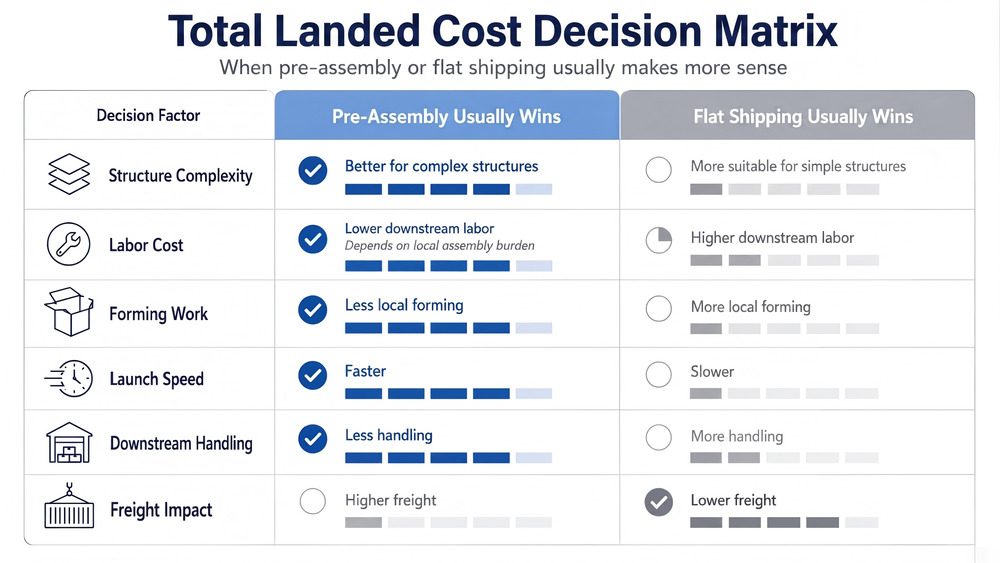
Pre-assembly usually wins when:
- More forming work is required
- Destination labor cost is high
- Filling speed matters
- Functional checks happen before use
Flat shipping usually wins when:
- The carton structure is simple
- Local assembly is fast
- Downstream handling is minimal
- Freight reduction creates larger savings
One rule mattered in this project:
Choose the option that creates less work and lower total cost after delivery.
This case does not prove that pre-assembly is always better.
It shows that packaging decisions should be made using labor, freight, timing, and risk together.
The best packaging format is usually the one with lower total landed cost and less downstream work.
Where Packaging Projects Usually Go Wrong
Cost Models Often Break After the Quote Is Approved
Many projects look right on paper.
Then extra work starts after arrival.
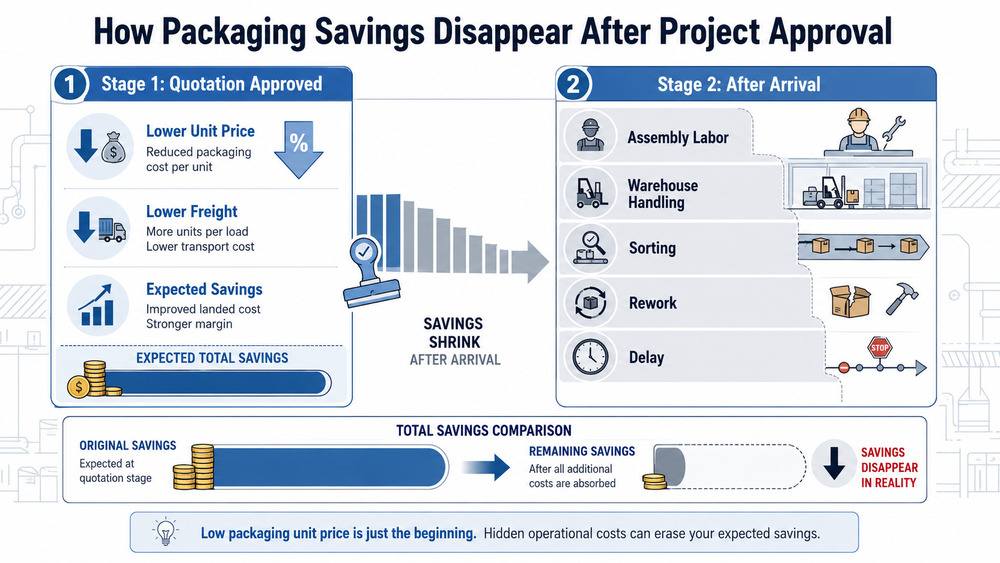
Then extra work starts:
Labor.
Handling.
Sorting.
Delays.
That is usually where expected savings disappear.
People often compare price and freight, the missing part is usually total landed cost.
Fewer compare how much work gets added later.
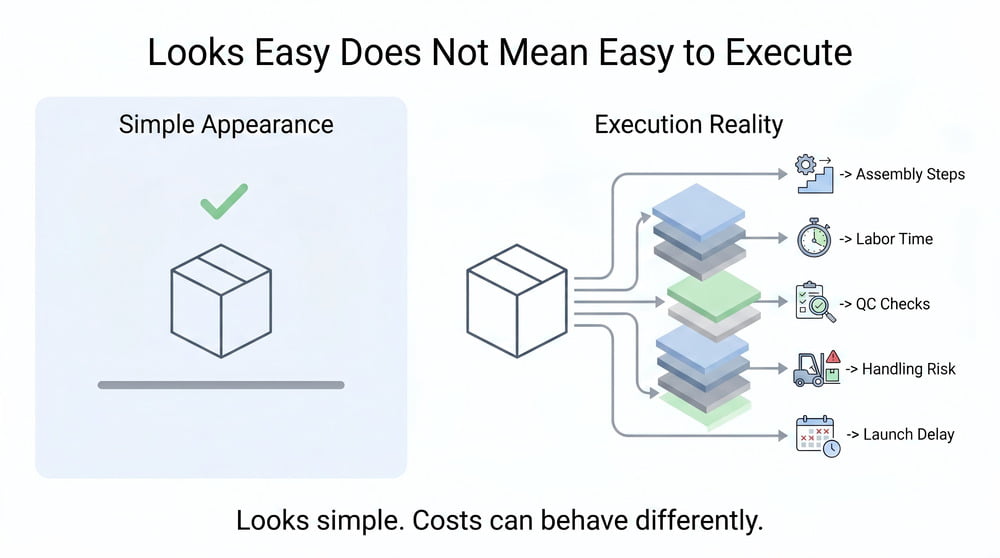
Some Structures Look Simple Until Production Starts
This carton looked simple.
The assembly was not.
The locking structure needed sequence control and functional checks.
The box did not only need to look correct.
It needed to work correctly.
Looks like a carton.
Works like a mechanism.
Container Planning Can Change the Entire Math
We have seen projects where the cost model worked.
Then loading started.
Everything changed.
Pre-assembled cartons need earlier loading review.
Space, compression, and loading efficiency can decide whether the original math still works.
A loading issue found late can erase expected savings.
“Can Manufacture” Does Not Automatically Mean “Ready for Market”
A supplier can make the structure.
That does not automatically define testing requirements.
Or market claims.
Or compliance decisions.
Avoid assumptions early.
They become expensive later.
The most expensive packaging mistakes usually happen before production.
Most packaging problems do not start on the production floor. Wrong assumptions cost more than wrong cartons.
Validation Before Scaling — How Risk Was Controlled Before 300,000 Units
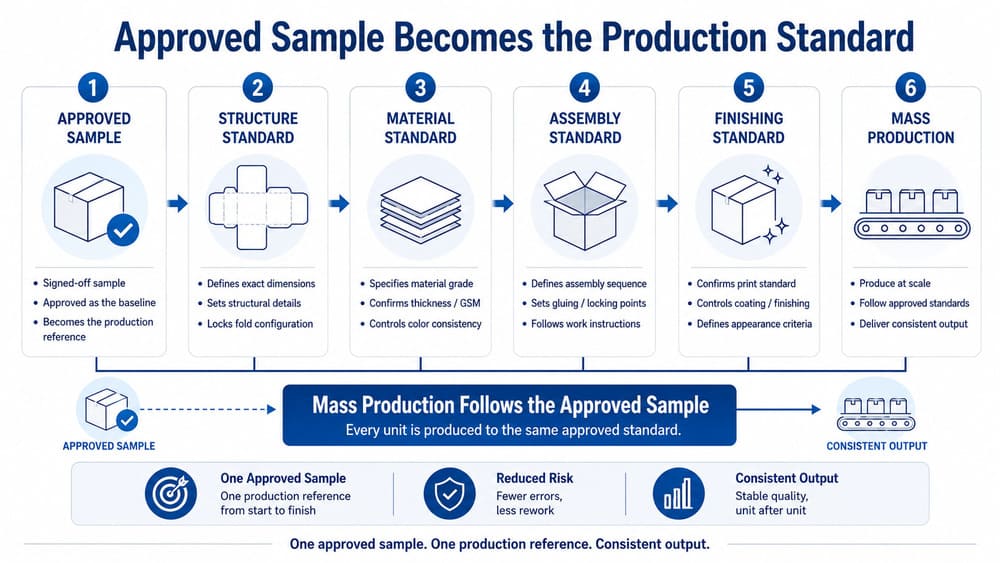
The Approved Sample Became the Production Standard
For this project, production did not begin with a purchase order.
It began with an approved sample.
The approved sample used:
- Final production material
- Final structure
- Final assembly method
- Final finishing process
The approved sample became the reference for:
- Structure
- Assembly
- Color
- Final execution
After buyer approval, the signed sample became the production standard.
Mass production was not allowed to move away from it.
Klong also supported validation before scaling, including:
- Drop testing
- High and low temperature testing
- Transportation simulation review
- Functional sample preparation
If additional market-specific testing was needed, formal samples and supporting information could also be prepared.
Mass production started only after both sides agreed on what “correct” looked like.
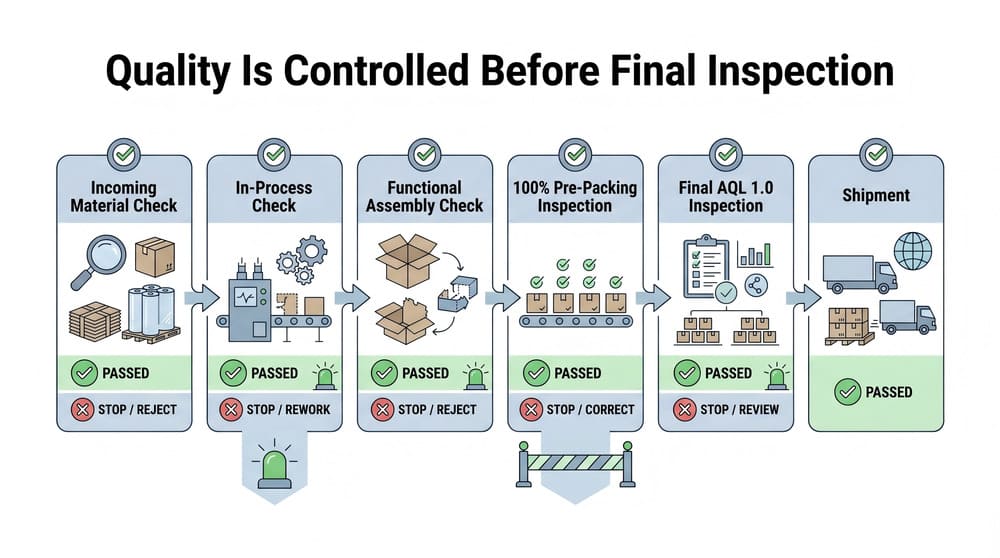
QC Started Before Production Finished
Quality control did not begin at the end.
It started before assembly.
Incoming materials were checked first.
Checks then continued before and during production.
The goal was simple:
Do not let one process pass problems to the next one.
Critical checkpoints stayed active throughout manufacturing.
Problems were not supposed to survive to the final inspection stage.
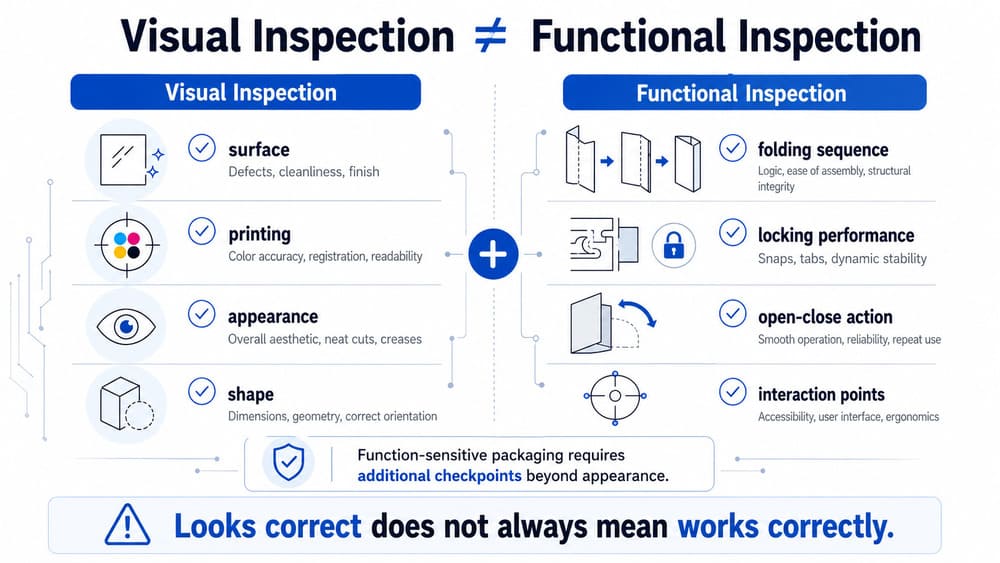
Functional Checks Were Built Into Assembly
For this carton, assembly was not only a forming process.
It was also a functional checkpoint.
During assembly, the team checked:
- Folding sequence
- Locking performance
- Critical structure points
- Opening and closing consistency
Functional issues and cosmetic issues were reviewed separately.
Because appearance alone was not enough.
Finding a locking issue after import is much more expensive than finding it during assembly.
For this structure, assembly itself became part of quality control.
100% Inspection Happened Before Packing
Finished cartons went through 100% inspection before packing.
The inspection included:
- Appearance
- Locking status
- Forming consistency
- Functional condition
Units with functional issues were separated during inspection.
For function-sensitive cartons, inspection after assembly matters.
Because once packed and exported, correction becomes slower and more expensive.
Once packed and shipped, every defect becomes harder and more expensive to fix.
Final AQL 1.0 Inspection Confirmed Shipment Readiness
Before shipment, the finished batch received a final AQL 1.0 inspection.
AQL 1.0 was used because this project involved a functional structure — not a standard carton.
The review included:
- Quantity verification
- Packaging condition
- Label checking
- Finished goods status
- Packing consistency
The purpose was confirmation.
Not discovery.
Final inspection confirmed the shipment. It was not the first time quality was checked.
Manufacturing Support Stayed Clear Without Overclaiming Compliance
Complex packaging projects work better when responsibilities stay clear.
Klong supported:
- Samples
- Structure information
- Assembly guidance
- Technical preparation
If additional testing was required, supporting samples and documents could also be prepared.
Testing paths, market requirements, and final compliance decisions remained with the buyer or responsible parties.
Support and compliance are connected — but they are not the same responsibility.
Large packaging projects do not become safe at the final inspection stage.
They become safer when every step prevents problems from moving forward.
That is how a 300,000-piece shipment becomes predictable.
FAQ — Pre-Assembled Child-Resistant Carton Questions
Are child-resistant-style cartons the same as certified child-resistant packaging?
No. Klong can manufacture child-resistant-style locking structures, but manufacturing capability and certification are different things. Whether testing or certification is required depends on the final product, market, claims, and applicable regulations.
Does every child-resistant-style packaging project require testing?
Not always. Testing requirements depend on the product category, intended use, target market, and marketing claims. Some projects require additional testing, while others may not.
Who usually handles 16 CFR §1700.20 testing and compliance?
Testing and compliance are usually handled by the buyer, importer, brand owner, domestic packager, or qualified compliance professionals. Klong can support manufacturing and provide samples or technical information when needed.
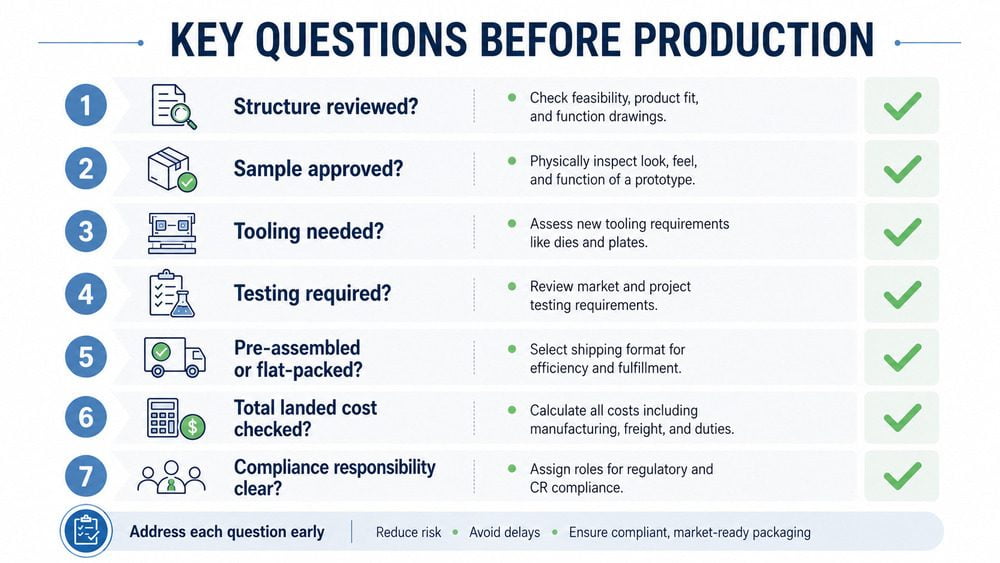
Can you review my design before tooling starts?
Yes. Klong can review drawings, CAD files, samples, and structure concepts before tooling begins. DFM review helps identify assembly risks, locking concerns, and production feasibility before additional cost is added.
Do I need production tooling before making samples?
Not always. Structural and functional samples can often be reviewed before production tooling investment. Early validation usually reduces downstream cost and risk.
Can I test the structure before large-scale production?
Yes. Formal samples can support drop testing, transportation review, temperature evaluation, and project validation before mass production. Testing before scale is usually cheaper than changing production later.
Are pre-assembled cartons always cheaper than flat-packed cartons?
No. Pre-assembled cartons make sense when labor savings, filling readiness, and risk reduction outweigh added freight volume. Total landed cost matters more than freight alone.
Who handles customs classification, duty treatment, and compliance filing?
In most projects, the party handling customs clearance is responsible for final classification and filing decisions. As the packaging manufacturer, Klong can provide reference HS codes, product descriptions, material details, technical information such as A-570-866 scope data, and shipment references for broker review. Final confirmation should be made by the customs broker or importer of record.
Most expensive packaging problems usually do not start in production.
They start earlier — when structure, labor, testing, and responsibility are evaluated separately.
The smoother projects are usually the ones where these decisions are connected before production starts.
Conclusion — Cost Reduction Starts Before Shipping
Lower freight does not always create lower total cost.
Freight is easy to compare.
Downstream work usually is not.
For this project, pre-assembly worked because labor, handling, and launch risk cost more than added shipping volume.
If your carton needs controlled folding, locking checks, or ready-to-fill delivery, send the structure, quantity, destination, and filling plan early.
Those details often decide cost before shipping does.
Request a DFM review before expensive decisions are locked in.