
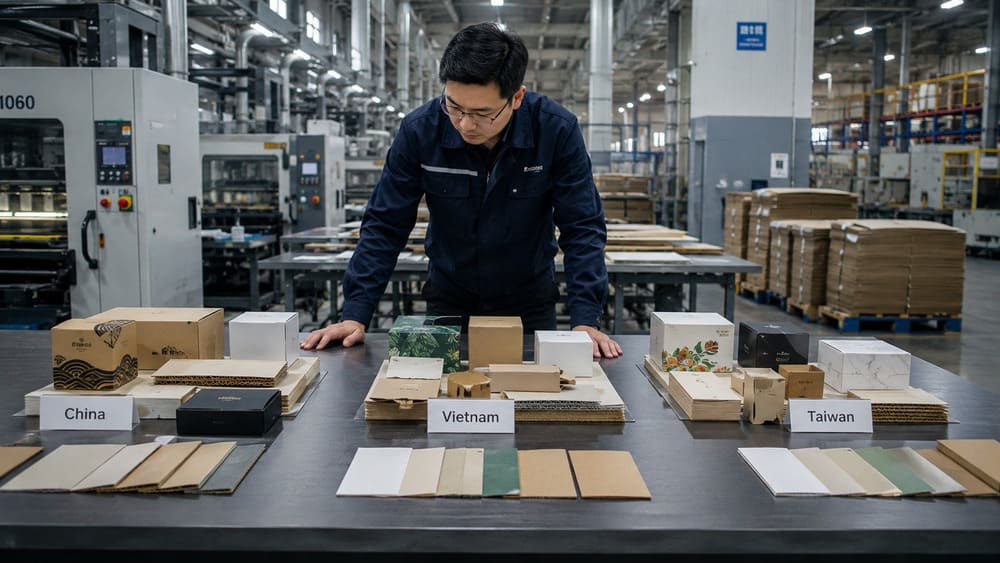
Selecting a packaging manufacturing location involves more than comparing supplier quotations.
Different locations may offer different advantages in production capability, supply chain maturity, lead time, and risk exposure.
The right decision depends on matching packaging requirements, production capability, and business priorities with the right sourcing strategy.
Table of Contents
Why Packaging Manufacturing Location Is a Strategic Decision Beyond Factory Price
Choosing a packaging manufacturing location is not only about finding the lowest factory price.
The right location depends on whether the supplier can support your packaging requirements from development to mass production. This is why buyers should evaluate manufacturability before production through a proper DFM review.
For custom packaging projects, production capability, engineering support, and supply strategy directly influence the final project outcome. A lower quotation may look attractive at the beginning, but it does not always create the lowest total cost.
Why the Lowest Manufacturing Cost May Not Mean the Lowest Total Cost
Factory price is only one part of packaging sourcing decisions.
The actual project impact may also include:
- Freight cost
- Tariff impact
- Lead time
- Quality risk
- Supply disruption risk
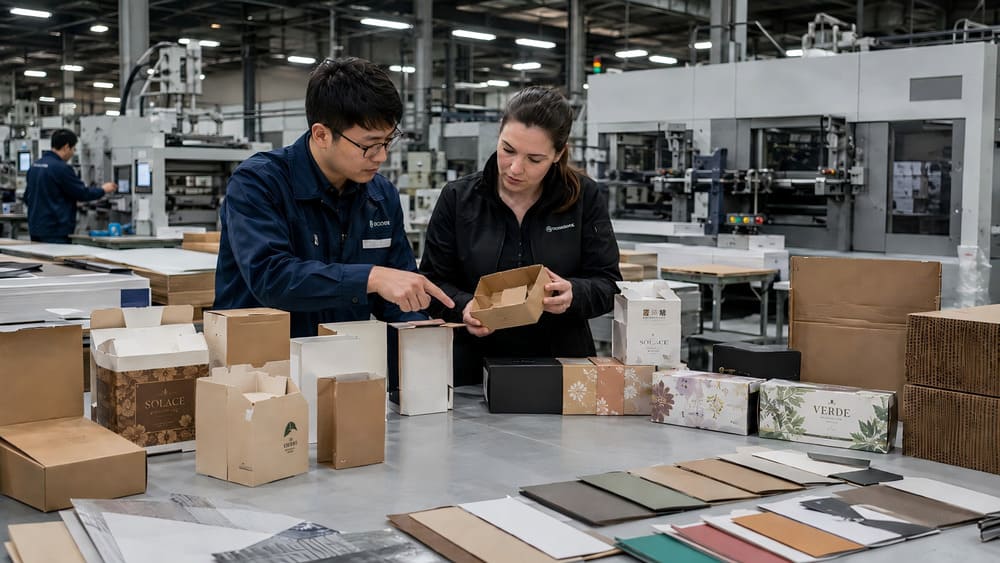
These risks usually appear during development and production preparation. A lower quotation can become more expensive when problems appear during execution, such as:
- Additional sampling cycles
- Production adjustments after design changes
- Delays caused by material or process limitations
This is why experienced procurement teams evaluate total landed cost, rather than comparing unit prices alone.
The key question is not:
“Which supplier offers the lowest price?”
It is:
“Which sourcing option creates the best balance between cost, reliability, and project requirements?”
Engineering Insight
Packaging cost is closely connected to execution capability.
A supplier that can quickly solve design changes, material issues, and production adjustments can reduce hidden costs during development.
Packaging Manufacturing Depends on Supply Chain Capability, Not Only Labor Cost
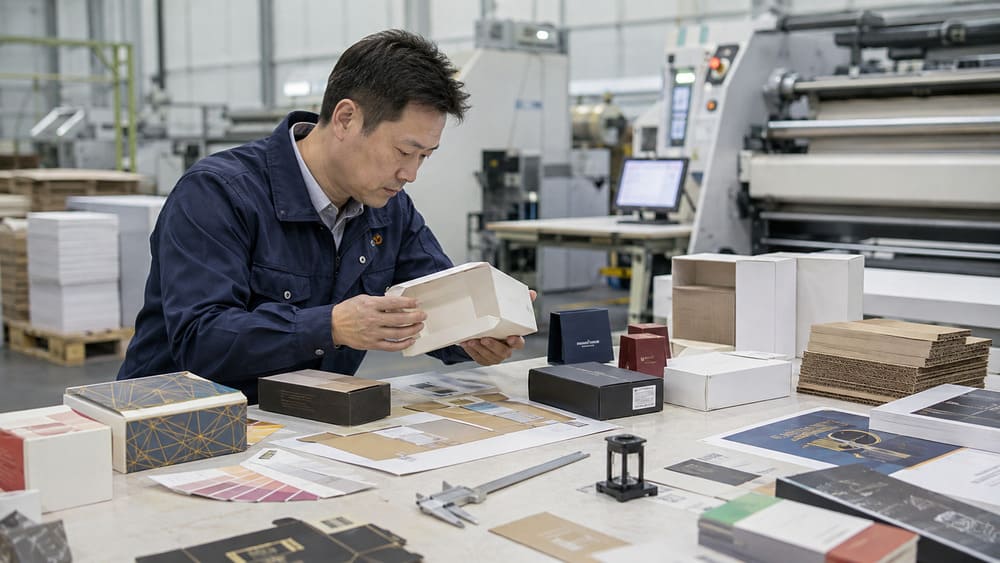
For packaging projects, the best manufacturing location is not determined by labor cost alone.
It depends on whether the supplier ecosystem can support the specific structure, material requirements, and production processes involved.
Unlike many products that can be transferred between factories more easily, packaging performance depends on how well design, materials, and manufacturing processes work together.
A stable packaging supply chain requires coordination between:
- Paper materials
- Structural design
- Printing
- Finishing
- Die-cutting
- Assembly
- Quality control
This manufacturing ecosystem affects how efficiently a project moves from design review to sampling and mass production.
When packaging issues occur, the ability to coordinate these processes determines how quickly solutions can be implemented before production is affected.
What Buyers Should Evaluate
When comparing packaging manufacturing locations, buyers should consider:
- Can the supplier support the required packaging structure?
- Are key manufacturing processes available and coordinated?
- Can engineering issues be solved before they impact production timelines?
Engineering Insight
A strong packaging ecosystem reduces uncertainty.
Effective packaging sourcing decisions usually balance three factors:
Cost Structure + Manufacturing Capability + Supply Risk
In practice, successful packaging projects happen when materials, engineering, production processes, and quality control are aligned before mass production begins.
China vs Vietnam vs Taiwan Packaging Manufacturing: Cost, Capability and Supply Risk Comparison
Choosing between China, Vietnam, and Taiwan packaging manufacturing is not about finding the lowest-cost location or ranking one country above another.
The right choice depends on packaging capability, production scale, supply diversification needs, and regional coordination requirements.
Different locations solve different sourcing challenges. The goal is choosing the right supply chain structure for the packaging project.
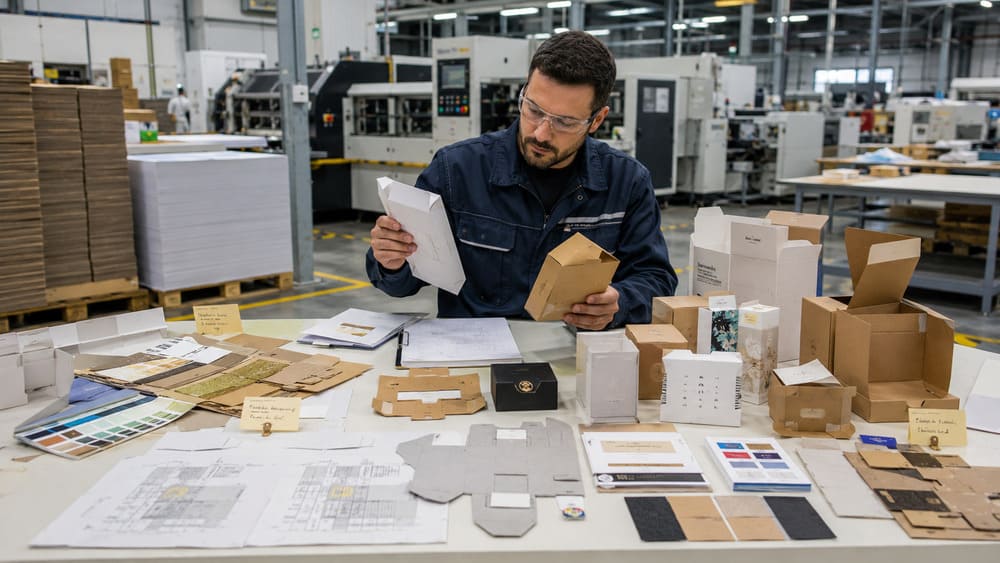
China Mainland Packaging Manufacturing: Best for Packaging Complexity, Scale and Flexibility
China is often a strong choice for buyers who need packaging capability, production flexibility, and reliable scale.
Its advantage comes from a mature packaging ecosystem that combines material availability, experienced manufacturing teams, engineering support, and multiple production processes.
China is especially suitable for projects requiring:
- Complex custom packaging development;
- Handmade forming processes with strict appearance requirements;
- Large-volume paper box production requiring automation and stable capacity;
- Faster engineering communication and production adjustments.
A complete packaging ecosystem allows suppliers to coordinate structural design, materials, printing, finishing, die-cutting, assembly, and quality control more efficiently.
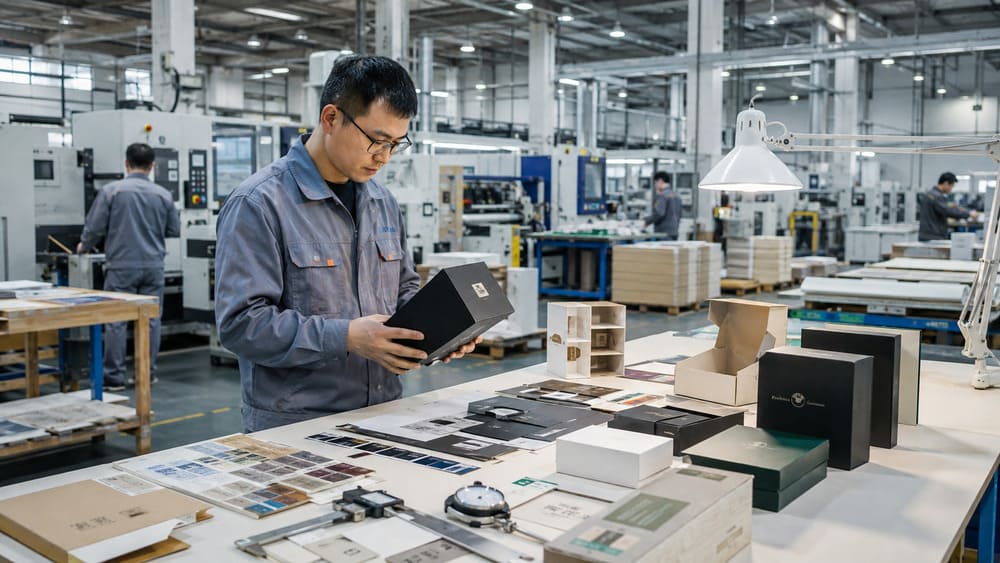
For China sourcing, buyers should evaluate manufacturing capability and supply chain maturity rather than only tariff exposure or factory price.
Vietnam Packaging Manufacturing: Supply Diversification Through China+1 Strategy
Vietnam is one of the manufacturing locations considered under the broader China+1 strategy, together with other Southeast Asian countries such as Thailand and Cambodia.
The main reason buyers consider these locations is usually supply diversification, not simply lower production cost.
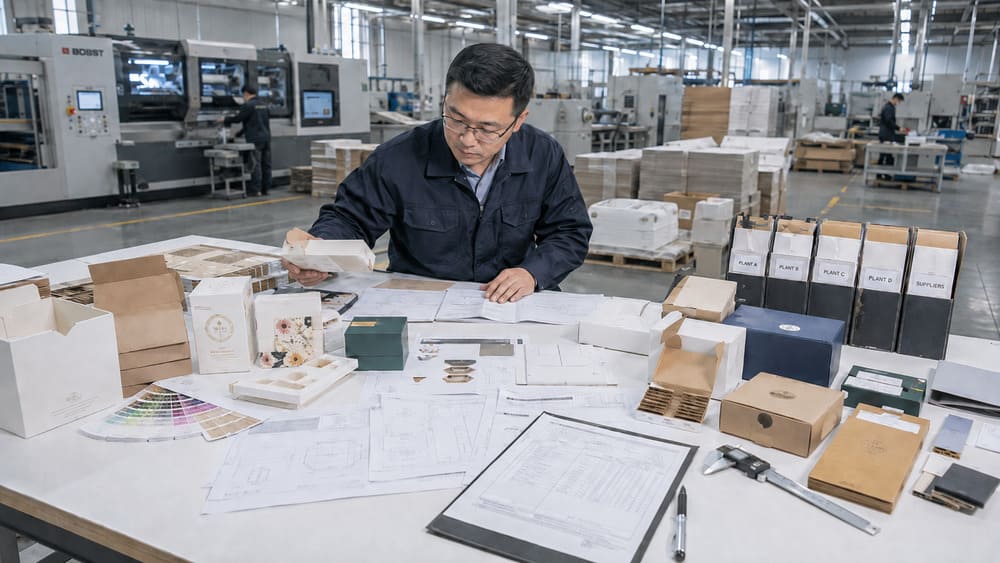
Vietnam and other Southeast Asian options can support buyers looking for:
- Alternative production locations;
- Reduced dependence on a single manufacturing region;
- Additional supply chain flexibility.
However, packaging manufacturing depends on more than factory capacity. Compared with China, some Southeast Asian packaging ecosystems are still developing, especially in material availability, supplier coordination, and process integration. Buyers should confirm whether the local ecosystem can support complex packaging projects.
Klong Position
Klong maintains the packaging development process from structural review and sampling to production coordination and quality control, helping buyers achieve consistent results across different locations.
Taiwan Packaging Manufacturing: Best for Regional Coordination and Customer Support
Taiwan is generally not positioned as a low-cost packaging manufacturing option.
Its main advantage is regional coordination, especially for customers with Taiwan-based operations who value closer communication, easier sample handling, and convenient project follow-up.
Taiwan can be suitable for buyers who prioritize:
- Local communication efficiency;
- Sample confirmation convenience;
- Regional customer support.
However, compared with mainland China, Taiwan usually has higher packaging production costs due to higher material costs, processing costs, and overall manufacturing expenses.
For some large-volume packaging projects, material selection and production flexibility can also be more limited. Common materials such as white card and grey board may have fewer specification or width options compared with mainland China.
Klong Position
Taiwan is more suitable for regional coordination and customer support rather than cost-driven mass production.
Asia Packaging Manufacturing Comparison Matrix
The right manufacturing location depends on project requirements, not a country ranking.
| Decision Factor | China Mainland | Vietnam / Southeast Asia | Taiwan |
|---|---|---|---|
| Best fit | Complex packaging, scale production, flexible development | China+1 diversification strategy | Regional coordination and customer support |
| Packaging capability | Strong and complete | Developing | Selective |
| Production scale | High | Growing | More limited |
| Material options | Strong | Developing | More limited for some large-volume requirements |
| Production flexibility | High | Growing | Limited for scale-driven projects |
| Supply strategy role | Main production base | Alternative production location | Regional support option |
Engineering Insight
Packaging sourcing decisions should match:
Packaging Capability + Supply Strategy + Production Requirements
The right manufacturing location is not the cheapest option. It is the location strategy that best supports quality, flexibility, and long-term supply reliability.
What Buyers Should Evaluate Before Choosing a Packaging Sourcing Strategy
Choosing a packaging supplier requires more than comparing manufacturing locations.
Experienced buyers also evaluate whether a supplier can support the full project journey — from packaging development and production coordination to export documentation readiness.
A reliable sourcing strategy should reduce three major risks:
Can the packaging be made correctly, managed reliably, and shipped smoothly?
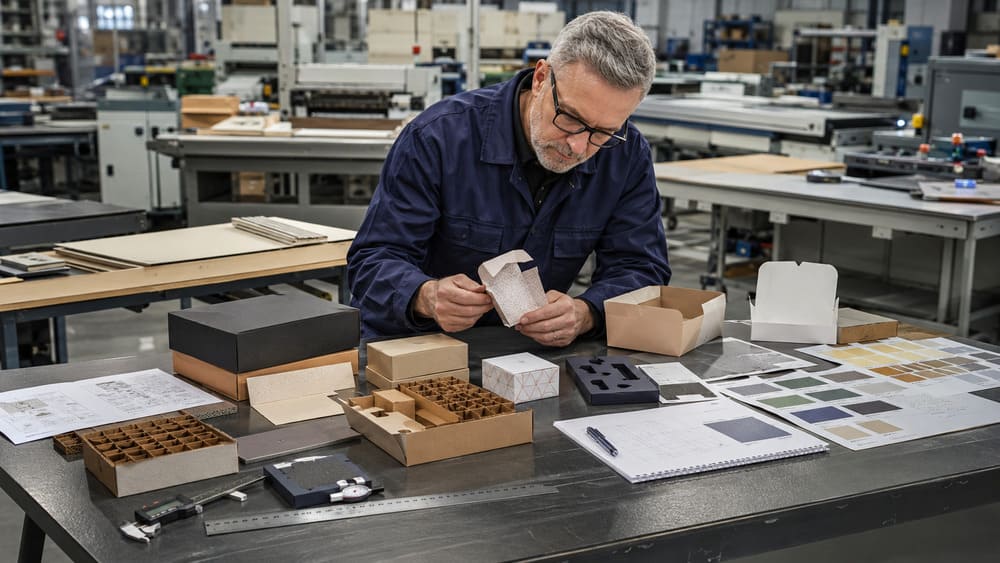
Klong 4-Point Packaging Sourcing Review: Four Questions Before Production
Before selecting a packaging supplier or manufacturing location, buyers should review four key areas:
| Review Area | Buyer Question |
|---|---|
| Cost Impact | Is the lowest quote really the lowest total cost? |
| Capability Fit | Can the supplier support packaging complexity? |
| Supply Risk | Does the sourcing structure reduce risk? |
| Trade Readiness | Are documents and product details prepared correctly? |
The lowest quotation does not always create the lowest overall cost.
A stronger sourcing decision considers whether the supplier can support packaging requirements from development through mass production.
Why Packaging Structure and Documentation Should Be Considered Early
Packaging decisions influence more than appearance and manufacturing. Early clarification helps avoid unnecessary delays caused by inconsistent product information during export or customs processes.
Materials, structures, and product characteristics can also affect how packaging products are described during export and import documentation processes. International product classification follows the Harmonized System (HS), which provides a standardized framework for classifying traded goods.
For example, different paper packaging structures may involve different HS Code classification considerations:
- 48191000 — Corrugated paper or paperboard boxes;
- 48192000 — Non-corrugated folding cartons or paperboard boxes.
However, classification depends on the complete product structure, material composition, destination country requirements, and applicable customs interpretation.
It is not determined by a single feature such as paper thickness.
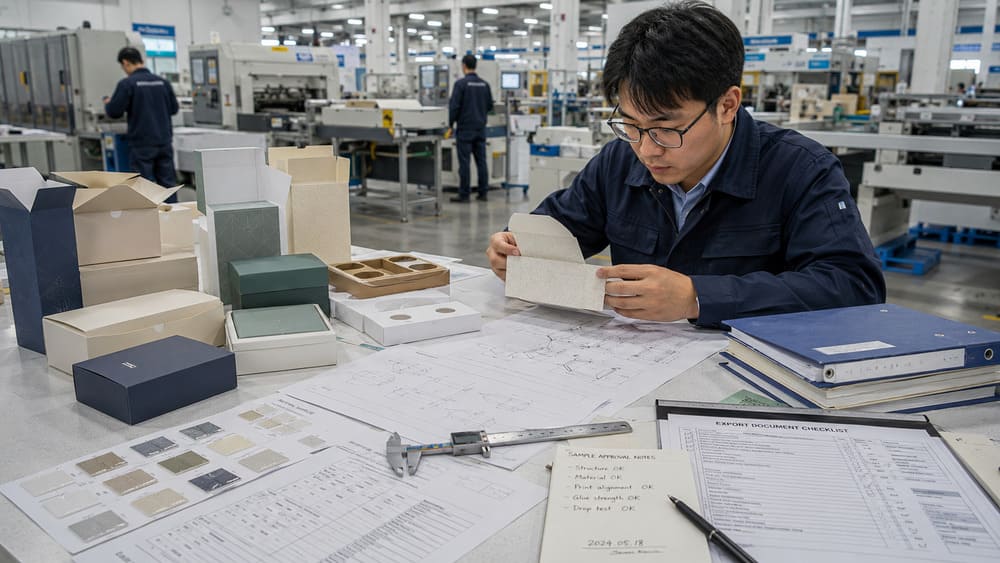
Packaging Supplier Support vs Customs Responsibility
A professional packaging partner should consider export-related requirements before shipment, not after problems occur.
During quotation and development stages, a packaging supplier can help review:
- Whether Certificate of Origin requirements should be considered;
- Whether product information supports correct HS Code reference;
- Whether declaration details match the actual packaging structure;
- Whether manufacturing documents are prepared consistently.
Early preparation helps reduce avoidable delays during export procedures and destination customs clearance.
Klong supports buyers with:
- Packaging structure information;
- Material specifications;
- Manufacturing documentation;
- Product details required for export communication.
For customers handling customs clearance independently or working with external agents, Klong provides reference information and coordination support.
Final decisions regarding HS Code classification, import duties, and customs requirements should always be confirmed by qualified customs brokers, trade professionals, or relevant authorities.
When Multi-Location Packaging Sourcing Makes Business Sense

Multi-location sourcing can support companies that need:
- Supply chain diversification;
- Regional production options;
- Reduced dependence on one manufacturing location;
- Long-term sourcing flexibility.
However, adding more production locations does not automatically reduce risk.
More locations also require consistent control of samples, specifications, quality standards, and production communication.
The right strategy is not simply adding suppliers. It is building a supply structure that matches the packaging requirements and business objectives.
Engineering Insight
The best sourcing decisions are made before production begins.
A strong packaging partner helps buyers evaluate:
Cost Impact + Manufacturing Capability + Supply Risk + Trade Readiness
before these factors become production delays or shipment problems.
Frequently Asked Questions About Choosing an Asian Packaging Supplier
Choosing an Asian packaging supplier is not about finding the lowest-cost country. The right sourcing strategy depends on packaging requirements, production capability, supply chain objectives, and business risk tolerance.
Which country is best for packaging manufacturing in Asia?
There is no single best country for packaging manufacturing in Asia. The right choice depends on packaging complexity, production requirements, cost expectations, timeline, and supply chain goals.
Is China still a good choice for custom packaging manufacturing?
Yes. China remains a strong option for custom packaging because of its mature supply chain, engineering capability, material availability, and flexible production capacity. Buyers should evaluate total project value instead of factory price alone.
Is Vietnam a better alternative to China for packaging production?
Vietnam can be a suitable option for supply diversification, but it is not automatically better for every packaging project. Buyers should verify packaging capability, material coordination, quality control, and production management before making a decision.
What is a China+1 sourcing strategy for packaging?
A China+1 sourcing strategy means adding alternative production locations to reduce dependence on one manufacturing base. For packaging, successful diversification requires consistent quality control, supplier coordination, and a clear production strategy.
What should buyers check before moving packaging production to another country?
Before changing production locations, buyers should verify that the new supplier can maintain the required packaging specifications, quality standards, and production requirements. Approved samples, materials, and manufacturing capability should be confirmed early.
How can buyers maintain packaging quality across different manufacturing locations?
Packaging quality consistency requires aligned specifications, approved samples, quality standards, and supplier communication. Multiple production locations should follow the same requirements to avoid differences in materials, structures, finishing, and final appearance.
How should buyers evaluate a packaging supplier?
Buyers should evaluate packaging suppliers based on more than quotation price. A reliable supplier should help control project cost, manufacturing risks, supply reliability, and export readiness before production begins.
Can packaging suppliers help with export documentation and HS Code preparation?
Yes. A professional packaging supplier can provide product structure information, material details, and manufacturing documents to support export preparation. Final HS Code classification, import duties, and customs decisions should be confirmed by qualified trade professionals.
Before Choosing a Packaging Manufacturing Strategy, Review Your Supply Chain Risks
Choosing a manufacturing location based solely on unit price is a costly mistake. Hidden tariffs, raw material dependencies, and supply chain bottlenecks can easily wipe out your expected savings.
Don’t let a blind sourcing decision derail your product launch. Download the Packaging Cost & Shipping Risk Checklist to evaluate a supplier’s true capabilities and eliminate hidden geographic risks before committing your orders.