
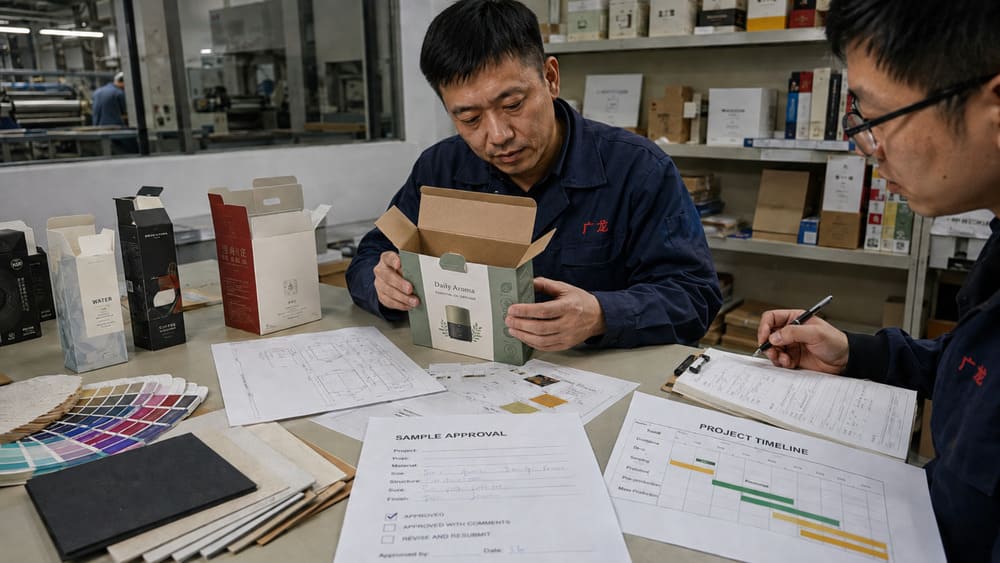
Your packaging project is already behind schedule — but mass production has not even started yet.
The problem is often not the factory speed. It starts earlier: a design that is difficult to manufacture, unclear sample feedback, missing decisions, or approvals that happen too late.
Packaging lead time optimization is not about simply pushing production faster. It is about identifying and removing avoidable risks before they turn into missed launches, repeated sampling, and unnecessary delays.
Table of Contents
Why Packaging Projects Run Late Even When Production Is On Schedule
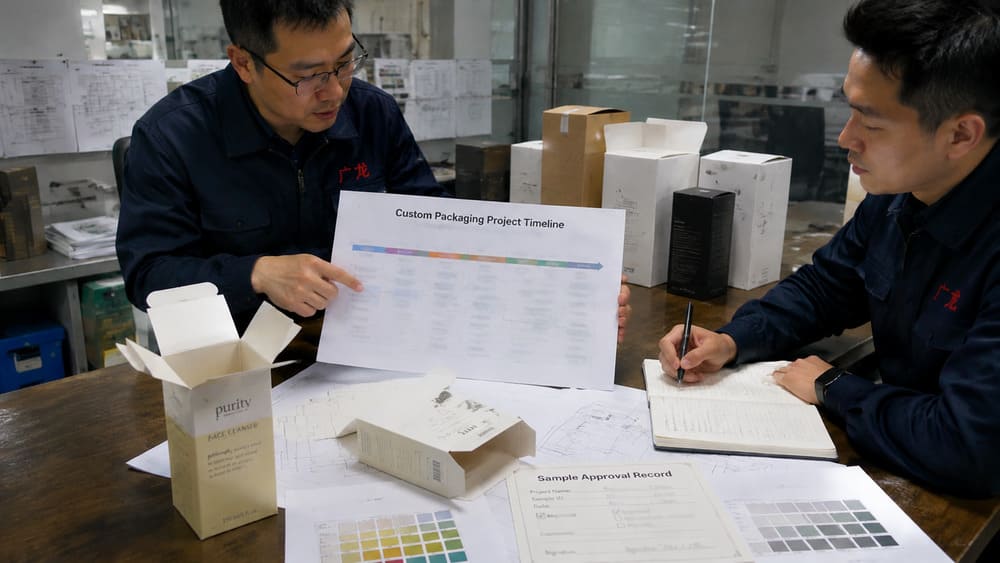
A supplier can complete production on time, but your product launch can still be delayed.
The reason is that production lead time only represents the manufacturing stage. The actual packaging project timeline usually starts much earlier, including design preparation, engineering review, sampling, approval, material confirmation, and production release.
When these early decisions are delayed, changed repeatedly, or not clearly confirmed, the entire project timeline can extend — even when the factory follows its production schedule exactly.
For buyers, the key question is not only “How fast can this supplier manufacture?” but also “How much uncertainty remains before production can actually begin?”
The Difference Between Production Lead Time and Total Project Lead Time
Production lead time begins after packaging requirements are confirmed and the project is ready for manufacturing.
It does not include the earlier work required to reach that point.
A complete packaging project usually involves several connected stages:
- Design preparation
- Engineering review
- Sampling
- Sample approval
- Material confirmation
- Production release
Each stage depends on previous decisions being clear. If specifications are incomplete, artwork is not production-ready, structural decisions change late, or sample approval takes multiple rounds, the project timeline can extend before manufacturing even starts.
This is why experienced buyers evaluate more than the supplier’s quoted production days. A shorter manufacturing timeline does not automatically mean a faster product launch.
A supplier may complete production within the expected 10–30 day production window, while the overall packaging project still faces delays because earlier decisions were not finalized in time.
When comparing suppliers, buyers should ask not only:
“How many days does production take?”
but also:
“How does this supplier help reduce uncertainty before production begins?”
The Hidden Waiting Points That Delay Packaging Launches
Many packaging delays happen before the factory starts production.
They are often caused by waiting for decisions, missing information, or repeated alignment between different teams.
Common hidden waiting points include:
- Missing product specifications;
- Incomplete artwork or production files;
- Late structural decisions;
- Unclear approval responsibilities;
- Repeated sample revision cycles;
- Material confirmation delays.
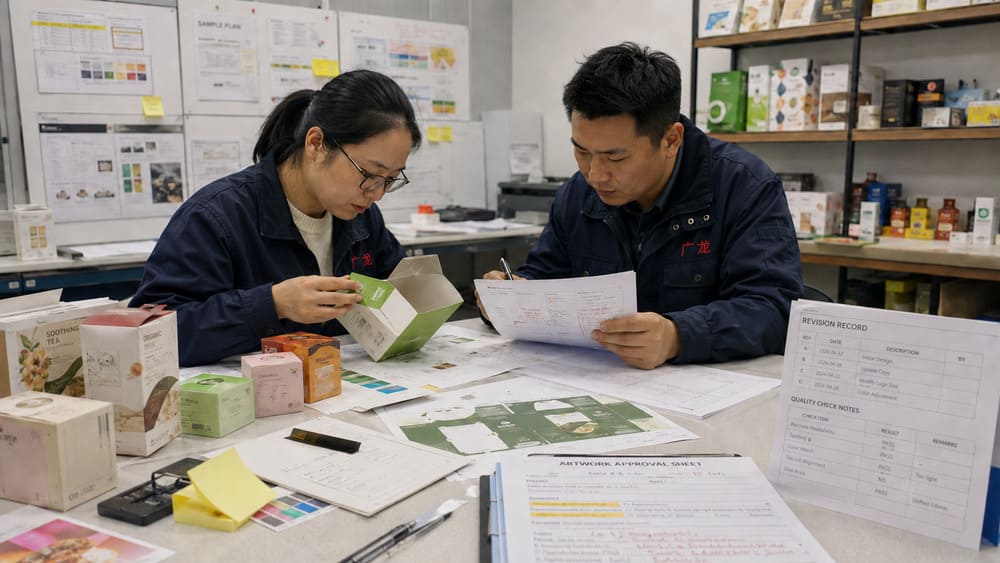
These issues are easy to overlook because there is no visible production problem. The factory may have capacity available, but the project is waiting for the next decision before moving forward.
In real packaging projects, timeline problems are often created by many small delays accumulating across different stages rather than one major manufacturing failure.
Packaging lead time optimization is therefore not simply about asking factories to produce faster. It is about reducing avoidable waiting before production begins through clearer inputs, earlier validation, and better decision alignment.
Where Packaging Lead Time Is Lost: The Critical Path From Design to Production
Packaging lead time is rarely lost during one single stage. In most projects, time is gradually lost between stages — when one unfinished decision prevents the next step from moving forward.
A packaging project can lose valuable time through incomplete design inputs, delayed engineering decisions, repeated sample revisions, slow approvals, or late material confirmation. For project managers, the goal is not simply tracking production days, but identifying which decision is blocking the next milestone.
The critical path is not always the longest stage. It is the stage that prevents every following step from moving.
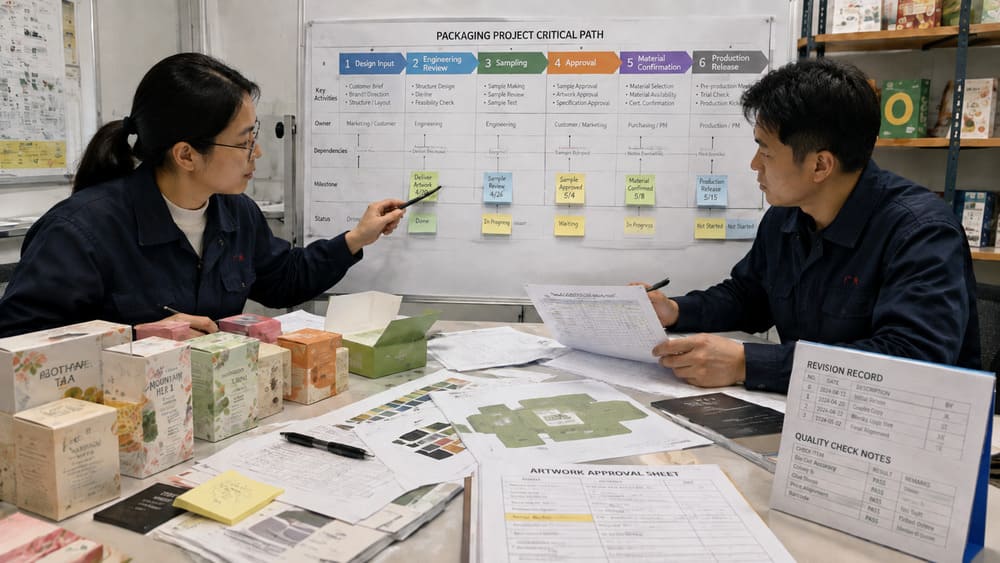
Packaging Lead Time Critical Path Map
A packaging project moves through several connected decision points. Each stage depends on the previous stage being sufficiently prepared. When information, approvals, or technical decisions are missing, the delay often appears later in the timeline even though the original issue started much earlier.
| Project Stage | Main Delay Risk | Buyer Action |
|---|---|---|
| Design Input | Missing product information or specifications | Prepare complete project inputs |
| Engineering Review | Late feasibility issues | Confirm design direction early |
| Sampling | Multiple revision rounds | Define approval expectations before sampling |
| Material Confirmation | Material availability delays | Confirm materials early |
| Approval | Slow internal decisions | Assign clear decision owners |
| Production Release | Last-minute changes | Freeze final requirements |
Before requesting faster production, buyers should first identify which decision is preventing the next stage from starting.
The fastest improvement usually comes from removing the current bottleneck, not speeding up every stage.
Sample Lead Time: Faster Samples Only Help When Revision Loops Are Reduced
A faster sample turnaround does not automatically create a faster product launch. The biggest time loss during sampling is often not the sample preparation itself, but repeated revision cycles caused by unclear requirements or undefined approval expectations.
Klong structural and digital samples typically require 5–7 days for standard materials. However, even a fast sample process cannot recover time lost through unclear decisions before sampling begins.
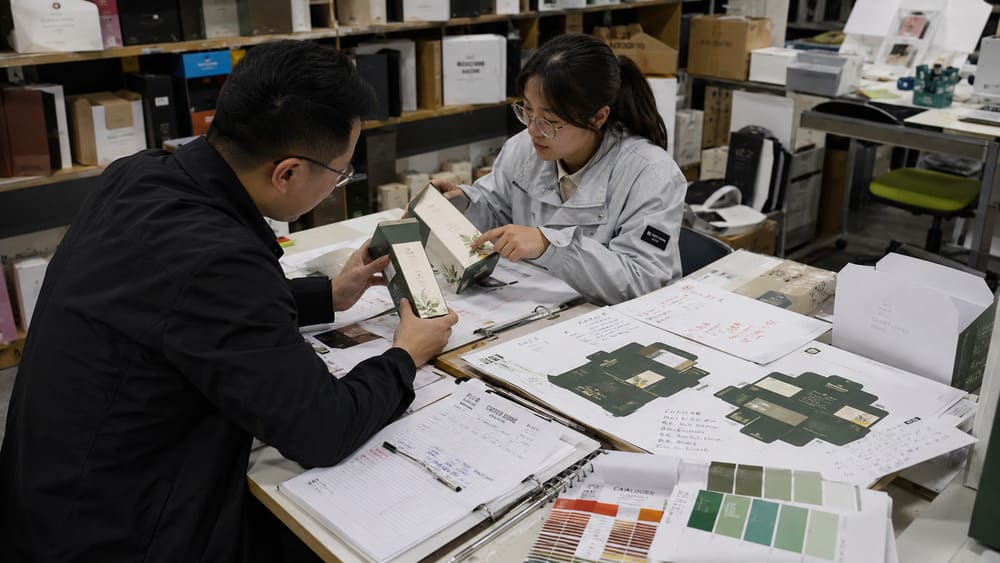
Before sampling starts, buyers should confirm:
- Product requirements;
- Packaging expectations;
- Approval criteria.
Better first-round decisions usually create more timeline improvement than simply producing samples faster. Buyers who want to understand the sampling validation approach can review the packaging sampling process guide.
Production Lead Time: Creating a Predictable Manufacturing Schedule
A predictable production schedule starts before production begins. Manufacturing becomes more stable when key requirements are already confirmed, including final specifications, material availability, approved artwork, and frozen production requirements.
Klong standard production lead time is typically 10–30 days, while expedited production can be 7–15 days depending on project conditions. However, production speed only becomes meaningful when the project enters manufacturing with clear and stable inputs.
A reliable production schedule starts with a reliable production specification.
How to Shorten Packaging Lead Time Without Creating Quality Risk
Shortening packaging lead time is not about removing necessary steps or simply asking suppliers to produce faster. The most effective improvements come from reducing avoidable waiting, repeated revisions, and unclear decisions while protecting engineering validation and quality control.
The most effective improvements start with early decisions: complete project inputs, clear engineering direction, and defined approval ownership before production pressure appears. For urgent projects, the goal is not only moving faster, but avoiding quality issues, rework, and longer delays later.
Start With Complete Project Inputs Before Development Begins
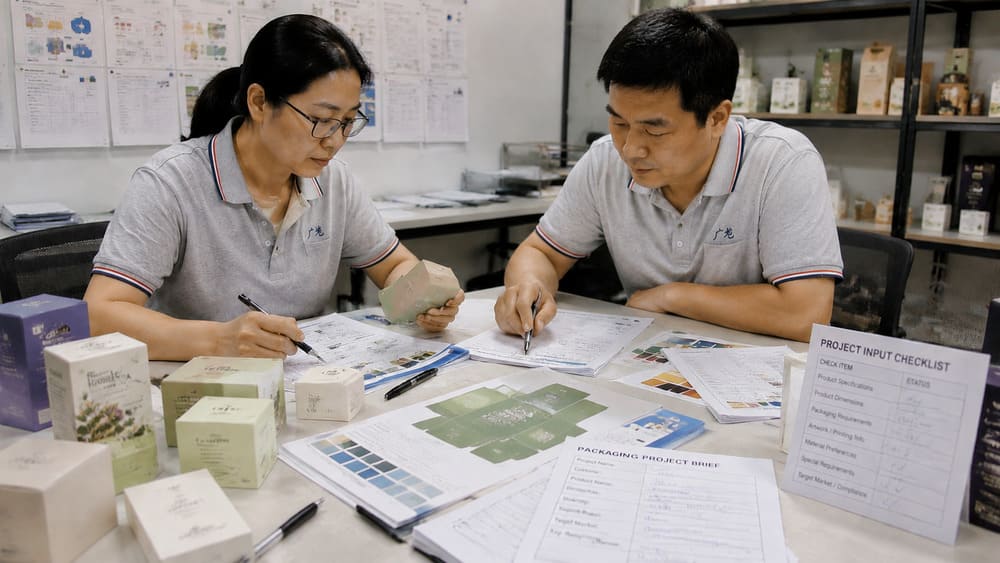
Many packaging delays begin before engineering work or sampling starts. When key information is missing, teams often spend additional time confirming requirements, revising directions, or correcting decisions that could have been clarified earlier.
Before development begins, buyers should prepare essential project inputs, including:
- Product dimensions;
- Product weight;
- Packaging requirements;
- Artwork information;
- Target market;
- Testing requirements.
Complete project inputs reduce unnecessary clarification cycles and allow packaging teams to evaluate feasibility earlier. The goal is not to provide every possible detail before discussion begins, but to provide enough information for accurate decisions from the start.
Use Early Engineering Review to Prevent Late-Stage Changes
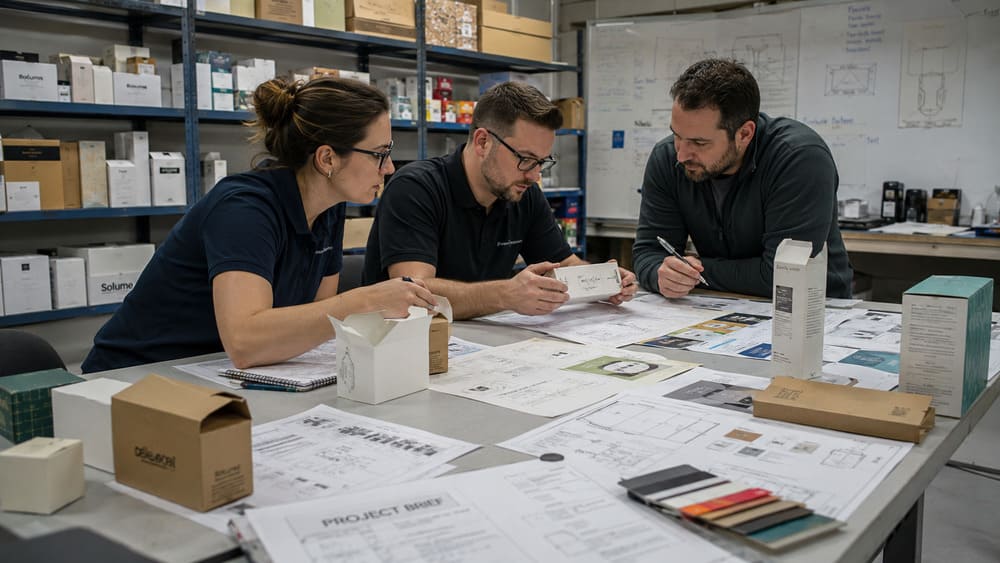
Late-stage changes are one of the most expensive sources of packaging delays. A design issue discovered before sampling is usually easier to address than a change required after samples are completed or production preparation has started.
Early engineering review helps identify potential issues before:
- Sampling;
- Production release;
- Manufacturing changes.
The purpose of early engineering input is not to slow development with additional checks. It is to prevent avoidable corrections when changes become more difficult, time-consuming, and costly.
For buyers evaluating how packaging risks are reduced before production, review the packaging DFM process.
Reduce Approval Loops Through Clear Decision Ownership
In many packaging projects, the longest delay is not caused by manufacturing capacity. It is caused by waiting for the next confirmed decision.
A sample may be ready, materials may be prepared, and production capacity may be available, but the project cannot move forward when feedback ownership is unclear or different teams provide conflicting directions.
In real packaging projects, waiting for one final decision often creates more delay than the production step itself.
A more efficient approval process requires:
- Clear approval responsibility;
- Defined feedback timing;
- Organized revision communication;
- Final specification confirmation.
Faster approval does not mean rushing decisions. It means ensuring the right person can make the right decision at the right stage.
Confirm Materials Early and Remove Avoidable Waiting
Material preparation is another area where packaging projects can lose unexpected time. Even when design and artwork are completed, production schedules can still be affected if materials, supplier coordination, or required documentation are not prepared in advance.
Early preparation should include:
- Material availability confirmation;
- Supplier coordination;
- Production planning;
- Documentation preparation.
Material planning should happen before the project becomes urgent, not after the schedule is already under pressure.
Lead time optimization comes from better planning and earlier alignment, not from skipping necessary preparation steps.
Lead Time Optimization Should Not Remove Quality Validation
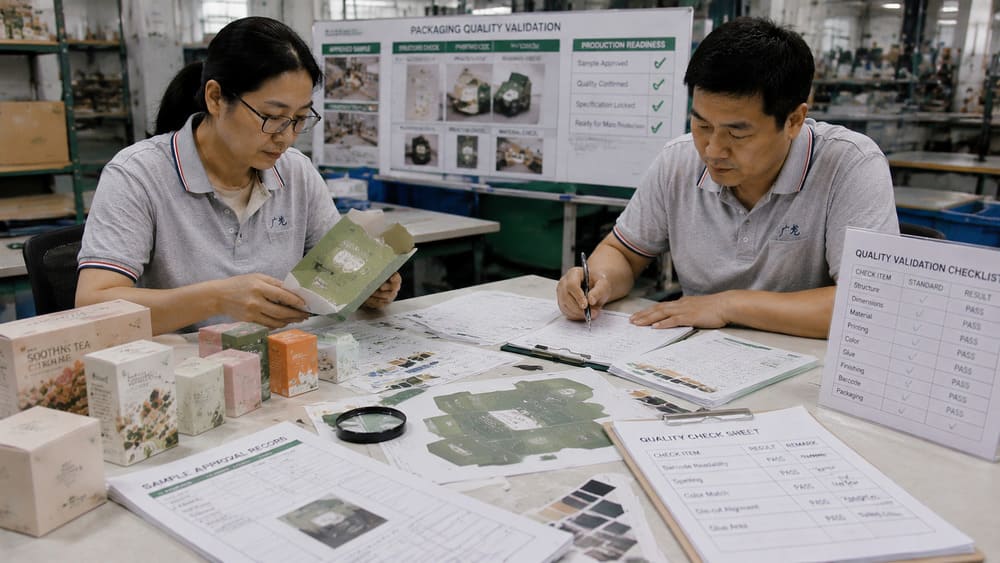
The fastest packaging development process is not the one with the fewest steps. It is the one with fewer unnecessary problems between steps.
Effective lead time optimization removes:
- Waiting caused by missing information;
- Rework caused by unclear requirements;
- Communication gaps;
- Approval delays.
However, it should never remove:
- Engineering validation;
- Quality control;
- Production reliability checks.
A packaging timeline is healthy when three things are controlled: information is complete, decisions are clear, and production requirements are stable.
For urgent projects, maintaining quality validation is even more important. A rushed packaging decision that creates quality problems or requires production rework can consume more time than the original delay.
Engineering Insight
Faster packaging development does not come from reducing necessary quality steps. It comes from reducing unnecessary delays between those steps, so potential issues are identified earlier instead of becoming production problems later.
FAQ: Packaging Lead Time Optimization Questions Buyers Ask
Find practical answers to the packaging timeline questions buyers face before starting a custom packaging project.
What is the typical lead time for custom packaging?
Custom packaging lead time depends on project requirements, but Klong structural and digital samples typically take 5–7 days, standard production usually requires 10–30 days, and expedited production can take 7–15 days. Actual timing depends on project complexity, approval speed, material conditions, and final requirement confirmation.
How can I reduce packaging lead time without increasing quality risk?
Packaging lead time can be reduced by preparing complete project inputs early, reviewing feasibility sooner, reducing revision loops, improving approval efficiency, and confirming materials earlier. The goal is to remove unnecessary waiting and rework while keeping engineering validation and quality control in place.
Why does custom packaging take longer than expected?
Custom packaging projects often take longer because delays may happen before production begins, including design changes, approval delays, material waiting, repeated sampling, and specification changes. Production speed is only one part of the timeline; early decisions and clear requirements help create a more predictable launch schedule.
Why is total packaging project time longer than production lead time?
Production lead time only covers the manufacturing stage after requirements, materials, and specifications are confirmed. Total packaging project time also includes design preparation, engineering review, sampling, approval, material confirmation, and production release.
How long does packaging sampling take?
Klong structural and digital samples typically take 5–7 days for standard materials. Faster sampling supports a faster launch only when requirements, feedback, and approval decisions are clear enough to avoid repeated revisions.
Does faster packaging production increase quality risk?
Faster packaging production does not increase quality risk when optimization focuses on removing unnecessary delays instead of removing engineering validation and quality control. The objective is a more predictable development process with fewer avoidable problems, not fewer quality safeguards.
Conclusion: Prevent Packaging Delays Before They Cost You Your Launch
A supplier finishing production on schedule means nothing if the product misses its retail launch window. The real packaging timeline is almost always lost much earlier—through incomplete design files, repeated structural revisions, and engineering decisions made too late.
Don’t let a preventable packaging delay force you into paying exorbitant air freight costs.
Download the DFM & Sampling Checklist to uncover hidden pre-production bottlenecks, eliminate unnecessary revision loops, and lock in your critical launch schedule before mass production begins.