
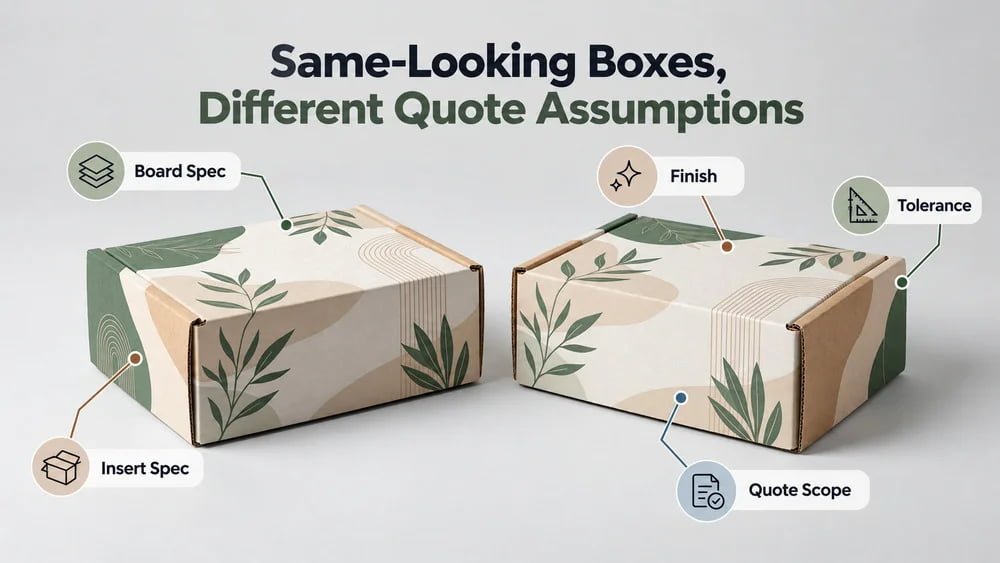
Two packaging quotes may look identical until you compare the paper grades, print setup, tolerances, and quantities behind them. A lower price can reflect a better production plan—or a different specification.
Use this packaging RFQ checklist to request comparable quotes and identify assumptions before you approve a purchase order. You can start with product photos, approximate dimensions, and an estimated quantity; a finished dieline, artwork, or disclosed budget is not required for an initial review.
Table of Contents
What Information Should Be Included in a Packaging RFQ?
A useful packaging RFQ tells the supplier what you're packing, how it needs to be presented or protected, and how many you need. You don't have to finalize every technical specification before asking for advice.
The Minimum Information Needed to Start a Custom Packaging Quote
1. Packaging Type or Intended Function
Tell the supplier whether you need a folding carton, corrugated box, rigid box, paper insert, molded pulp tray, or another packaging solution. Also explain whether it's for retail display, direct shipping, gifting, or a combination.
If you already have a packaging idea, share a reference photo or sketch. At Klong, we first review whether the proposed structure is practical. Where we have relevant product experience, we may suggest an alternative before preparing an initial estimate.
2. Approximate Dimensions
Provide length × width × height and the measurement unit. Specify whether the measurements refer to the product, the box interior, or the finished box exterior. If the box size is unknown, start with the product dimensions.
3. Estimated Order Quantity
Specify the initial quantity for each size, SKU, or artwork version, rather than giving only a combined total. Include expected repeat orders if available.
For multiple printed designs, Klong reviews whether compatible artworks can share a printing sheet rather than pricing every design as a separate print run by default. Sheet size, carton dimensions, material, colors, finishes, quantity split, and production method determine whether a combined layout is economical. If those conditions change on a repeat order, we recalculate the price and propose a more cost-efficient production option where feasible, subject to customer approval.
How Klong Evaluates Gang-Run Printing Before Quoting
A press sheet may accommodate two to four carton blanks for a particular size. When several artwork versions share compatible construction and print requirements, Klong can assess a gang-run layout that uses those positions across designs. This may reduce paper waste, press make-ready expense, and associated processing costs compared with separate runs. It is a feasibility check—not a promise that every four-SKU project can be combined.
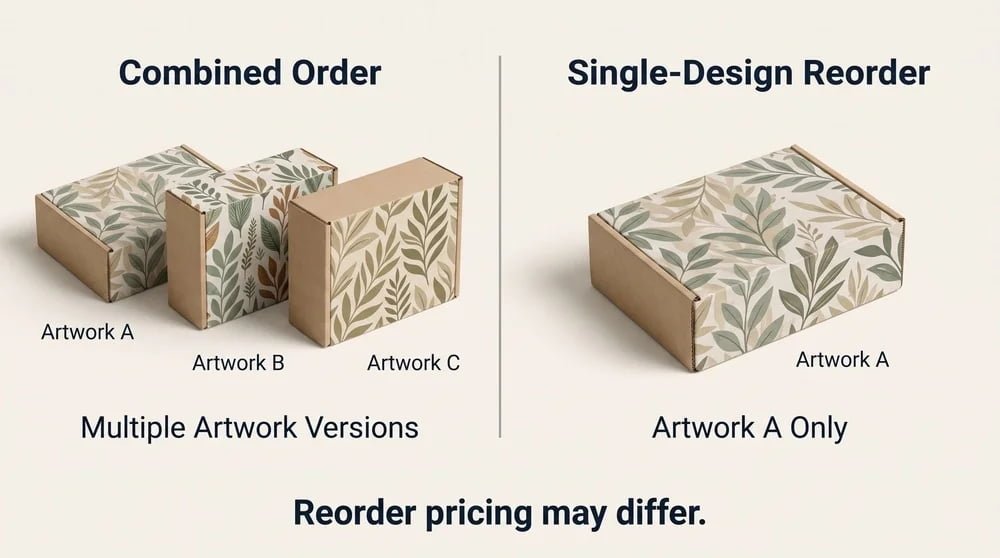
For smaller projects, we may offer several quantity-based price options to help buyers compare costs. Klong supports pilot orders from 200 pieces, while regular orders typically start from 500 pieces. Feasibility depends on packaging specifications, production setup, and any special material or accessory minimums.
4. Artwork, Packaging Reference, or Product Photo
You can start with a product photo, existing packaging, reference image, draft artwork, 3D rendering, or simple sketch. A finished dieline isn't necessary for an initial discussion.
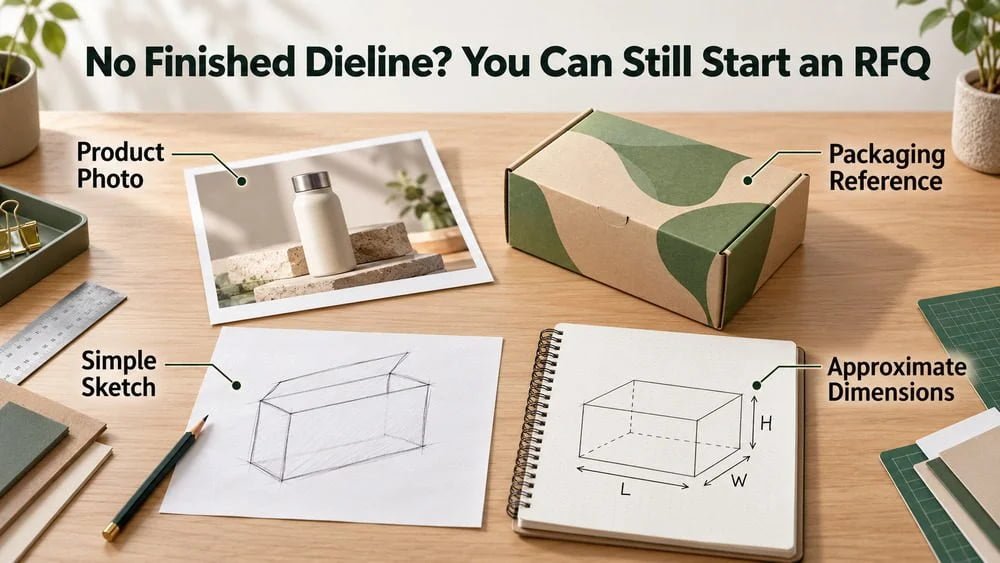
If the packaging must hold or protect the product, also provide its weight, fragile areas, and expected shipping conditions where known. Photos help communicate the concept but cannot confirm structural fit or protection performance.
5. Target Packaging Budget or Product Positioning
A premium fragrance and a mass-market shampoo may need different packaging, even when their sizes are similar. The right specification depends on presentation, protection, and commercial priorities—not retail price alone.
A target packaging budget helps, but it's optional. If your procurement policy restricts budget or retail-price disclosure, share your market positioning, packaging preferences, and functional requirements instead. Klong can use this information to suggest a practical starting option and, where appropriate, a lower-cost or more premium alternative.
6. Destination and Target Schedule
Provide the destination country, delivery location if known, and required delivery or launch date. Include your preferred shipping terms if already decided. For delivered pricing, the supplier needs enough destination and shipping information to establish the quotation basis.
Additional Specifications That Improve Quote Accuracy
Once the basic project requirements are clear, these details help suppliers reduce assumptions and improve quotation accuracy.
A. Product and Structure
- Product weight, fragile areas, and packing orientation
- Box structure, dimensions, and insert requirements
- Dieline or structural drawing, if available
- Protection and handling requirements
B. Material and Finishing
- Paperboard grade, GSM, caliper, or thickness
- Corrugated flute and board construction
- Insert material and foam specifications, if applicable
- Printing coverage, colors, and printed sides
- Coating, lamination, or plastic-free finishing requirements
- Special finishes such as spot UV, foil stamping, or embossing
C. Production and Quality
- Critical dimensions, insert fit, and assembly tolerances
- Appearance and inspection requirements
- Customer-specific quality or compliance requirements
D. Commercial Requirements
- Quantity per SKU or artwork version
- Initial and repeat-order quantities
- Destination and delivery schedule
- Incoterm and shipping arrangement, if known
If you don't know the board grade, insert material, or required tolerance, mark it "To Be Confirmed" and explain what the packaging needs to achieve. The supplier can then identify which specifications require engineering review.
Packaging RFQ Checklist: Essential vs. Optional Information
Use this checklist to identify what you can send now and what can be confirmed during supplier review.
| RFQ Information | Priority | Why It Matters |
|---|---|---|
| Packaging type, function, or reference | Needed to start | Defines what the packaging must do |
| Product or approximate box dimensions | Needed for initial sizing | Helps estimate box size |
| Quantity per SKU or design | Needed for pricing | Defines order volume and possible combined production |
| Product photo or reference | Strongly recommended | Shows the intended packaging direction |
| Product weight and fragility | Needed for protection review | Identifies structural and protection needs |
| Brand positioning or target budget | Optional | Guides material and presentation choices |
| Destination and delivery date | Depends on quotation scope | Clarifies shipping and timing assumptions |
| Artwork or dieline | If available | Improves quotation accuracy |
| Materials, inserts, and finishes | If known or applicable | Defines construction and production requirements |
| QC, tolerances, and compliance | Project-dependent | Clarifies quality and documentation needs |
| Incoterm and shipping arrangement | If known | Defines delivery and pricing terms |
When is your RFQ ready?
You can start with a packaging reference, approximate dimensions, and estimated quantity. If important specifications remain open, request an initial estimate with stated assumptions rather than treating it as a final quote.
An incomplete RFQ is a reason to clarify the project—not to invent a final price.
Why Packaging Quotes Differ: Hidden Material Downgrades and Total Cost
Two suppliers may quote the same-looking packaging but use different materials, quality requirements, or order quantities. Before choosing the lower price, make sure both suppliers are pricing the same product under the same conditions.
The Hidden Downgrade: The "Apples-to-Apples" Trap
1. Corrugated Board: Same K3K Label, Different Materials
Klong has seen quotations that both say “K3K corrugated board” but specify different paper grades or basis weights. For example, a 140 gsm layer in one construction might be quoted as 120 gsm in another; a higher-grade kraft liner may also be replaced with a lower-grade liner. These are illustrative specification differences, not a claim about a particular supplier or a universal K3K recipe. Less paper or a different grade can lower the quoted price while changing the board’s properties. GSM alone, however, does not establish finished board strength.
For an existing product, we prefer to examine a physical reference sample and its known performance requirements. For new packaging, we review product weight, insert needs, and intended handling before recommending a construction. To compare quotes fairly, specify the actual liner and medium grades, layer GSM, flute construction, and required performance. Otherwise, a “cheaper K3K box” may simply be a different box.
2. Foam Inserts: Density and Material Type Affect Pricing
Two quotations for "high-density foam" may cover different materials, densities, and thicknesses. Even a 5 kg/m³ density difference can affect cost, depending on the foam type and construction. Higher density does not automatically mean better protection.
For straightforward projects, Klong may start with a suitable standard foam specification for quotation and sampling. For larger or more complex inserts, we may offer standard and reinforced options so buyers can compare the specifications and prices. Before treating two quotations as equivalent, confirm the foam type, density, thickness, and required protection.
3. Multi-Layer Foam Inserts: Alignment and Inspection Costs
Multi-layer foam inserts can have different production costs even when they look alike. Tight layer alignment, consistent cavities, and strict appearance requirements may require slower production, positioning fixtures, and additional inspection.
In Klong’s large multi-layer EVA and foam insert projects, layer-to-layer positioning can vary by approximately 1–3 mm, with larger formats sometimes approaching 3 mm. Adhesive bonding, material movement, and compression are among the process factors to assess. This is project-specific alignment experience, not a universal ±3 mm allowance for cavities or critical product-contact dimensions. Fit must be checked separately using the actual product and approved physical sample.
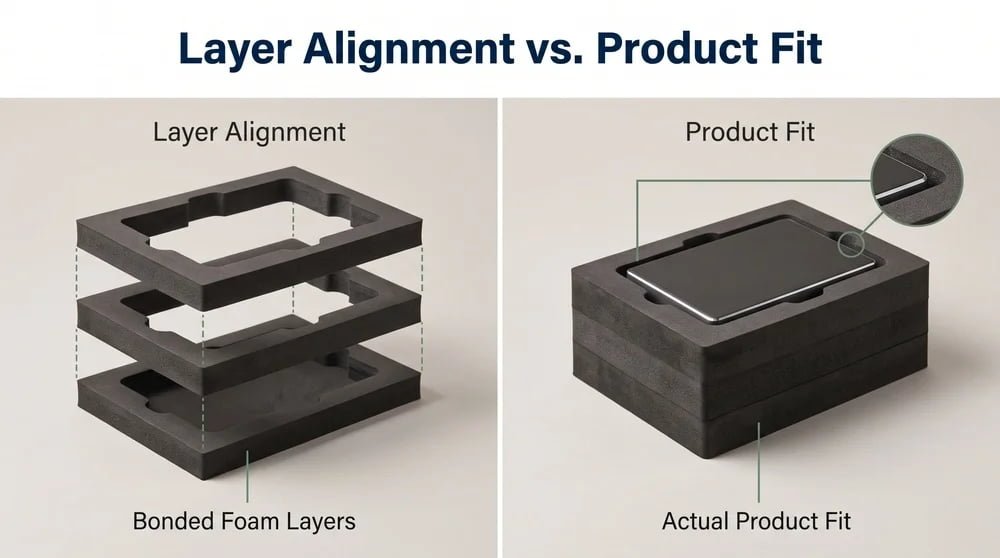
If a sample fits too loosely or tightly, we review the physical product and bonded insert, then discuss any structural or process adjustment and its cost implications before proceeding. Projects with critical fit requirements may also need fixtures, first-piece checks, in-process inspection, or 100% inspection as agreed in the quality plan.
A lower quote is not proof of material downgrading. It may reflect different materials, construction, or inspection requirements. Confirm these differences before comparing prices.
How to Prevent Specification Substitution and Quote Ambiguity
Before comparing quotations, ask suppliers to confirm the specifications that affect price, appearance, fit, and protection.
| Packaging Component | What to Confirm |
|---|---|
| Corrugated board | Paper grades, layer GSM, flute construction, required performance |
| Folding cartons / rigid boxes | Board type, thickness, construction, finishing, critical dimensions |
| Foam inserts | Material type, density, thickness, layer construction, product fit |
| Printing and finishing | Print requirements, surface treatment, approved appearance |
| Quality control | Critical tolerances, inspection requirements, acceptance criteria |
| Material substitutions | Which changes require buyer approval |
If one offer assumes a 140 gsm layer and another a 120 gsm layer—or if kraft liner quality differs—those are not automatically apples-to-apples quotations, even when both are labeled K3K. The same applies to unspecified foam density, material type, or layer alignment requirements. Ask each supplier to record its actual specification and flag unconfirmed assumptions.
Before production, agree on the critical specifications and require approval for substitutions that could affect cost, appearance, protection, fit, or compliance. Do not approve a quotation based on the lowest unit price while material or quality requirements remain unclear.
Tooling, Sampling and Logistics Are Part of the Real Quotation
Check the Quantity Behind the Price
An annual forecast of one million boxes does not mean the buyer will order one million at once. If actual purchase orders are for 50,000 pieces but a supplier quotes based on 200,000 per batch, that unit price may not apply.
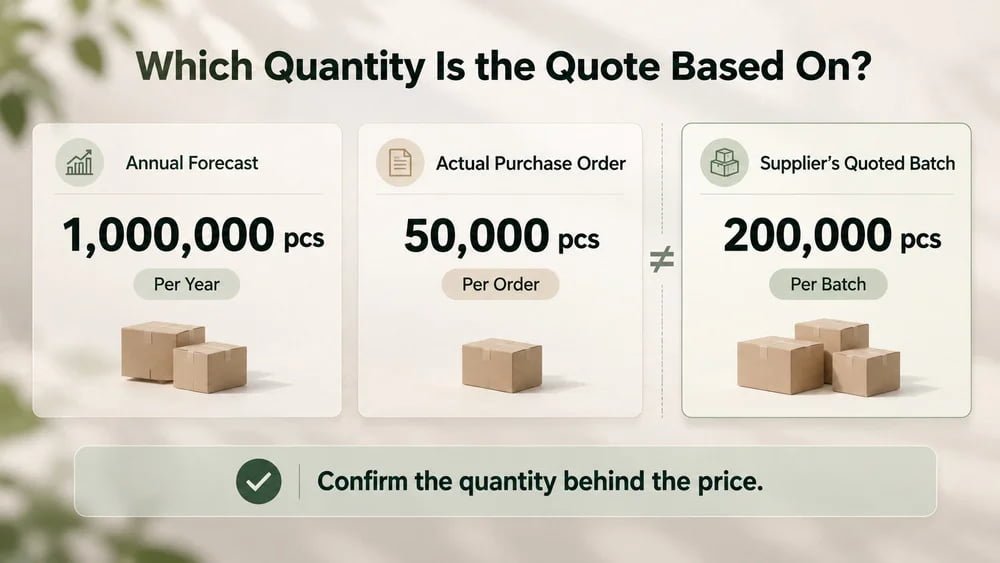
Klong reviews realistic purchase-order quantities and may use batches up to approximately 100,000 pieces as a practical pricing reference, depending on the project. This is not a production capacity limit. Where suitable, we may suggest consolidating orders quarterly to evaluate better pricing. Buyers should confirm the quantity used for the quotation and whether smaller repeat orders would be repriced.
Check What's Included
Klong generally keeps routine packaging costs consolidated rather than listing every minor charge. Significant one-time expenses, such as molded pulp tooling, are normally identified separately.
A production-equivalent sample follows the actual manufacturing process, including production printing, die-cut tooling, and applicable finishing equipment. Unlike a plotter-cut structural sample, it requires production tooling and setup.
Typical Klong sampling and tooling references:
| Item | Typical Reference |
|---|---|
| Structural / digital sample using standard materials | 5–7 days; no plotter-cut structural tooling charge |
| Production-equivalent sample | 7–10 days; production printing, die-cut tooling, and applicable finishing processes |
| Folding carton / paper insert die-cut tooling | 24–48 hours; approximately RMB 200–500 |
| Molded pulp sample mold | 12–15 days for samples; approximately RMB 4,500–7,000 |
| Molded pulp production mold | 20–25 days to first mass production; approximately RMB 11,000–30,000 |
Molded pulp sample molds and production molds are separate tooling investments. The number of production molds depends on the required output, equipment setup, mold life, and delivery schedule. Large orders or tight deadlines may require additional molds.
These figures depend on project requirements and are not guaranteed for every order. Sampling charges and any refund arrangements depend on agreed commercial terms. Where applicable, Klong can confirm the cumulative order quantity required for a sampling-fee refund. Molded pulp tooling is assessed separately.
Before approving a quotation, check the agreed materials, printing and artwork split, inserts, assembly, inspection, master cartons, and shipping arrangements. Confirm whether any multi-artwork price depends on gang-run production. Significant tooling, sampling, testing, or excluded charges should be clear, as should the Incoterm and named delivery place where applicable.
A useful quotation makes the actual order quantity, included services, and additional charges clear without unnecessary complexity.
Compare Total Landed Cost, Not Only Factory Unit Price
A lower factory price does not always mean a lower delivered cost. Freight, tooling, inspection, assembly, applicable duties, storage, and quality-related expenses may change the comparison.
Make sure both suppliers are quoting equivalent packaging, achievable order quantities, and comparable delivery terms. An EXW Dongguan price and a DDP price to a named U.S. destination cover different responsibilities and costs. Ask for the agreed Incoterms® 2020 rule, named place, and any exclusions before treating delivered prices as comparable.
Klong works through its Dongguan manufacturing operation, Taiwan-based company coordination, and qualified Vietnam manufacturing partners. Each sourcing arrangement must be evaluated against actual production feasibility, manufacturing origin, logistics, and applicable import requirements. Changing production location does not automatically reduce duties or guarantee identical capabilities.
Compare the total cost of receiving packaging that meets your approved specifications—not just the lowest factory unit price.
How to Turn an Incomplete RFQ Into an Actionable Packaging Project
An incomplete packaging RFQ doesn't have to delay your project. What matters is knowing which information is reliable enough to work with, which specifications still need supplier advice, and what must be approved before production.
Separate Confirmed Requirements From Open Engineering Questions
Start by separating your packaging information into three groups. Details you've provided are not necessarily final production specifications, but they can still help the supplier assess feasibility and recommend the next step.
| Status | Typical Information | Next Action |
|---|---|---|
| Confirmed | Available product dimensions, estimated quantity, destination, approved artwork if available, required delivery date where known | Share the information you have and identify what is already approved |
| To Be Confirmed | Board grade, structure, insert material, finishing, tolerances, assembly requirements | Identify which missing details affect pricing, product fit, protection, or production |
| Supplier Advice Needed | Suitable structure, material options, product protection, cost and presentation priorities, sampling direction | Ask the supplier to recommend practical options and explain what needs validation |
At Klong, we check manufacturing feasibility when we receive a buyer's packaging information. We look for necessary structural changes, material or finishing risks, and questions that should be resolved before production. For example, certain standard lamination or varnish finishes on dark, heavily printed packaging may be more vulnerable to visible scratching or cracking along folds. We raise these concerns early and discuss suitable alternatives rather than leaving them until sample approval or production.
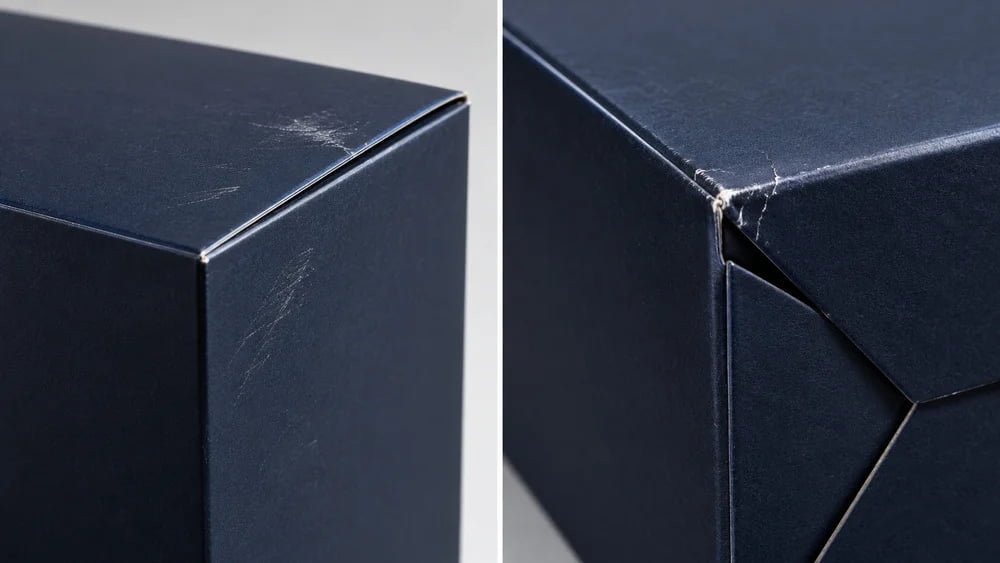
A missing board grade doesn't necessarily prevent an initial estimate if the product and protection requirements are clear. But an insert cannot be reliably approved without adequate product dimensions and weight information. Mark unknown specifications "To Be Confirmed" rather than guessing.
If your procurement policy restricts budget disclosure, product positioning, presentation expectations, and protection requirements can still guide the initial discussion.
Use DFM and Sampling Before Final Production Commitment
The information behind a packaging quote determines what the buyer can safely approve. These are three levels of quotation readiness—not three documents or mandatory stages for every project. Paper drawings and nominal dimensions can support an estimate, but they cannot by themselves confirm how a multi-layer insert fits after bonding and compression.
| Quotation Readiness | What It Is Based On | Buyer Decision |
|---|---|---|
| Preliminary Estimate | Approximate dimensions, estimated quantity, packaging direction, and stated assumptions | Assess initial budget and feasibility; do not treat the price or design as final |
| Specification-Based Quotation | Defined structure, materials, artwork, printing, finishing, inserts, quantity, and quality requirements | Compare supplier offers against the same agreed specifications |
| Production-Ready Commercial Offer | Confirmed manufacturing feasibility, production specifications, applicable sample approvals, tooling, and commercial conditions | Authorize production once required approvals and order conditions are met |
For a project starting with a basic idea, Klong may provide a reference estimate and update it as structure, materials, samples, and order details are confirmed. For example, a drawing that assumes zero layer misalignment does not establish the fit of a bonded EVA insert: physical sampling may reveal a 1–3 mm layer-position variation in a large-format construction. If validation calls for revised cavities, fixtures, materials, or inspection, we explain the engineering and pricing impact for buyer approval. A complete, production-feasible specification can be quoted directly without an unnecessary preliminary stage.
Klong performs an initial Design for Manufacturability (DFM) review when assessing incoming projects. The depth of further engineering work depends on the design, materials, finishing, and manufacturing risks. Where sampling is needed, we check the sample against the agreed requirements and address identified issues before sending it to the buyer for approval.
For planning, structural or digital samples typically take 5–7 days using standard materials. Standard mass production generally takes 10–30 days, while expedited production may be possible in 7–15 days, depending on feasibility. These are separate reference periods, not a guaranteed overall project timeline.
Production should not be authorized while critical manufacturing issues, required approvals, or commercial conditions remain unresolved. For an established or derivative project with confirmed specifications, a new sample may not be necessary if the buyer agrees to proceed without one.
The Klong RFQ-to-Production Readiness Framework™
The Klong RFQ-to-Production Readiness Framework™ helps turn a packaging inquiry into a project that can be quoted, reviewed, and approved. It is a practical decision path, not a fixed sequence that every order must follow.
- Collect buyer information: Review available product details, packaging references, dimensions, quantity, and destination.
- Clarify product positioning: Understand branding, protection, and cost priorities without requiring confidential budget disclosure.
- Identify open specifications: Separate confirmed information from requirements needing engineering advice.
- Verify material and quality assumptions: Check proposed materials, finishing, protection, and quality expectations.
- Review manufacturability: Identify necessary changes, production risks, and decisions requiring buyer approval.
- Validate samples where required: Check the sample before submission and obtain customer approval where applicable.
- Confirm quotation scope: Align specifications, order quantity, included services, pricing assumptions, and delivery terms.
- Approve production requirements: Complete the applicable approvals and proceed once the customer's order and agreed production conditions are confirmed.
Choose the starting point that fits your project.
Path A — You Already Have Packaging Specifications
Use the RFQ Checklist to submit your specifications for manufacturing feasibility and quotation review. If the requirements are complete and production-feasible, Klong can quote directly without requiring a preliminary estimate.
Path B — You Need Packaging Engineering Advice
Share your product photos or packaging references, approximate dimensions, quantity, and intended use. Klong can recommend a workable direction, identify missing specifications, and advise on any further DFM work or sampling.
You don't need to complete every technical detail before asking for help. You need a clear starting point, honest assumptions, and the right approvals before production.
FAQ: Packaging RFQ Checklist and Custom Packaging Quotes
These FAQs answer common buyer questions about starting an RFQ, checking specifications, and comparing packaging quotes.
1. What information is needed to request a custom packaging quote?
Start with the packaging type or a reference image, approximate dimensions, estimated order quantity, and delivery destination. Product photos, weight, and protection requirements can help the supplier recommend suitable materials and structures. This is enough to begin a review, but accurate final pricing may require additional specifications.
2. Do I need to disclose my packaging budget when requesting a quote?
No. A target budget helps suppliers recommend options that match your cost expectations, but disclosure is optional. If company policy restricts it, share your product category, brand positioning, permitted retail positioning, and functional requirements instead. Klong can begin an initial review without confidential budget information.
3. Why can two suppliers quote different prices for the same K3K corrugated board?
The K3K label alone does not lock in layer basis weights or paper grades. For example, a 140 gsm component versus a 120 gsm component or differing kraft liner grades can change both price and performance. These are comparison examples, not fixed K3K specifications. Ask for the actual paper grades, layer GSM, flute construction, and required board performance.
4. Why do foam insert quotations vary so much?
Prices depend on foam type, density, thickness, layer construction, bonding, and inspection. In large multi-layer inserts, Klong has encountered approximately 1–3 mm of layer positioning variation. That is not the product-fit tolerance. Confirm functional fit against a physical sample and agree on any necessary process or tooling adjustments.
5. Can I request packaging advice with only product photos and dimensions?
Yes. Klong can review your product photos and dimensions, discuss possible packaging structures, and identify what additional information is needed. For familiar product types, we may suggest a practical direction and provide a reference estimate once sufficient basic details are available. Final specifications require further confirmation.
6. Can several artwork versions share one printing run?
Sometimes. When carton size, material, printing, finishes, and quantity allocation are compatible, Klong can evaluate a gang-run sheet layout to reduce setup expense and paper waste. If the artwork mix or order quantity changes later, the production plan and quotation are reviewed again before the buyer confirms the order.
7. What should I verify before comparing custom packaging quotations?
Confirm that suppliers are quoting the same materials, structure, printing, finishing, inserts, quality requirements, tooling, assembly, and delivery terms. Check excluded charges and the actual quantity used for pricing. Compare equivalent packaging specifications and commercial conditions rather than choosing solely by unit price.
8. Why did my custom packaging quote change after the initial estimate?
An initial estimate is based on stated assumptions. Confirmed material grades, gang-run artwork arrangements, sample-verified insert fit, order quantities, and delivery terms may change the manufacturing cost. Ask what changed, whether an alternative layout or material is feasible, and approve the revised specification and price before production.
Conclusion: Don't Let a "Cheap" Quote Blow Up Your Budget
The cheapest packaging quote is not the lowest-cost option if its paper grade, artwork setup, insert fit, or production assumptions differ from what you need.
Compare the same specification, then approve the production conditions—not just the price.
Send Klong the dimensions, quantity by artwork, product photos, and any available specifications. We can identify open items, assess practical production options, and prepare the appropriate quotation basis.