

Last reviewed for PPWR regulatory updates: September 2026
EU PPWR packaging compliance now requires importers to verify more than a supplier’s claim that its packaging is “PPWR compliant.” Since Regulation (EU) 2025/40 began applying on 12 August 2026, EU importers must verify applicable conformity evidence before placing packaging on the market, while manufacturers, importers and other economic operators retain distinct legal responsibilities.
The challenge is that PPWR requirements do not all start at the same time. Packaging minimisation, the 50% empty-space limit, harmonised labelling and recyclability requirements follow different deadlines, and some still depend on delegated or implementing acts. This guide shows what EU importers should verify now, what packaging and documentation should be prepared before 2030, and which future requirements should not yet be treated as final.
Table of Contents
The PPWR Shift: From Supplier Certificates to Importer Legal Liability
For packaging imported from outside the EU, the importer is typically the first EU-side economic operator that must verify compliance before market placement. A supplier saying “PPWR compliant” is not enough.
Economic Operator Responsibilities and Importer Identification
PPWR gives manufacturers, importers and distributors different responsibilities. Before release, the importer should be able to answer:
- Who is the PPWR manufacturer for this packaging?
- Has the required conformity assessment been completed?
- Are the required documents and identification in place?
- Is there any reason to believe the packaging is non-compliant?
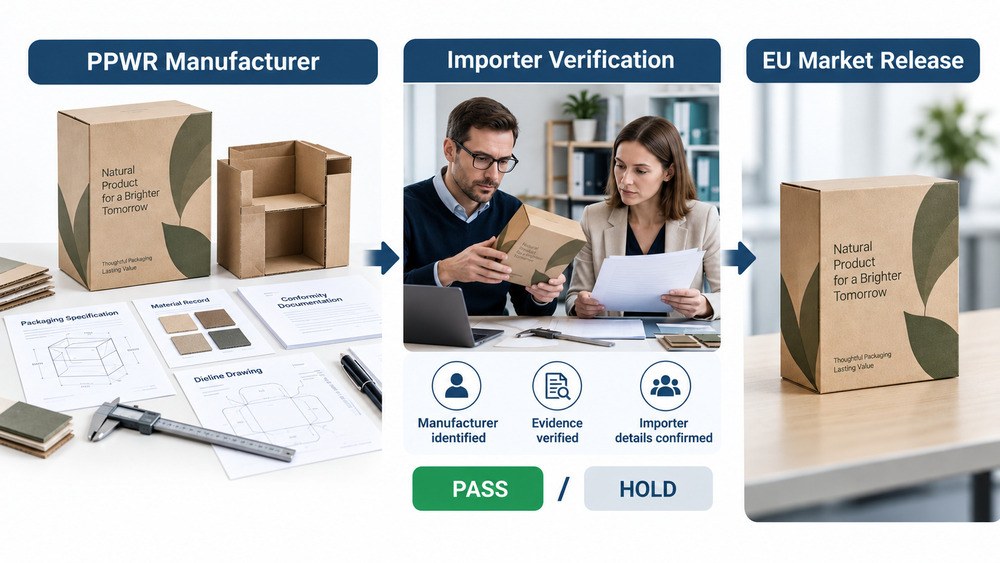
If the answer to the last question is yes, the packaging should not be placed on the EU market until the issue is resolved.
The importer must also be identifiable through its name, registered trade name or trademark, postal address and, where available, electronic contact details using the method permitted by PPWR.
One point matters especially in private-label and branded sourcing: the physical packaging factory is not automatically the PPWR manufacturer in every project. If an importer places packaging on the market under its own name or trademark, or modifies packaging in a way that could affect compliance, manufacturer obligations may apply to that importer.
The better buyer question is: “Who is legally responsible for this packaging, and what do we need to verify before release?”
EU Declaration of Conformity and Technical Documentation
The PPWR manufacturer must complete the applicable conformity assessment and prepare the required Technical Documentation. Once conformity has been demonstrated, the manufacturer must draw up the EU Declaration of Conformity.
For buyers, the issue is not how many documents the supplier can send. It is whether those documents belong to the packaging being approved.
The evidence should clearly match the current packaging design, materials, intended use and manufacturing specification.
The key question is:
“Does this evidence match the exact packaging version we are ordering?”
This is where real projects often fail. A supplier may have valid evidence on file, but a later change to the dieline, artwork or material can leave the documents tied to an older version.
Klong treats version control as part of production control. Any change to the dieline, artwork content or material is recorded in the system. Superseded documents, tooling and obsolete warehouse stock are then removed or scrapped as applicable so that an old version cannot be produced again by mistake.
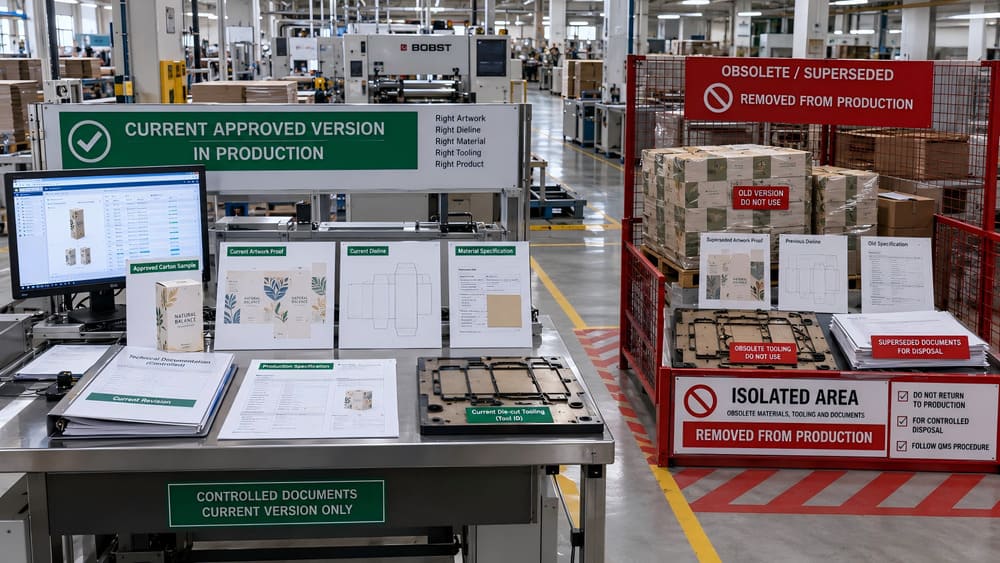
Before release, the importer should be able to confirm that:
- the responsible PPWR manufacturer is clear;
- the required conformity assessment and Technical Documentation exist;
- the EU Declaration of Conformity is available;
- the evidence matches the current packaging specification;
- any change that may affect conformity has been reviewed;
- the relevant evidence can be retrieved if requested.
The importer must also retain the required EU Declaration of Conformity and ensure access to the relevant Technical Documentation for the applicable retention period.
If the manufacturer role is unclear, the evidence cannot be matched to the current packaging, or a conformity-relevant change has not been reviewed, the packaging is not ready for EU market release.
Physical Packaging Requirements: Minimisation and Empty Space Rules
PPWR is not only about packaging materials. It also asks whether a pack uses more weight or space than the product actually needs. For buyers, that makes structure, product fit and the real packing configuration part of the compliance decision.
Packaging Minimisation: Reduce Size and Weight Without Losing Function
From 1 January 2030, packaging must be designed so its weight and volume are reduced to the minimum necessary for its function, subject to the applicable performance criteria.
That does not mean making every box as small or light as possible.
The better buyer question is:
“Can we remove material or volume without making the pack harder to produce, harder to form or less protective?”
In Klong projects, reduction continues only while three conditions remain stable:
- the structure can be mass-produced reliably;
- the box remains efficient to form and pack;
- tighter cushioning margins do not reduce product protection.
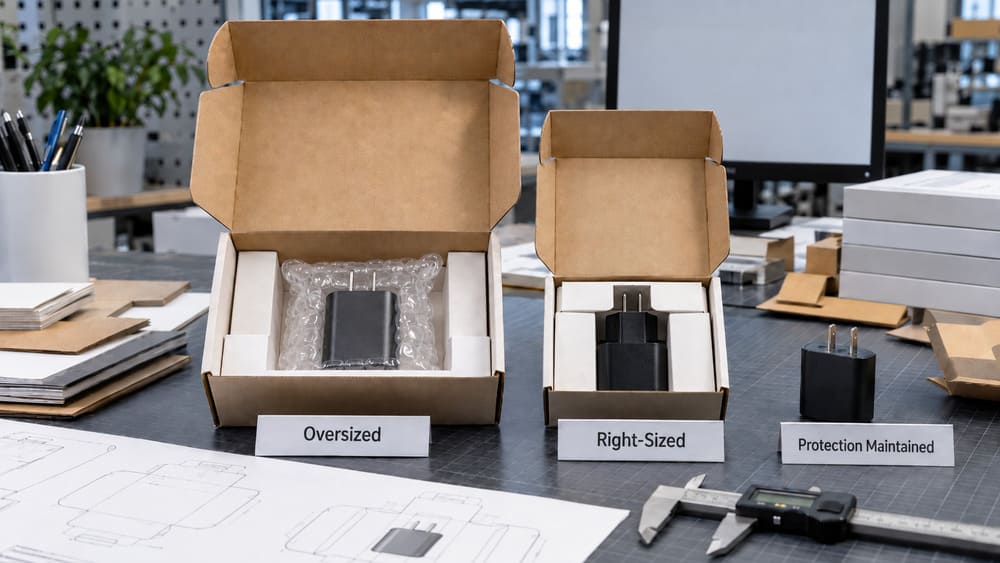
Once those conditions are met, a smaller pack can also reduce outbound freight, local storage and downstream logistics cost.
Brands may standardise the same box size, material and structure across several SKUs to reduce cost, but the shared format should still fit the actual products rather than remain oversized for convenience.
Buyers should also review features such as double walls, false bottoms or unnecessary layers when they exist only to increase perceived product volume. The question is not whether such structures look unusual, but whether they have a genuine functional reason.
The 50% Empty Space Limit: Who Controls the Final Result?
The maximum 50% empty-space rule applies specifically to grouped packaging, transport packaging and e-commerce packaging. It is not a universal 50% rule for every sales package.
The requirement applies from 1 January 2030 or three years after the relevant implementing act enters into force, whichever is later.
The key point is responsibility: the final result depends on the economic operator filling the packaging, not on the empty carton drawing alone.
A packaging manufacturer can optimise carton dimensions, internal layout, product orientation and external volume. But it cannot confirm the final result without seeing the actual packing configuration—what is packed, how it is arranged and what protective material is used.
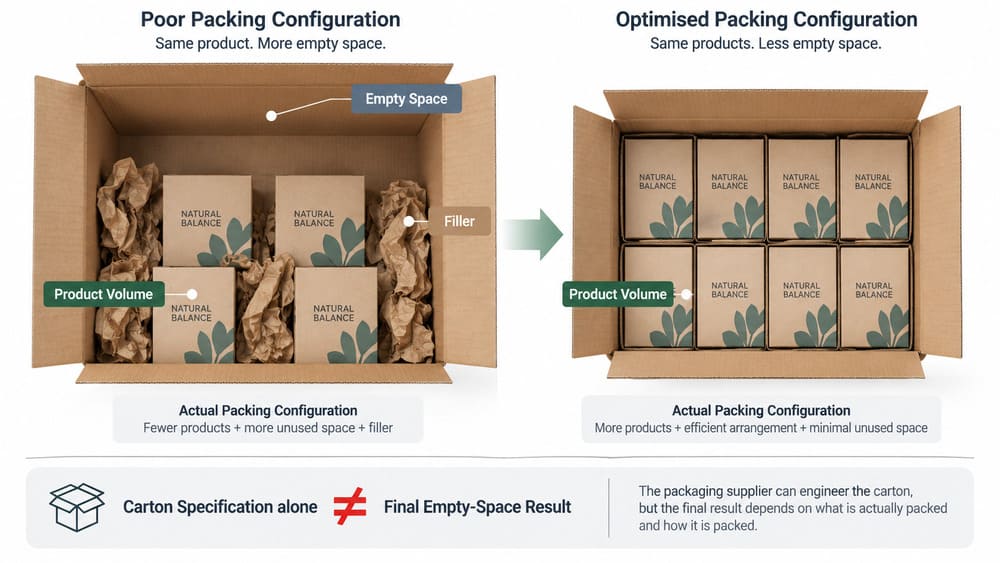
So if a supplier is asked:
“Can you guarantee this box meets the PPWR 50% rule?”
the first engineering response should be:
“Show us the actual packing configuration.”
Sales packaging does not use the same universal 50% threshold; its empty space must instead be kept to the minimum necessary for packaging functionality.
Filling Material Does Not Fix an Oversized Carton
Adding filler does not solve an oversized carton under the PPWR 50% empty-space rule.
Under PPWR empty-space logic, space occupied by common fillers such as paper cuttings, air cushions, bubble wrap or foam is still treated as empty space for this assessment.
So the answer is not:
oversized carton + more filler
Instead, review the product-to-carton fit, product orientation, insert structure and outer-carton dimensions. A good insert should protect the product and control movement without creating unnecessary external volume.
The final 50% calculation methodology still depends on the relevant EU implementing rules. Until that methodology is final, buyers should not treat a supplier-created formula as the official PPWR calculation method.
For now, the practical approach is simple: identify obvious oversizing, record the real packing configuration, and keep enough structural flexibility to resize the pack when required.
PPWR Requirements Buyers Must Prepare Before 2030
Before 2030, buyers should focus on two practical PPWR issues: PFAS evidence for food-contact packaging and future EU labelling updates. One needs attention now; the other needs preparation so it does not create unnecessary cost later.
PFAS Restrictions for Food-Contact Packaging
If the packaging is intended to come into contact with food, PPWR PFAS restrictions are already relevant.
The buyer question is simple:
“Does the evidence match the actual finished packaging we are ordering?”
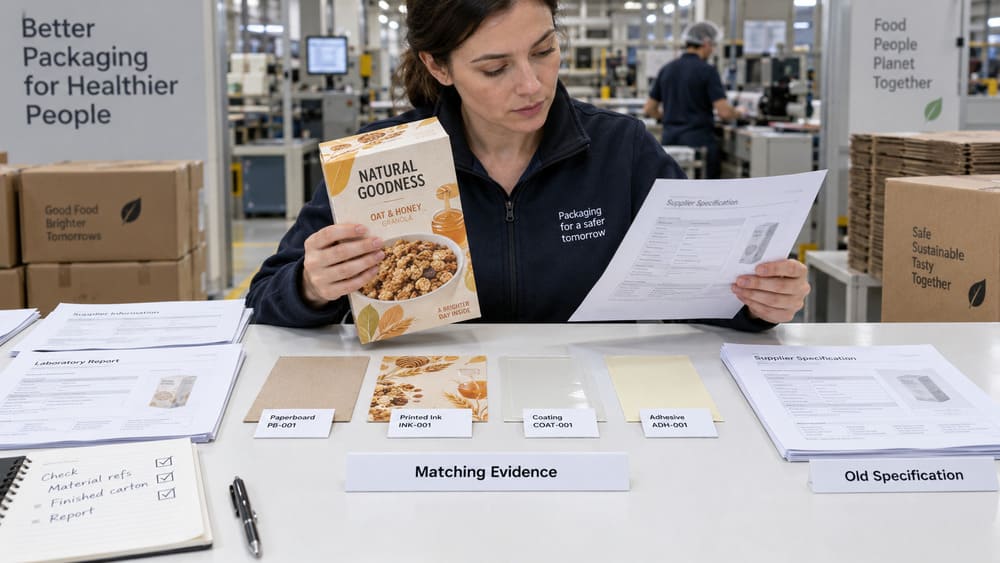
PFAS evidence should relate to the real material construction—not just the base paper or a generic supplier statement. Depending on the project, this may include supplier documentation or third-party testing where appropriate.
If an ink, adhesive, coating or paper specification changes, Klong rechecks the supporting evidence rather than assuming the previous documentation still applies.
The practical risk is straightforward: if the evidence does not match the material actually used in production, the packaging should not be treated as ready for release.
Harmonised Labelling: Keep Future Artwork Flexible
PPWR will introduce harmonised material-composition labelling, but the final official format and pictograms still depend on implementing specifications.
So buyers should not hard-code an assumed future PPWR label into artwork today.
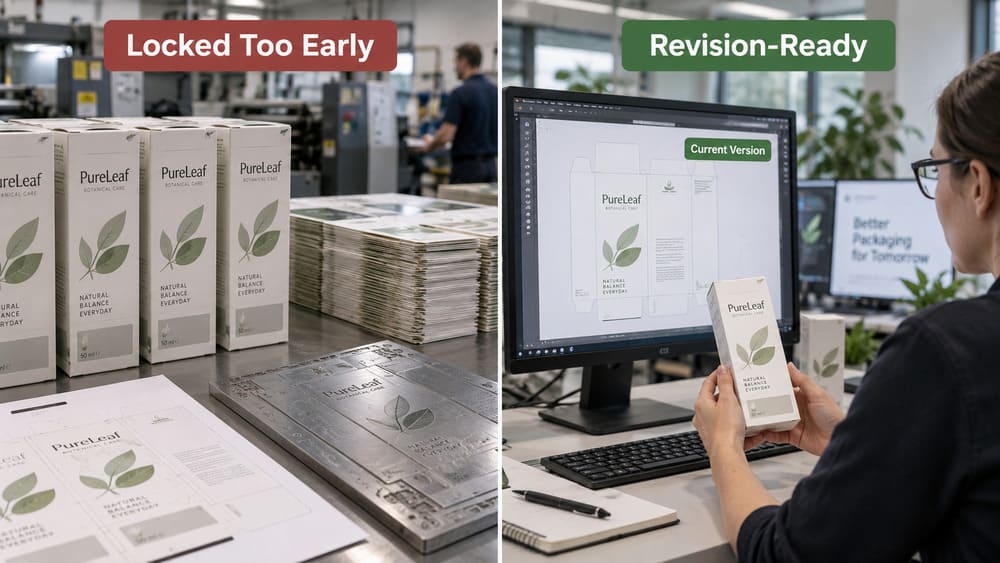
For new or revised EU packaging files, keep the artwork easy to update. Once the official format is final, it can be added directly without forcing a wider redesign.
If artwork is locked too early, the later cost may include:
- artwork revision;
- printing plate or tooling updates;
- obsolete packaging stock;
- reapproval delays.
The buyer decision is simple:
Keep future EU artwork revision-ready now, then adopt the official label once the final specification is available.
EU PPWR Compliance Timeline and 2030 Recyclability Roadmap
PPWR is a phased roadmap, not a single 2030 deadline. A packaging design approved today may still be in production when later requirements take effect.
For buyers, the practical question is:
“What is the latest PPWR milestone this packaging is likely to cross?”
EU PPWR Compliance Timeline Matrix
| PPWR Requirement | General Applicability / Milestone | What Buyers Should Know |
|---|---|---|
| General PPWR Application | 12 August 2026 | Regulation (EU) 2025/40 generally applies |
| PFAS Restrictions for Food-Contact Packaging | 12 August 2026 | Relevant food-contact packaging needs appropriate supporting evidence |
| Harmonised Labelling | 12 August 2028 | Or 24 months after the relevant implementing acts enter into force, whichever is later |
| Packaging Minimisation | 1 January 2030 | Weight and volume must be reduced to the minimum necessary for function |
| 50% Empty Space Ratio | 1 January 2030 | Or 3 years after the relevant implementing act enters into force, whichever is later |
| Grade A / B / C Recyclability Requirement | 1 January 2030 | Or 24 months after the relevant delegated acts enter into force, whichever is later |
| Recycled-at-Scale Assessment | 1 January 2035 | Or 5 years after the relevant implementing act enters into force, whichever is later |
| Grade C Phase-Out | 1 January 2038 | Grade C packaging can no longer be placed on the EU market |
PPWR is a phased roadmap, and some dates move with delegated or implementing acts. In long-running packaging programs, the same structure or tooling may still be in use when a later milestone takes effect.
Recyclability Performance Grades: A, B and C
PPWR already defines the recyclability performance thresholds:
- Grade A: ≥95%
- Grade B: ≥80%
- Grade C: ≥70%
But the final EU method for deciding whether an actual packaging design achieves Grade A, B or C is still being completed through the official Design for Recycling criteria and grading methodology.
In simple terms:
The thresholds are known. The final method for scoring a real box is not yet fully available.
So a box that is 95% paper by weight does not automatically achieve Grade A. Its final grade will depend on how the complete packaging unit performs under the official PPWR assessment method.
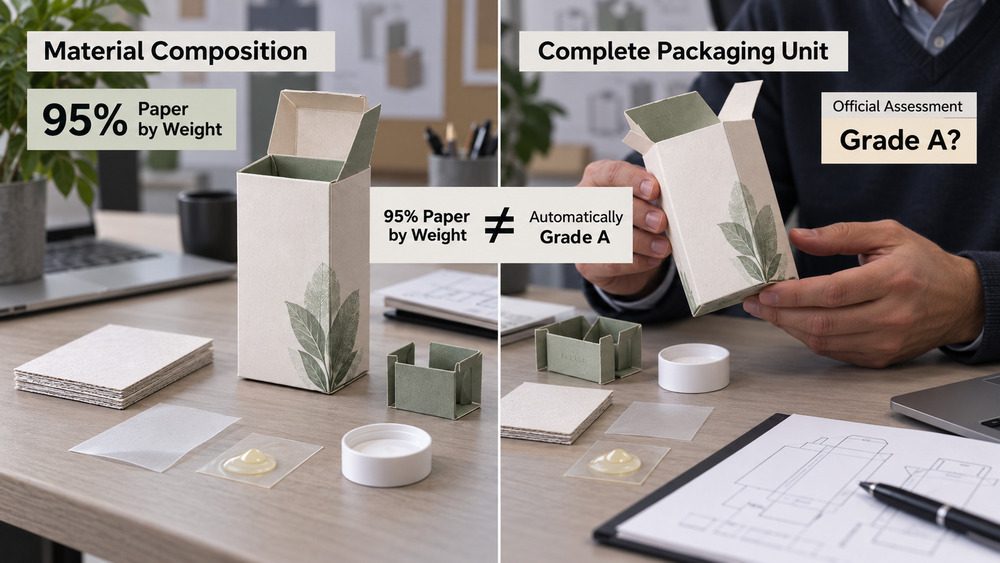
Grade C ≥70% also does not mean:
- 70% recycled content;
- 70% paper by weight;
- a 70% packaging-waste recycling target.
The Phase-Out Timeline: 2030, 2035 and 2038
The roadmap is easiest to understand in three steps:
2028 — How will a real package be graded?
The Commission is required to establish the detailed Design for Recycling criteria and grading methodology through delegated acts.
2030 — Can it achieve A, B or C?
Packaging must meet at least Grade C under the applicable PPWR recyclability methodology.
2035 — Is it also recycled at scale?
The assessment becomes stricter by adding whether the packaging category is actually recycled at scale.
2035 does not phase out Grade C; it adds the recycled-at-scale requirement. Grade C is phased out in 2038.
2038 — Is it at least Grade B?
Grade C packaging can no longer be placed on the EU market. Grade A or B becomes the minimum acceptable recyclability level.
For buyers, the reason to act now is simple: the final grading method may still be developing, but obvious redesign risks can already be reduced.
Where technically feasible, buyers can already:
- reduce unnecessary plastic components;
- avoid unnecessary packaging volume and empty space;
- keep long-life packaging structures and artwork easy to update.
Do not wait for the final A/B/C methodology to remove obvious risks. Simplify what can be simplified now, then validate the final recyclability grade once the official assessment method is available.
FAQ: EU PPWR Packaging Compliance Questions Importers Ask
EU importers need clear answers on what applies now, what evidence must be verified, and which future PPWR deadlines could affect packaging already in production.
When does the EU PPWR take effect?
Regulation (EU) 2025/40 generally applies from 12 August 2026, but PPWR is not a single-deadline regulation. Labelling, packaging minimisation, empty-space and recyclability requirements phase in later, and some dates depend on delegated or implementing acts.
Does PPWR apply to packaging made outside the EU?
Yes. PPWR can apply to packaging made in China, Taiwan, Vietnam or elsewhere outside the EU if it is placed on the EU market. The EU importer must still verify the required conformity evidence before market placement.
Who is responsible for PPWR compliance, and can an EU importer rely on the supplier alone?
Manufacturers, importers and distributors have different PPWR obligations. The manufacturer prepares the required conformity evidence, while the EU importer must verify that the applicable requirements and documents are in place. A supplier saying “PPWR compliant” is not sufficient by itself.
What PPWR documents should an EU importer request from a packaging supplier?
Importers should verify the applicable Technical Documentation and EU Declaration of Conformity, together with the packaging specification, intended use, material information and supporting evidence. The key is not just having documents, but confirming they match the exact packaging version being ordered.
Does the PPWR 50% empty-space rule apply to all packaging?
No. The 50% maximum empty-space ratio applies specifically to grouped packaging, transport packaging and e-commerce packaging. Sales packaging does not use the same universal 50% threshold and instead follows the broader packaging-minimisation requirement.
Who is responsible for meeting the PPWR 50% empty-space limit?
The obligation is linked to the economic operator filling the applicable packaging. A packaging manufacturer can optimise carton dimensions and internal layout, but the final result depends on the actual product-loading, protective material and fulfilment configuration.
Do filling materials count as empty space under PPWR?
Yes. Common fillers such as paper cuttings, air cushions, bubble wrap and foam are relevant to the PPWR empty-space assessment. Adding filler does not turn unused carton space into product volume. Final calculations must follow the applicable official methodology.
When do PPWR labelling requirements start?
Harmonised material-composition labelling applies from 12 August 2028 or 24 months after the relevant implementing acts enter into force, whichever is later. Until the final official format is available, buyers should keep EU artwork revision-ready instead of locking in an assumed future label.
Does PPWR require PFAS testing for all paper packaging?
No. The PPWR PFAS restrictions discussed here are specifically relevant to packaging intended to come into contact with food. Evidence should match the actual finished packaging and intended use; this is not a universal PFAS-testing requirement for every paper packaging project.
Do packaging companies need an A, B or C recyclability grade now?
Not yet. PPWR defines the Grade A, B and C thresholds, but the detailed method for grading a real packaging design is still being finalised. From the relevant 2030 deadline, packaging must reach at least Grade C; from 1 January 2038, at least Grade B is required.
Conclusion: Don’t Let PPWR Block Your EU Market Entry
Discovering a compliance gap after shipment guarantees dead stock, rework fees, and a hard stop at EU customs.
Don’t pay for packaging you can’t legally sell.
Work with a manufacturer who builds PPWR documentation and empty-space compliance into your project long before production starts.