
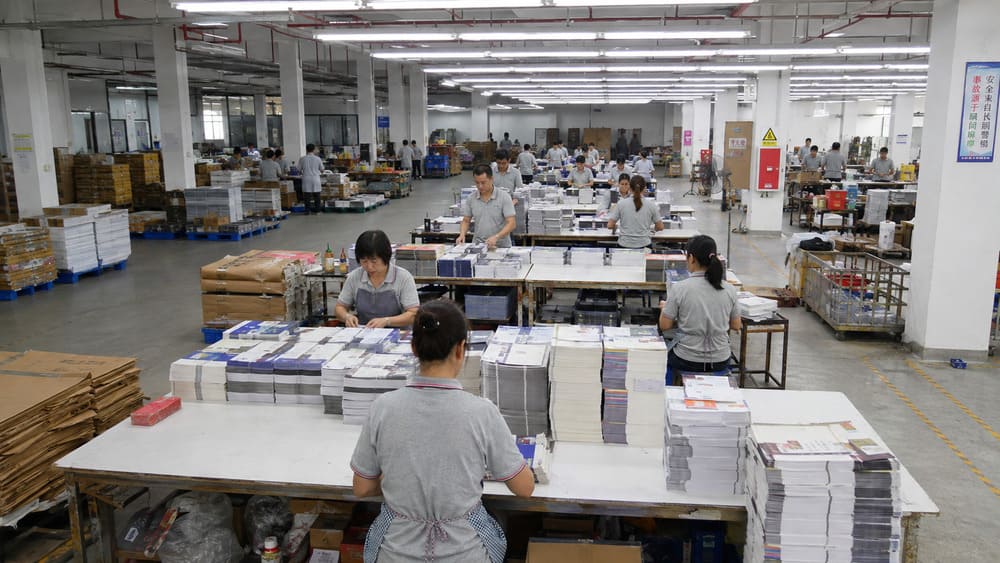
The sample is approved. The 200-piece pilot looks good. Is the packaging now ready for bulk production? Not necessarily.
Small folding problems, material variation, slow assembly, or inconsistent appearance may be manageable in a pilot run but become quality, labor, and delivery risks when repeated thousands of times.
This article shows buyers how to determine whether a project is ready for custom packaging mass production before scaling volume.
Table of Contents
Why a Successful Pilot Run Does Not Automatically Mean Mass Production Is Ready
A successful pilot proves the packaging can be produced at limited volume. Mass-production readiness depends on whether the same result can be repeated without excessive adjustment, rework, or operator intervention.
What a Pilot Run Actually Proves
A pilot run tests whether the approved packaging can work under real production conditions. Before reaching this stage, the packaging sampling process should already have confirmed the approved structure, materials, and specifications.
It helps verify:
- Structure
- Assembly
- Material behavior
- Production handling
- Initial consistency
But the finished result is only part of the evidence.
Buyer Decision Point:
Do not ask only whether the pilot passed. Ask what had to be done to make it pass.
If acceptable units depend on frequent adjustment, extra handling, or operator correction, the packaging may be producible—but the process may not yet be ready to scale.
Engineering Insight:
A pilot proves feasibility. It should also reveal how difficult that result is to reproduce.
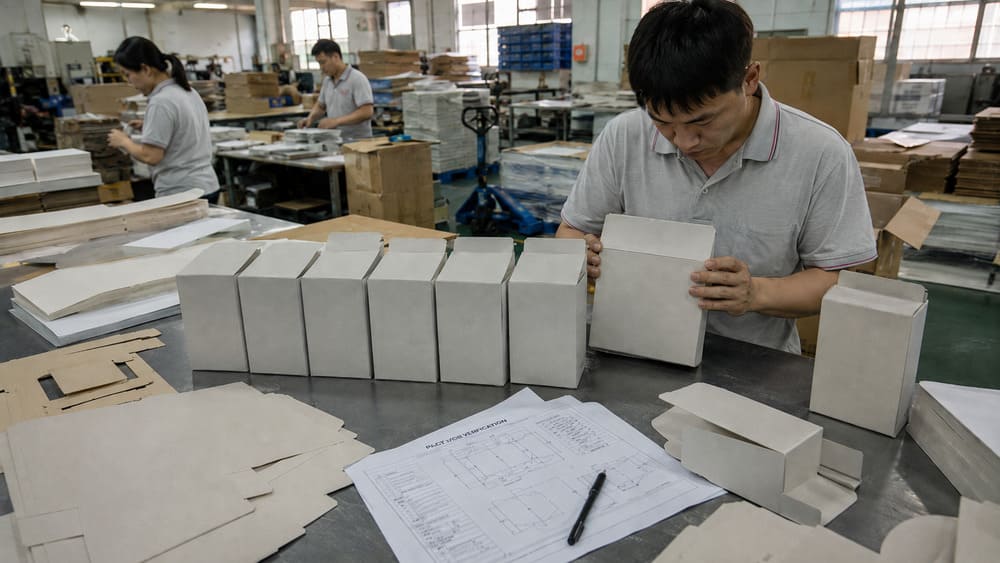
What Changes When Production Volume Increases
Higher volume makes small process weaknesses repeat at scale:
- Process variation
- Material inconsistency
- Assembly bottlenecks
- Printing variation
- Scheduling pressure
A minor issue at pilot scale can become a quality, labor, or delivery problem when repeated across mass production.
Engineering Insight:
Mass production does not only multiply units. It multiplies whatever is inefficient or unstable in the process.
What Buyers Should Validate Before Scaling Custom Packaging to Mass Production
Production readiness means the packaging can still be produced consistently as normal variation, repetition, and production workload increase.
Structural Consistency
Check whether multiple units behave consistently in:
- Folding
- Product fit
- Closure
- Structural stability
- Assembly
Do not judge the structure by one good unit. Watch whether operators repeatedly need to press, reshape, realign, or manually correct the packaging.
Buyer Decision Point:
A structure that needs frequent operator correction may be producible, but it is not yet proven repeatable at scale.
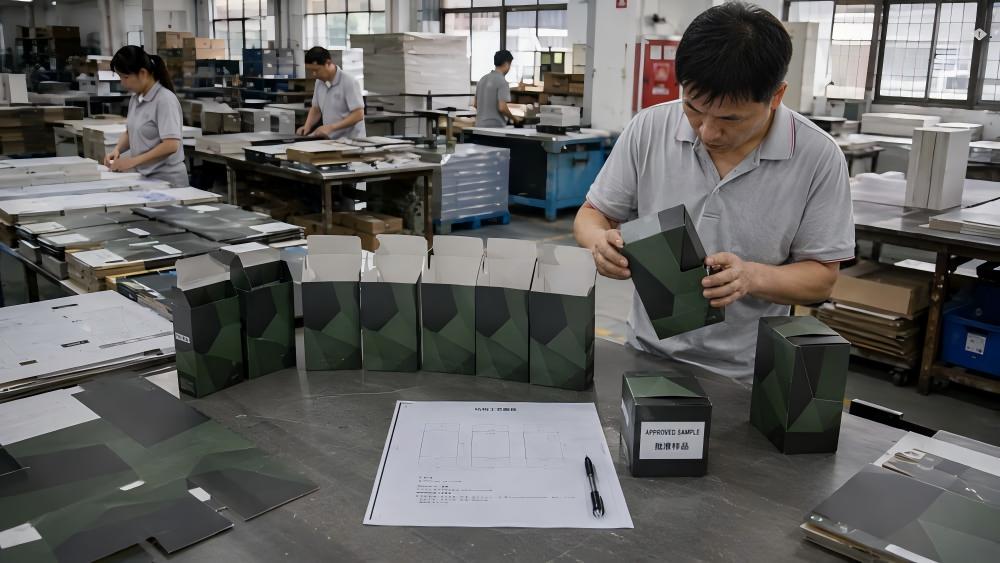
Material Consistency
Check:
- Material specification
- Thickness
- Stiffness
- Folding behavior
- Protection performance
A pilot may look consistent within a narrow material batch. Higher volume can expose normal batch or environmental variation that was less visible earlier.
The important question is not only whether the material meets specification, but whether normal material variation changes folding, fit, protection, or assembly enough to destabilize production.
Engineering Insight:
A production-ready design should tolerate normal material variation without becoming difficult to manufacture consistently.
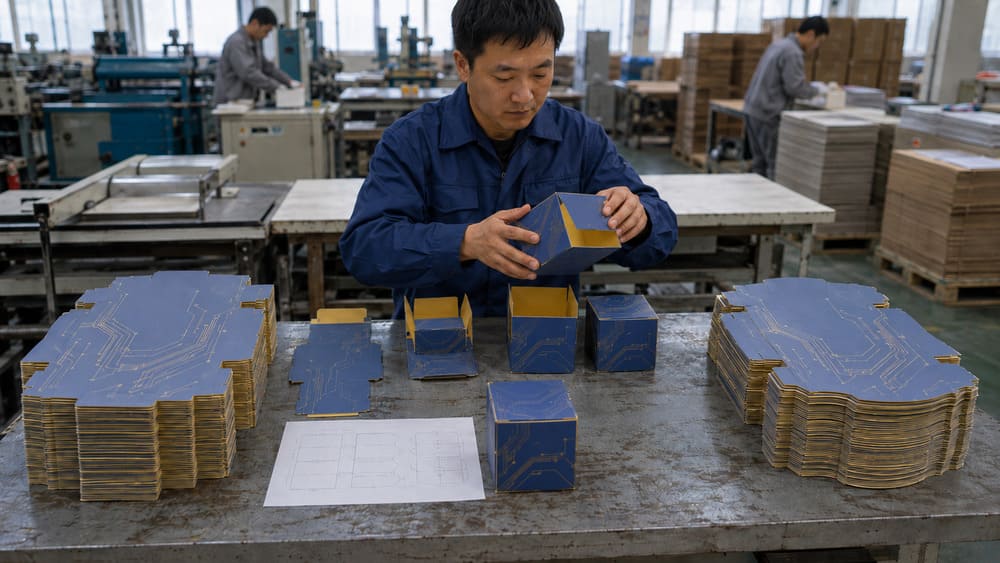
Printing and Appearance Consistency
Before scaling, define which appearance requirements are critical:
- Artwork position
- Color expectations
- Print alignment
- Overall appearance
Minor process variation becomes easier to see across a larger production lot.
Critical visual standards should therefore be agreed before production release, not interpreted after the full lot has already been produced.
Assembly and Production Efficiency
Check:
- Manual assembly complexity
- Repeated folding steps
- Gluing requirements
- Packing workflow
- Labor dependency
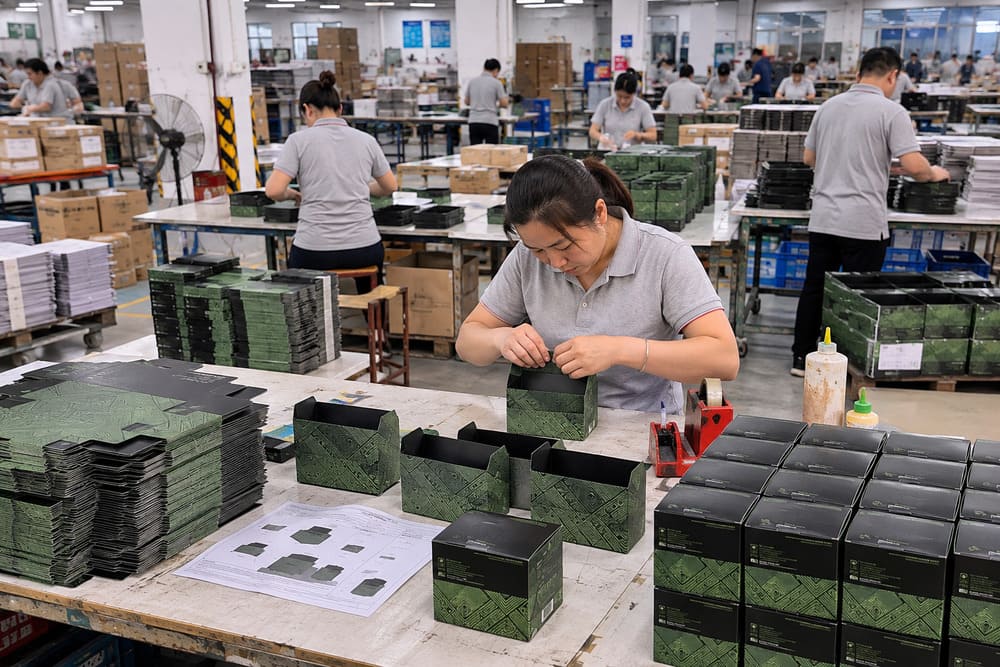
A structure may appear easy during a pilot because operators have time to correct individual units. At higher volume, those same corrections become repetitive labor and can slow the production flow. When assembly becomes a meaningful part of downstream cost, the packaging assembly cost should also be evaluated before the structure is scaled.
Buyer Decision Point:
Ask whether the packaging is genuinely easy to assemble—or only appears easy because pilot operators are compensating for the design.
Quality Control Requirements Before Production Release
Before scaling, define:
- Approved production reference
- Key specifications
- Critical quality expectations
- Inspection requirements
Production and QC teams should work from the same approved standard before volume increases. Buyers who need the deeper inspection logic can review Klong’s packaging quality control process.
Do not wait until mass production is running to decide what variation is acceptable. Unclear standards at that stage can turn normal variation into rework, disputes, or release delays.
Engineering Reality Check — What Pilot Runs Should Expose Before Scaling
The purpose of a pilot run is not to prove that everything is perfect. It is to expose weaknesses while the quantity is still small enough to correct them.
Small-volume issue → Repeated process → Higher-volume exposure → Operational or quality risk
If the pilot reveals repeated manual correction, sensitivity to normal material variation, unclear appearance standards, or excessive assembly handling, those issues should be corrected before volume increases.
Core Engineering Insight:
Scaling magnifies small inefficiencies. A minor inconvenience during a pilot can become a significant quality, labor, or lead-time problem when repeated across mass production.
How to Scale Custom Packaging Mass Production from a 200-Piece Pilot Run
Moving from a 200-piece pilot to mass production should be a controlled release—not simply a larger purchase order. The goal is to freeze what worked, close what did not, and keep the controls that made the pilot repeatable.
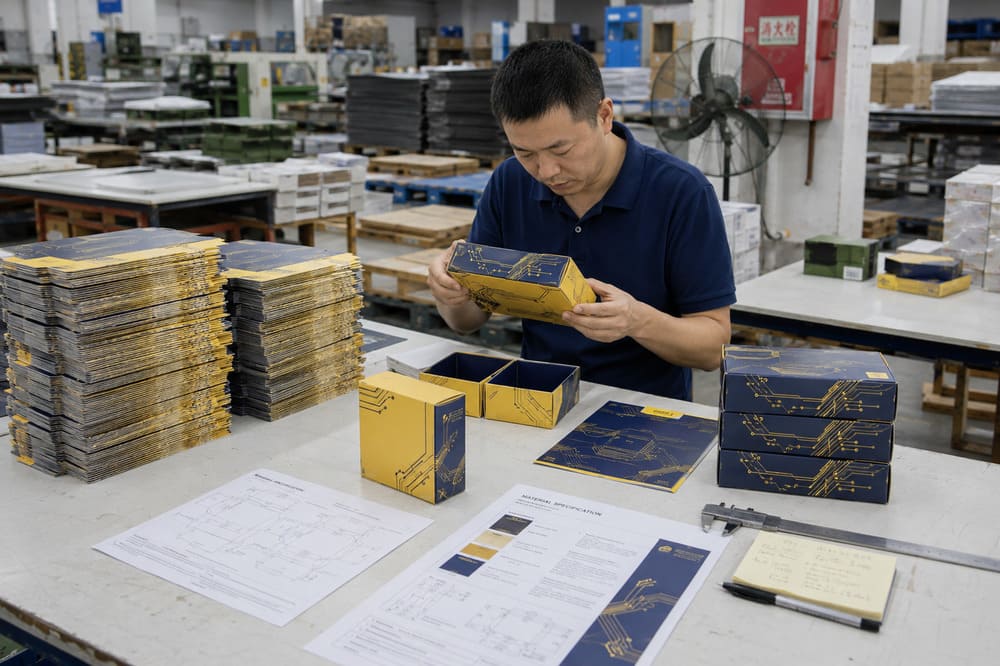
Step 1 — Lock the Approved Production Specification
Before increasing volume, confirm:
- Final structure
- Material specification
- Artwork
- Dimensions
- Assembly requirements
Buyer Decision Point:
Do not scale production while major specifications are still changing. Every late change introduces a variable the pilot may not have validated.
Step 2 — Resolve and Recheck Pilot Issues
Review any:
- Production difficulties
- Assembly bottlenecks
- Material behavior issues
- Appearance variation
- Quality concerns
Known pilot issues should be corrected and rechecked before volume increases. A problem found during the pilot should not be carried into mass production on the assumption that it will disappear at scale.
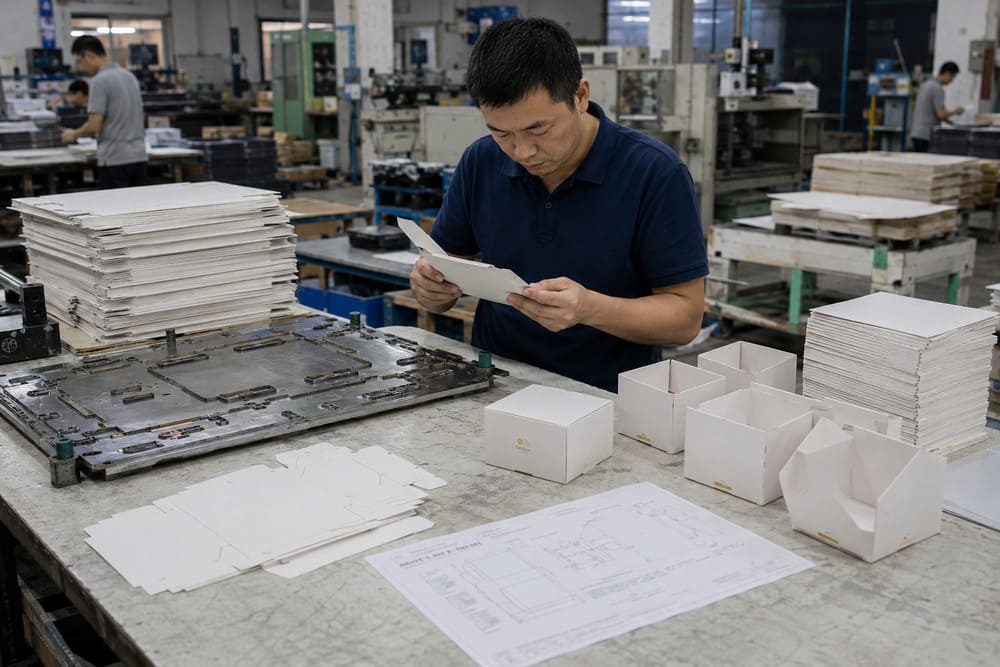
Step 3 — Confirm Tooling and Production Readiness
Before release, verify that:
- Required tooling is complete
- Tooling supports the approved structure
- The production plan supports the intended volume
- The process does not depend on pilot-stage workarounds
Tooling readiness is not only about having a tool available. The approved packaging tooling, process, and production plan must support the version that will actually be manufactured at scale.
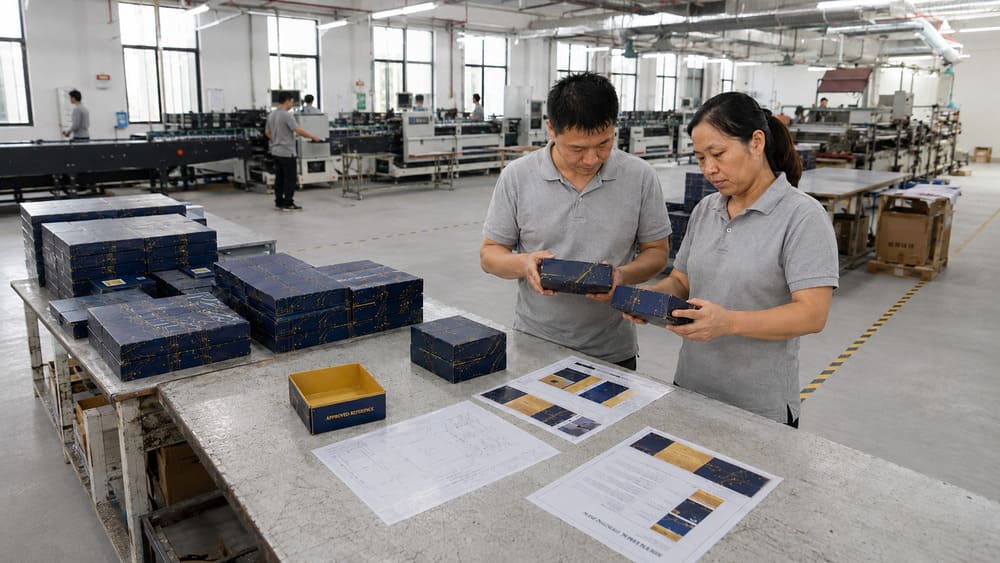
Step 4 — Establish One Mass Production Control Reference
Mass production should be released against clearly approved references:
- Approved sample
- Final specifications
- Material requirements
- Artwork requirements
Engineering Insight:
Scaling becomes more predictable when production and QC teams work from one frozen approval standard, rather than changing instructions after production has started.
Step 5 — Scale Volume Without Removing Validation Controls
Higher volume should not mean reducing:
- Quality verification
- Production monitoring
- Specification control
A project is ready to scale when these conditions remain true:
Higher Volume + Repeatable Process + Controlled Variation + Stable Quality
Mass Production Release Gate
Release mass production only when:
- Specifications are frozen
- Known pilot issues are closed and rechecked
- Tooling and production planning are ready
- One approved production reference is established
- Validation controls remain in place
Mass production should be released because uncertainty has been reduced—not simply because the pilot quantity has been completed.
FAQ: Custom Packaging Mass Production Questions Buyers Ask
Quick answers to the decisions buyers face when moving from an approved sample or pilot run into reliable mass production.
What is a pilot run in custom packaging?
A pilot run is a limited production quantity used to verify whether approved packaging can be reproduced consistently under real manufacturing conditions before larger-volume production begins.
What is the difference between sample approval and pilot production?
Sample approval confirms the packaging solution; pilot production confirms repeatability. A sample asks, “Is this the right packaging?” A pilot asks, “Can we reproduce it consistently under real production conditions?”
Why can a pilot run succeed but mass production still fail?
A pilot can produce acceptable units while hiding process variation, material sensitivity, assembly bottlenecks, or weak production controls that become more visible as volume increases. Pilot success proves feasibility; mass production requires repeatability.
When is a packaging pilot run ready for mass production?
A pilot is ready to scale when specifications are frozen, important issues are corrected and rechecked, tooling and production planning are ready, one approved production reference is established, and validation controls remain in place.
If packaging changes after the pilot run, does it need to be validated again?
If a change can affect structure, material behavior, fit, assembly, appearance, tooling, or production performance, the affected risk should be rechecked before scaling. The key question is whether the change alters something the previous pilot already validated.
How many units should a custom packaging pilot run include?
There is no universal pilot quantity for every packaging project. It should be large enough to expose repeatability problems but small enough to correct issues economically. In typical Klong projects, pilot production can start from 200 pcs.
Can you skip a pilot run for a repeat packaging order?
Sometimes. If the approved structure, materials, artwork, tooling, production method, and quality requirements remain unchanged, the same level of pilot validation may not be necessary. Meaningful changes should trigger a review of the affected production risk.
Conclusion: Stop Mass Production Disasters Before They Scale
A minor defect in a 200-piece pilot run becomes an expensive catastrophe when multiplied by 50,000 units. Scaling up is your last chance to catch machine errors before they wipe out your budget and timeline.
Don’t let unverified production lines ruin your product launch.
Download the Packaging Cost & Shipping Risk Checklist to validate your factory’s production baseline, catch hidden scale-up risks, and lock in volume production with zero guesswork.