
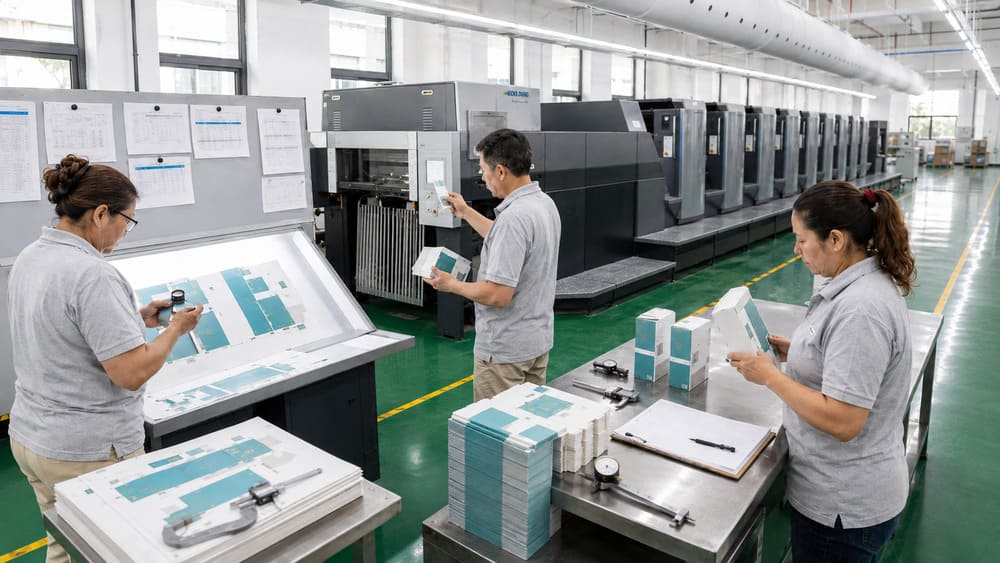
Packaging quality disputes often happen because buyers and suppliers never agreed on the same defect definitions and acceptance standard before production. AQL inspection alone cannot solve that problem—the defect criteria and quality-control responsibilities must be defined before production begins.
Table of Contents
Why Packaging AQL Standards Matter Before Production Begins
If the buyer calls a defect unacceptable but the factory calls it normal variation, the quality standard was defined too late.
A packaging AQL standard should give the buyer, supplier, and inspector the same basis for making an acceptance decision before production begins. Inspection cannot remove disagreement if nobody agreed beforehand on what should pass and what should not.
What a Packaging AQL Standard Actually Controls
AQL gives the quality team a defined benchmark for evaluating a production lot instead of deciding by opinion at the inspection table.
For Klong projects, AQL 1.0 is used as the quality inspection benchmark. But the number only becomes useful when the inspection standard and acceptance criteria are agreed in advance.
Otherwise, one party may record a defect while another considers the same condition acceptable—and the discussion starts after the goods are already produced.
Why “Looks Acceptable” Is Not a Quality Standard
“Looks acceptable” can mean something different to every person reviewing the packaging.
A carton may look fine but still fall outside the agreed dimensional requirements. A visible print variation may still be acceptable if it remains within the agreed appearance criteria. That is why buyers should define the project requirements that matter before production, including:
- Dimensions
- Structure
- Printing appearance
- Assembly
- Material condition
The goal is not to eliminate every possible variation. It is to remove ambiguity about which variations are acceptable and which are defects.
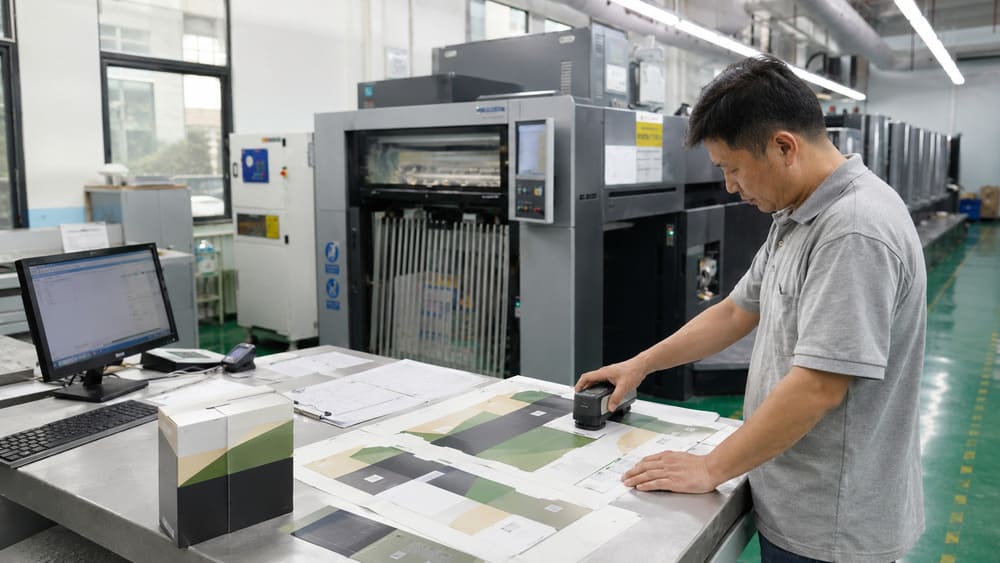
AQL Should Work Together With Defect Classification
AQL helps determine how a production lot is evaluated. Defect classification defines how serious an individual issue is. Both need to be agreed before inspection.
That changes the question from:
“Did we find defects?”
to:
“What kind of defect is this, and should it affect the release decision?”
Critical, Major and Minor Defects: How Packaging Teams Should Define Quality Risk
The same physical defect may be Minor in one project and Major in another because severity depends on how it affects the buyer’s approved requirements—not on the defect name alone.
Critical Defects: Safety, Compliance or Serious Functional Risk
Critical defects are the highest-severity issues because they may create an unacceptable safety, compliance, or fundamental product-use risk.
Depending on the project, examples may include:
- Packaging that cannot safely contain or protect the product
- A serious structural failure that prevents intended use
- Materially incorrect required product or regulatory information
Classification should follow the project’s product, customer, and destination-market requirements.
Major Defects: Problems That Affect Function, Fit or Customer Acceptance
Major defects are often where buyer and factory expectations diverge most. They may not create an immediate safety risk, but they can still make the packaging unsuitable for use or unacceptable to the customer.
Typical examples may include:
- Incorrect dimensions that affect product fit
- Folding or gluing problems that interfere with assembly
- Significant print misalignment
- Material performance outside agreed requirements
- Appearance issues that conflict with the approved brand standard
A scratch, stain, color difference, or forming detail may be Minor in one project but Major in another if appearance or presentation quality has been defined as an important acceptance requirement.
For standard projects, visual color comparison with the approved sample may be enough. If LAB or ΔE control is required, it should be agreed before sampling and production so measurements can be recorded during printing—not introduced after delivery.
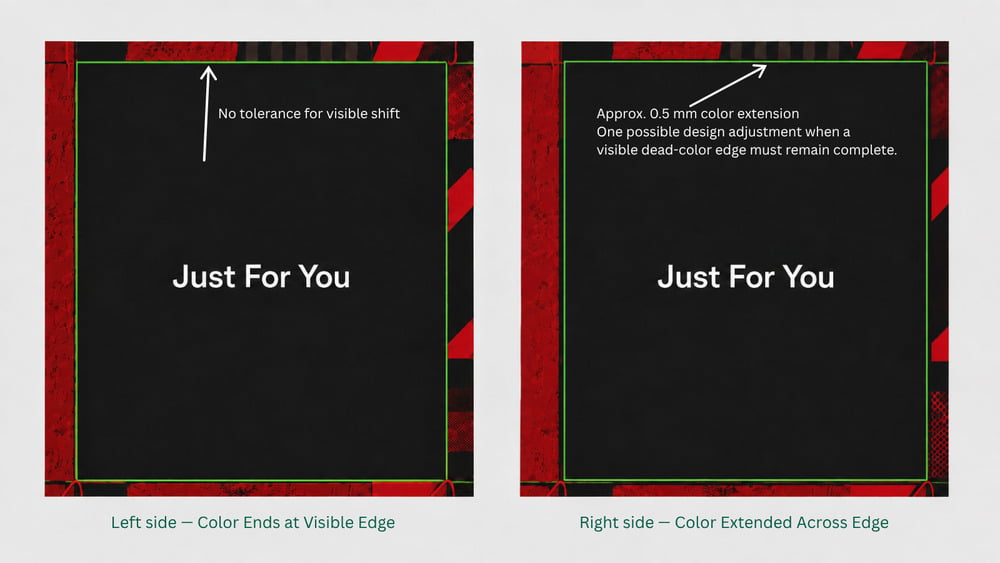
If a solid-color panel must visually end exactly at the edge, even a small die-cut variation can become commercially important. A DFM review of artwork and die-line alignment can identify this risk before production. One practical option is to extend the color area about 0.5 mm onto the adjacent panel to absorb normal manufacturing variation.
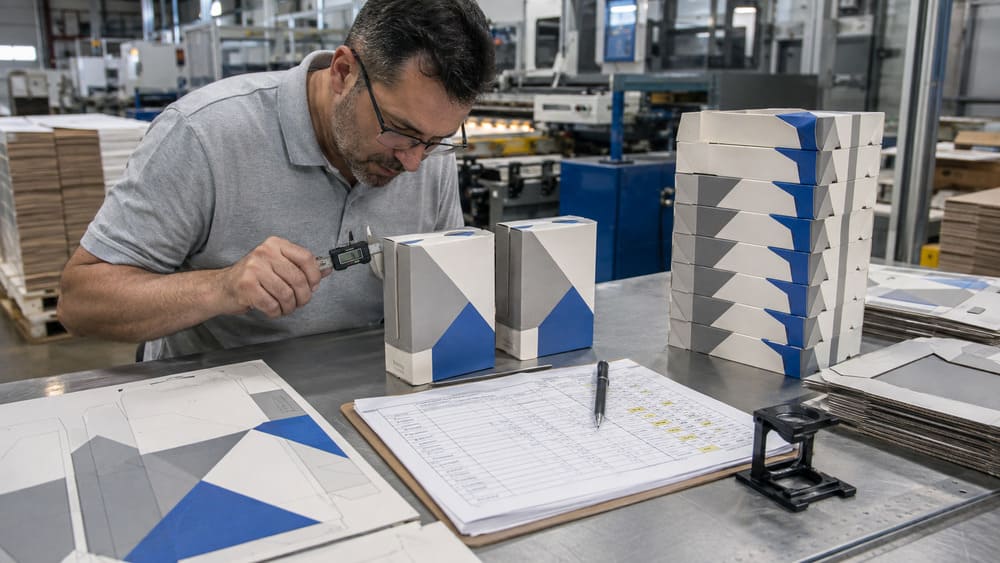
Fit also needs physical verification. A confirmed drawing or 3D model does not remove real manufacturing tolerance. Where fit is critical, sample approval should confirm actual fit and dimensional tolerance, not rely on CAD dimensions alone.
If severity is only disputed at final inspection, the goods are already finished. The remaining choices become disposition decisions—special acceptance, sorting, rework, replacement, or remake.
Minor Defects: Limited Variation That Does Not Prevent Intended Use
Minor defects are lower-severity workmanship or cosmetic issues that fall outside the agreed standard but do not normally prevent the packaging from performing its intended function.
Examples may include small paper marks, light dirt spots, or limited cosmetic variation, provided they do not affect:
- Function
- Fit
- Required print content
- Structural stiffness
- Required branding or product information
- Obvious visual consistency with the approved sample
A cosmetic defect is not automatically Minor.
Price-priority projects may accept wider cosmetic variation, but core functional and approved-sample requirements still apply. Some batch-to-batch print variation is a normal manufacturing reality; what matters is whether it stays within the approved project expectation.
Packaging Defect Classification Matrix
| Defect Class | What Makes It Serious | Typical Project Impact | What Should Be Agreed Before Inspection |
|---|---|---|---|
| Critical | Safety, compliance, or fundamental function | Creates an unacceptable product or use risk | Define project-specific non-acceptable conditions |
| Major | Function, fit, assembly, or important appearance | May affect use, brand expectations, or customer acceptance | Define measurable criteria and representative defect examples |
| Minor | Limited workmanship or cosmetic variation | Does not normally prevent intended use | Define the acceptable workmanship boundary |
The goal is simple: the buyer, factory, and inspector should make the same decision when they see the same issue.
For standard packaging projects, established workmanship expectations and an approved sample may be enough. Tighter criteria are needed when appearance, function, fit, color, or brand presentation carries higher commercial risk.
Buyer priority → Factory feasibility review → Agreed defect criteria → Inspector verification
A third-party inspector should verify the agreed standard—not create a new one at the inspection table.
Packaging Quality Control Process: From IQC and IPQC to FQC and OQC
Quality problems should be controlled during production—not discovered only when the shipment is almost ready.
A practical packaging QC chain is:
IQC → First Article Inspection → IPQC → FQC → OQC → Shipment Release
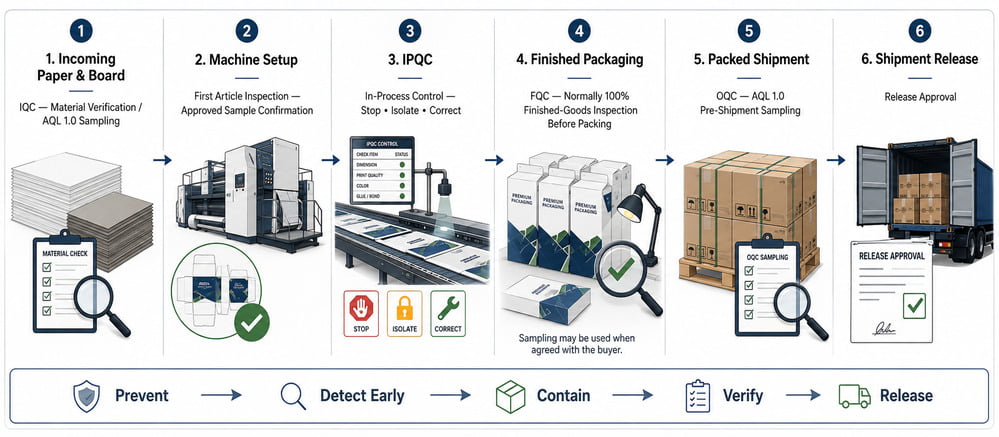
Each stage answers a different buyer question: Is the material correct? Did production start correctly? Is the process still under control? Have the finished goods been checked? Is the packed shipment ready to release?
IQC — Incoming Quality Control: Stop Material Problems Before Production
IQC checks incoming materials before they enter production. For incoming paper materials, Klong uses AQL 1.0 sampling together with checks such as paper type, basis weight, brightness, grain direction, and clear batch identification for FIFO control.
The purpose is simple: stop material problems before printing, converting, assembly, and labor are added.
IPQC — In-Process Quality Control: Stop Problems Before the Next Process
IPQC controls quality while production is still running. Where applicable, it begins with First Article Inspection after machine setup or a process adjustment. The first output is checked against the approved customer sample through a typical confirmation flow:
Machine operator self-check → IPQC confirmation → Project/account confirmation when customer-specific requirements need another review
Depending on the process, checks may include:
- Color and print appearance
- Dimensions
- Die-cut position
- Folding or structural condition
- Gluing or assembly result
- Workmanship against the approved reference
First Article Inspection answers “Did production start correctly?” Ongoing IPQC answers “Is the process still producing the approved result?”
If a problem is detected before defective output is produced, the process can be stopped and adjusted. If some affected pieces already exist, they should be isolated for sorting or rework rather than allowed to move into the next process.
The core rule is: do not pass a known problem forward.
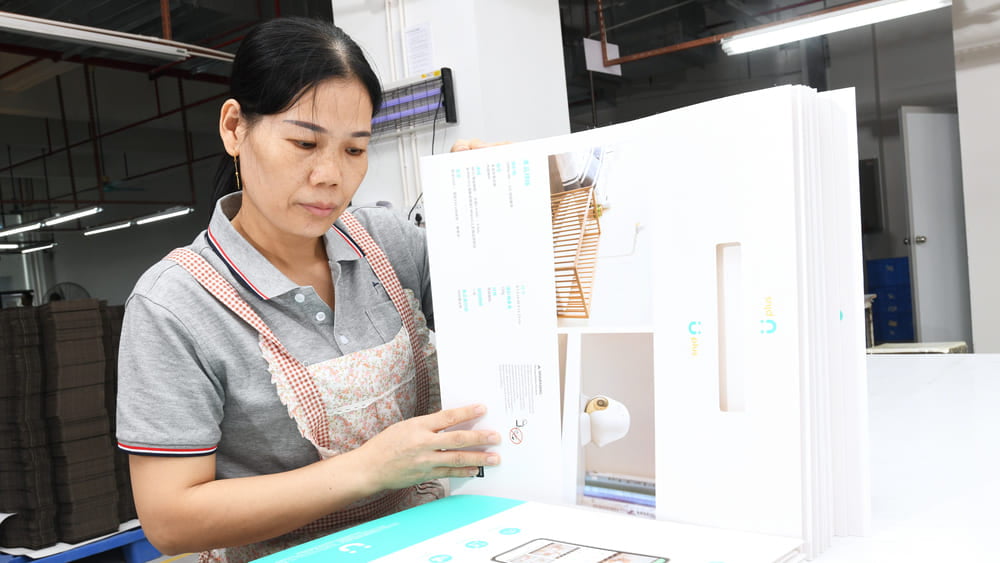
FQC — Final Quality Control: Check Finished Goods Before Packing
FQC checks completed packaging before it is packed for shipment. In typical Klong projects, finished goods are normally 100% inspected before packing. If the buyer has specifically agreed that full inspection is not required, an agreed sampling approach may be used instead.
Checks are made against the approved project requirements, including:
- Approved sample or quality reference
- Final specification
- Critical, Major, and Minor defect criteria
- Workmanship and appearance requirements
The purpose is to contain finished defects before packing, rather than discover them after the shipment has already been prepared.
OQC — Outgoing Quality Control: Verify the Packed Shipment Before Release
OQC is the final pre-shipment quality and release check after finished goods have been packed. Depending on the project, it may verify:
- Correct product or version
- Quantity
- Outer carton condition
- Labels or carton markings
- Packing method
- Conformity with the approved sample
- Required release records
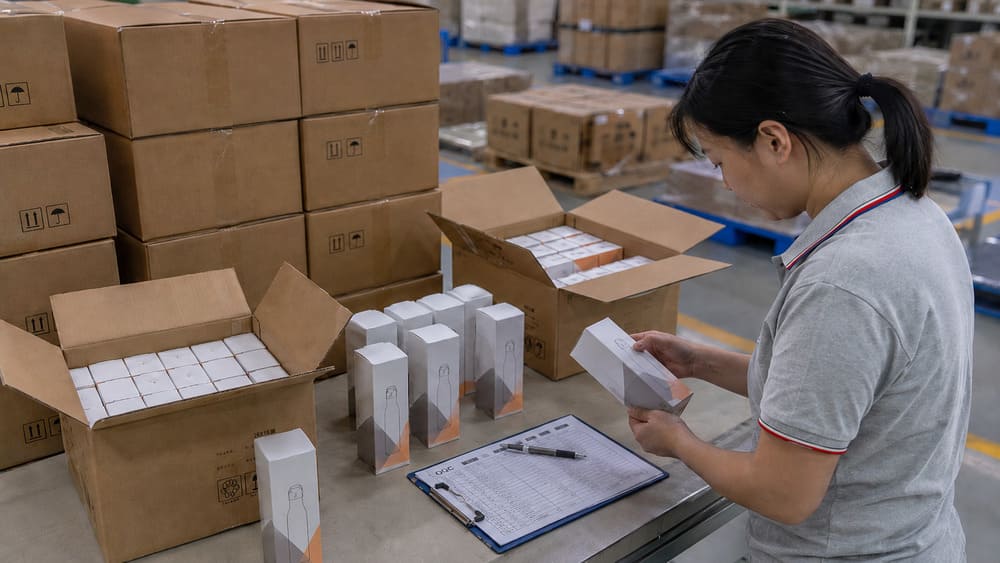
For Klong projects, AQL 1.0 is used for pre-shipment sampling inspection.
The difference between FQC and OQC is practical:
FQC checks the finished packaging before packing.
OQC samples and verifies the packed shipment before release.
If OQC finds a questionable condition, the inspector does not release the shipment alone. The issue is escalated internally, and if the agreed standard does not clearly resolve it, the buyer is consulted before shipment.
Why IQC, IPQC, FQC and OQC Must Work as One Quality Control System
The full packaging quality control process is:
Incoming Material → IQC → First Article Inspection → IPQC → FQC → OQC → Shipment Release
The logic is straightforward:
Prevent → Detect Early → Contain → Verify → Release
IQC prevents unsuitable material from entering production. First Article Inspection confirms the starting condition. IPQC stops process drift from moving forward. FQC contains finished defects before packing. OQC verifies the packed shipment before release.
Waiting until the end turns quality control into defect sorting. Progressive control gives the buyer more chances to contain a problem before it becomes a shipment problem.
What Quality Records Should Buyers Expect to See?
A functioning QC process should leave evidence that the controls actually happened. At a high level, buyers may expect:
- Incoming and in-process inspection records
- Approved samples or quality references
- Batch or production traceability
- Documented inspection criteria
- Final inspection and release records where applicable
The useful question is not whether a supplier says it has a QC system. It is whether the buyer can see what was checked, which reference was used, and how the lot was released.
For a deeper review of the records and manufacturing evidence buyers should request, see the Packaging Supplier Evidence Pack.
FAQ: Packaging AQL Standard and Quality Inspection Questions
These answers cover the most common buyer questions about AQL inspection, packaging defect classification, sampling, quality-control stages, and shipment release. The goal is to make the inspection logic clear before production—not after a quality dispute occurs.
What is AQL in packaging inspection, and what does AQL 1.0 mean?
AQL (Acceptance Quality Limit) is a sampling-based acceptance benchmark used to evaluate a production lot against agreed quality criteria. Klong uses AQL 1.0 where AQL sampling applies, but AQL 1.0 does not simply mean that 1% defective products are automatically acceptable; the result depends on the agreed sampling plan and acceptance criteria. See an AQL sampling table and calculator for sample-size and Ac/Re examples.
How many pieces should be inspected in an AQL inspection?
The number of pieces inspected depends on the production lot size and the agreed inspection level or AQL sampling plan, not on an arbitrary percentage of the order. The applicable sampling table then determines the sample size and corresponding Ac (accept) and Re (reject) criteria.
What is the difference between Critical, Major and Minor packaging defects?
Critical defects involve the highest-severity safety, compliance, or fundamental-use risk. Major defects meaningfully affect function, fit, assembly, appearance, or customer acceptance. Minor defects are lower-severity workmanship or cosmetic issues that do not normally prevent intended use. Actual classifications should be agreed for each project.
Can a packaging lot pass AQL inspection and still contain defects?
Yes. AQL evaluates a production lot through sampling, so passing an AQL inspection does not mean every unit is defect-free. This is why clear defect criteria, in-process controls, finished-goods inspection, and pre-shipment sampling still matter even when a lot passes AQL inspection.
What is the difference between IQC, IPQC, FQC and OQC?
IQC checks incoming materials, IPQC controls quality during production, FQC checks finished packaging before packing, and OQC verifies the packed shipment before release. Together, they control packaging quality progressively instead of relying only on an end-of-production inspection.
What should happen if defects are found during packaging inspection?
The response depends on the defect severity and when it is found. In-process problems should be stopped and contained; affected goods may require sorting or rework. Pre-shipment issues should be reviewed before release, and unclear acceptance decisions may require buyer confirmation.
What quality documents should a packaging supplier provide?
A packaging supplier should provide relevant inspection records, approved quality references, batch or production traceability, documented inspection criteria, and final inspection or release records where applicable. These show what was checked, which reference was used, and how the lot was released. See the Packaging Supplier Evidence Pack for a more complete buyer checklist.
Conclusion: Stop Quality Problems Before They Cross the Ocean
The most expensive packaging quality risk isn’t finding a defect—it’s finding it after a full container has already arrived at your warehouse. Relying solely on a final end-of-line inspection guarantees costly delays and unusable goods.
Don’t leave your mass production quality to chance.
Work with a manufacturing partner that builds AQL 1.0 standards and strict in-process controls into every single run.