
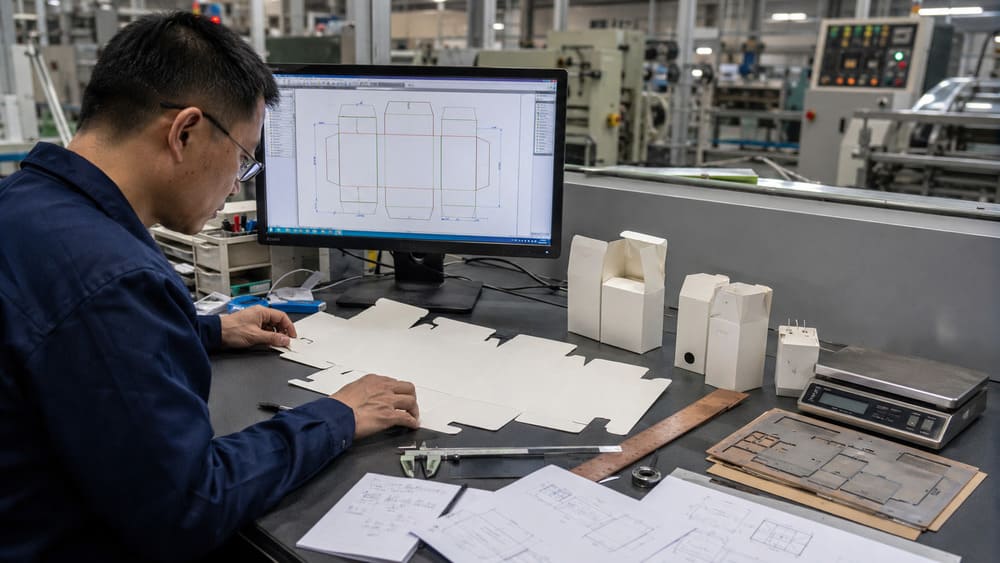
A packaging structure may look correct in CAD, but production reality can reveal unexpected issues during die-cutting, folding, gluing, or assembly.
A DFM packaging review helps identify these manufacturing risks before mass production begins, reducing unnecessary redesign and approval delays.
Table of Contents
Why Your Packaging Design Needs a Manufacturing Feasibility Review (And When to Request It)
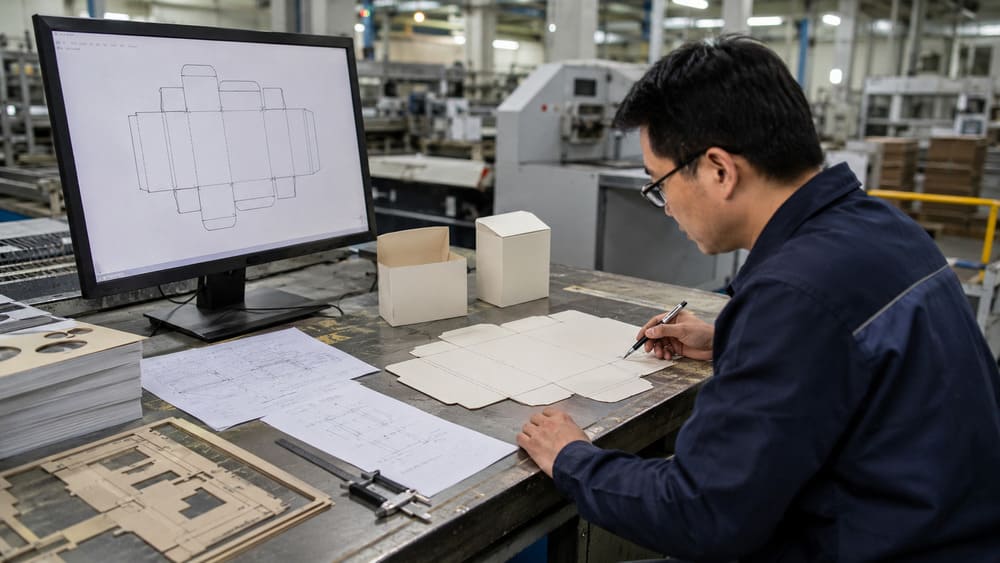
DFM packaging is the process of reviewing a packaging design before production to confirm whether it can be manufactured consistently, efficiently, and at the required quality level.
A packaging design may look complete in CAD but still create problems during real production.
Before approving production, buyers should confirm:
Can this packaging structure be produced reliably at scale?
A packaging feasibility review checks:
- Structural feasibility
- Material behavior
- Assembly requirements
- Production limitations
Packaging teams can review design intent, but manufacturing feasibility requires factory experience with materials, processes, and real production conditions.
A reliable packaging partner helps identify risks before they affect timelines, production stability, and product launches.
The Risk of Moving Directly From Design to Production
Many packaging problems happen when designs are approved visually without a manufacturing review.
CAD can confirm:
- Dimensions
- Appearance
- Structure
But it does not confirm:
- Production repeatability
- Assembly efficiency
- Manufacturing stability
A practical DFM review connects:
Design Intent
↓
Manufacturing Feasibility
↓
Production Readiness
A production-ready packaging design must perform consistently under real factory conditions.
Common Manufacturing Risks Found After Design Approval
Packaging issues often appear when designs move from prototypes to mass production.
Common risks include:
- Complex structures affecting assembly
- Tight tolerances affecting folding accuracy
- Material behavior affecting forming
- Inefficient production steps
The key question is:
Can this packaging be produced consistently for every order?
Why CAD Approval Does Not Always Mean Production Readiness
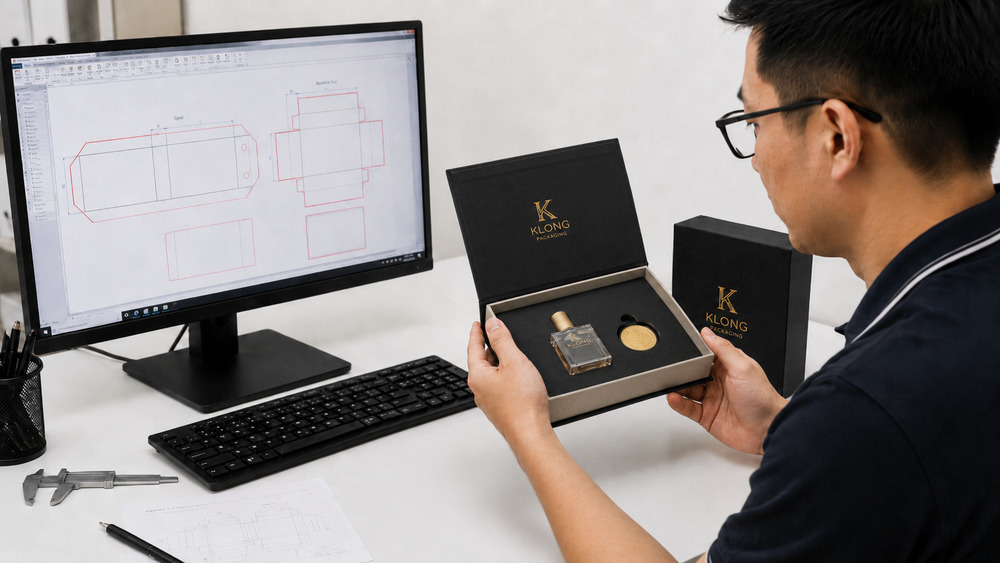
CAD confirms the design concept.
It does not confirm:
- Manufacturing repeatability
- Assembly efficiency
- Production stability
A packaging design must answer two questions:
How should it look?
How will it perform in production?
Engineering Insight:
We often see packaging designs that look perfect on screen but require changes after the first manufacturing review.
The issue is usually not the idea itself. It is the gap between design assumptions and production reality.
DFM Decision Checklist: Situations That Require a Review
Not every packaging project requires the same level of DFM review.
A supplier DFM review is especially valuable when complexity, customization, or launch risk increases.
| Project Situation | DFM Recommendation | Buyer Risk |
|---|---|---|
| New packaging structure | Required | Manufacturing issues may appear during production |
| Complex assembly design | Required | Assembly inconsistency may affect quality |
| Premium/custom packaging | Required | Design complexity increases production risk |
| Special structural requirements | Required | Custom functions need feasibility validation |
| Large production launch | Recommended | Late changes may affect launch schedules |
| Existing standard structure | Recommended | Confirms production compatibility |
When Should Buyers Request a Supplier DFM Review?
A supplier DFM review is valuable when:
- Developing a new packaging structure
- Changing materials or dimensions
- Preparing a major product launch
- Working with a new packaging supplier
- Requiring customized structural solutions
Early review helps identify problems before they become production changes.
What Buyers Should Expect From a DFM Review
A practical DFM review should answer:
- Can the structure be manufactured consistently?
- Are materials suitable for the design?
- Can assembly be completed efficiently?
- Are there risks before production approval?
Engineering Insight:
The biggest production delays usually happen when manufacturing issues are discovered too late.
A feasibility review before production can prevent much larger changes later.
What Should Be Checked During a Packaging DFM Review?
A packaging DFM review evaluates the key factors that determine whether a packaging design is ready for production.
Before approving a final design, buyers should confirm that the structure, materials, and operations can support consistent manufacturing.
A packaging feasibility review should focus on:
- Structural feasibility
- Material behavior
- Artwork and die-line alignment
- Assembly and fulfillment efficiency
These checks help buyers identify potential issues before production and make better packaging decisions with greater confidence.
Structural Feasibility and Machine Tolerance (AQL 1.0 Benchmark)
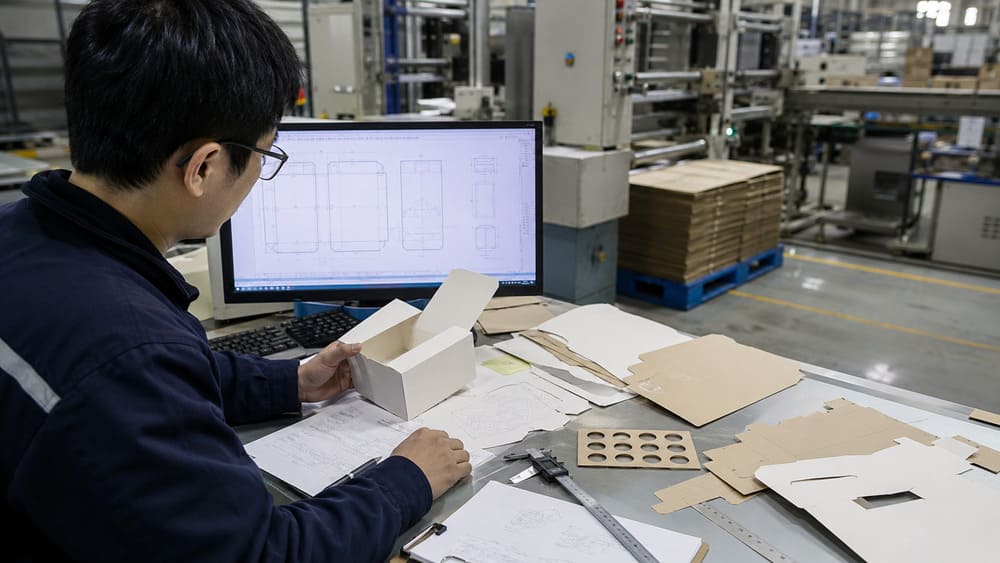
A packaging structure must be reviewed to confirm it can perform consistently during cutting, folding, and assembly.
A design that works as a sample may still fail to perform consistently during mass production.
What Engineers Check
- Folding structure
- Assembly method
- Die-cut complexity
- Automated gluing compatibility
Buyer Decision
Confirm:
- The structure is suitable for mass production
- Assembly requirements are practical
- Quality consistency can be maintained
The goal is not only to create one successful sample, but to ensure the packaging performs consistently across production runs.
Engineering Insight:
Complex structures usually create more production variation if cutting tolerance, folding accuracy, and assembly consistency are not reviewed early.
A balanced structure helps reduce manufacturing variation and improve consistency under AQL 1.0 inspection standards.
Material Selection and Physical Behavior
Material selection affects how the packaging forms, protects the product, and maintains its final appearance.
The right material should support both the packaging design and production requirements.
What Engineers Check
- Paperboard selection
- Grain direction
- Material thickness
- Folding behavior
Buyer Decision
Confirm:
- The material supports reliable forming
- Product protection requirements are met
- Final appearance matches expectations
A suitable material choice helps avoid unexpected changes after production begins.
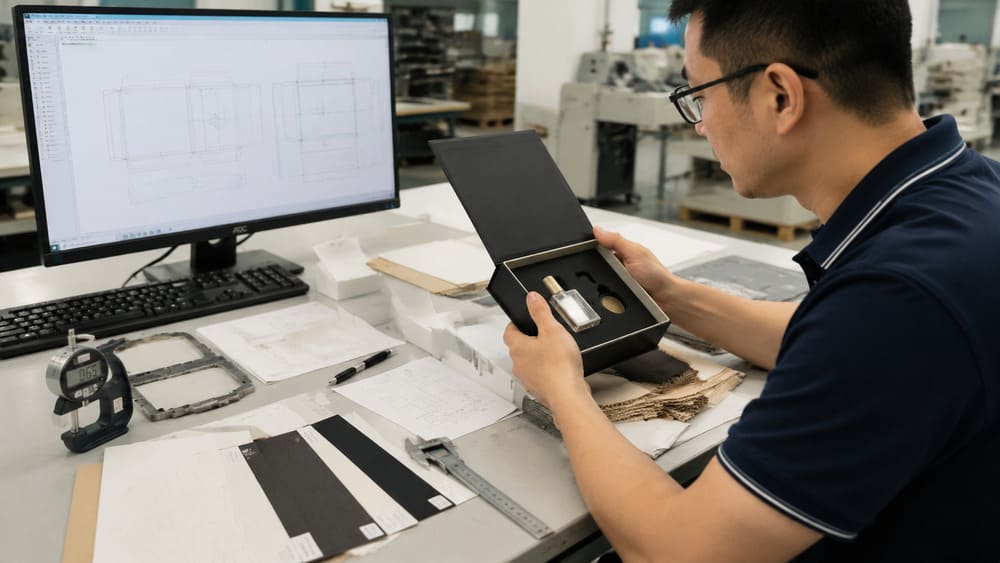
Artwork and Die-line Alignment
Artwork should be reviewed together with the packaging structure.
The goal is to prevent visual issues caused by conflicts between artwork placement and folding or cutting positions.
What Engineers Check
- Artwork position against crease lines
- Cutting edge clearance
- Bleed allowance
- Folding visual impact
Buyer Decision
Prevent:
- Logos crossing fold lines
- Artwork shifting after folding
- Graphics conflicting with die-cut areas
For advanced print and finishing considerations, refer to the Print Finishing DFM Guide.
Assembly and Fulfillment Efficiency
Packaging performance does not end after production.
The structure should also support efficient assembly, handling, and fulfillment operations.
What Engineers Check
- Assembly requirements
- Manual handling needs
- Fulfillment impact
Buyer Decision
Confirm the packaging can:
- Reduce warehouse handling complexity
- Improve operational efficiency
- Avoid unnecessary manual work
A packaging design should support the complete process from manufacturing to final use.
Packaging DFM Review Process: From CAD File to Production Readiness
A professional packaging DFM review is not only a file review.
It evaluates whether a packaging design can move from concept to production with fewer manufacturing risks.
To start a DFM review, buyers typically provide:
- Packaging design files
- Structural requirements
- Product information
- Key performance expectations
The review process usually includes:
- CAD and die-line engineering verification
- Physical structure validation
- Manufacturing feedback and design adjustment
Step 1: CAD & Die-line Engineering Verification
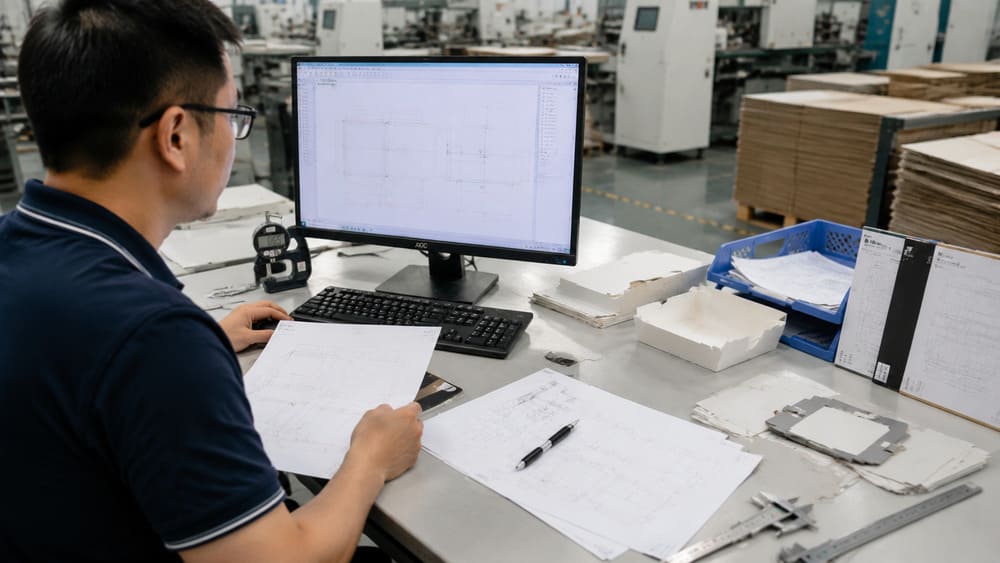
The first step is to review the design information and identify potential manufacturing issues before production preparation begins.
A complete DFM review considers both the packaging structure and the original design intent behind it.
Engineering Actions
Review:
- Design intent
- Product requirements
- Structural drawings
- CAD files
- Die-line logic
- Cutting and folding feasibility
Verify:
- Manufacturing conflicts
- Cutting limitations
- Structural feasibility issues
Buyer Outcome
Confirm:
- The packaging design can be correctly translated into manufacturing requirements
- Potential structural issues are identified before production preparation
- Design adjustments can be made earlier when changes are easier to implement
Early verification helps reduce unexpected changes later in the production process.
Step 2: Blank Sample Cutting and Physical Verification
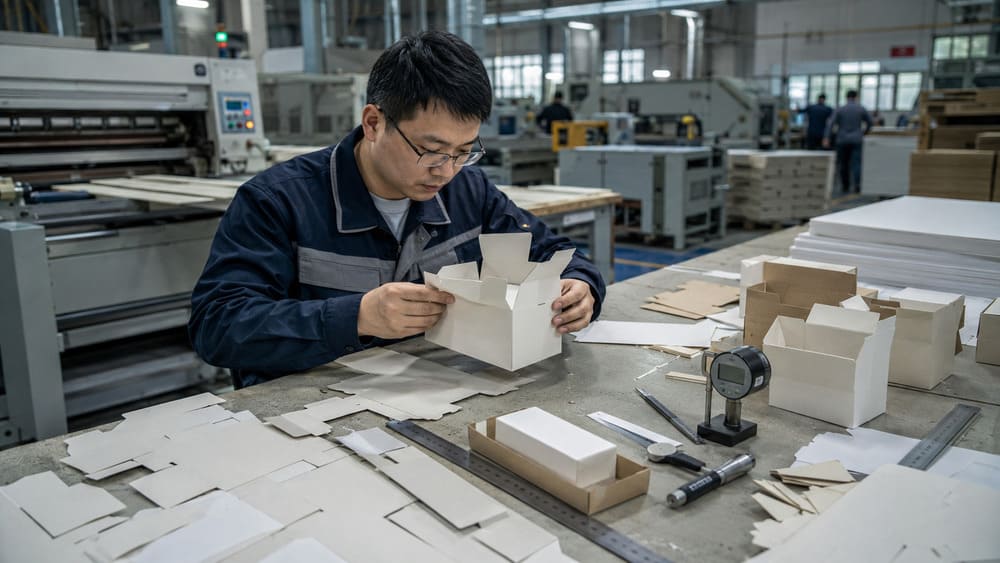
For complex packaging structures, digital files may not reveal every real-world forming issue.
Physical verification helps confirm how the structure performs when converted from a design file into an actual package.
Engineering Actions
Perform:
- Blank sample cutting
- Physical folding test
- Structural verification
Validate:
- Forming performance
- Folding behavior
- Product fit
Buyer Outcome
Confirm:
- The physical structure matches the design intent
- Folding and forming behavior meet expectations
- Potential issues are identified before mass production
This additional verification step helps buyers make decisions with greater confidence before moving forward.
Step 3: DFM Feedback Report and Design Adjustment
After engineering review and physical verification, the findings are converted into practical recommendations for final design decisions.
Engineering Output
Provide:
- Manufacturing concerns
- Recommended improvements
- Feasibility feedback
- Design adjustment suggestions
Buyer Outcome
Receive:
- Clear understanding of potential manufacturing risks
- Recommended adjustments before production
- Manufacturing feasibility confirmation
The goal is not to redesign packaging unnecessarily, but to identify and solve manufacturing issues before they affect production schedules and product launches.
Engineering Insight:
The most efficient and cost-effective time to solve packaging issues is before mass production begins.
Once production starts, even small design problems can lead to additional costs, delays, or even a complete packaging redesign. Early review and adjustment provide the greatest value by preventing larger problems before they happen.
FAQ: Packaging DFM Questions Buyers Ask
These FAQs explain how packaging DFM reviews help buyers identify manufacturing risks before production.
What is DFM in packaging?
DFM (Design for Manufacturability) in packaging is a review process that checks whether a packaging design can be produced reliably before mass production begins. It evaluates structure, materials, die-line feasibility, and production requirements to identify potential manufacturing issues early.
Why is DFM important before packaging production?
DFM helps buyers confirm that a packaging design is ready for real manufacturing, not only visually complete. Early review helps reduce unexpected changes, improve production confidence, and avoid issues that may affect launch timing.
What problems can a packaging DFM review identify?
A packaging DFM review can identify issues related to structural feasibility, material behavior, die-line limitations, assembly requirements, and production consistency. Finding these issues before production makes adjustments easier and helps avoid unexpected problems later.
What is the difference between packaging design review and packaging DFM review?
A packaging design review checks whether the package looks and works as intended. A packaging DFM review checks whether the design can be manufactured consistently under real production conditions, including structural feasibility, manufacturing limitations, and potential production risks.
What should buyers provide for a packaging DFM review?
Buyers typically provide packaging design files, structural drawings, product information, and key requirements. Complete design information helps engineers identify potential manufacturing issues earlier and provide more accurate feasibility feedback.
Can a packaging DFM review be done after the design is completed?
Yes. DFM is not only for new packaging concepts. It can also help review existing designs before production, supplier changes, or larger production launches to confirm whether adjustments are needed.
Can DFM prevent packaging redesign after production starts?
DFM cannot prevent every possible change, but it helps identify major risks before mass production begins. Early adjustments are usually easier and less costly than correcting problems after production starts, where changes may cause delays, additional work, or redesign.
When should brands request a packaging feasibility review?
Brands should request a packaging feasibility review when developing new structures, customized packaging, complex assemblies, or preparing for larger production launches. It is especially valuable when packaging performance, production stability, and launch timing are important.
Packaging DFM Checklist: Reduce Risks Before Production
Reliable packaging development should follow: Design → DFM Review → Validation → Production.
Don’t let a hidden design flaw turn into a mass production disaster. Download the checklist to identify risks before scaling.
Why Download This Checklist?
- Confirm whether your packaging design is ready for manufacturing
- Identify potential issues before production starts
- Communicate more effectively with packaging suppliers
- Reduce redesign, delays, and unexpected production costs
Get the Free Checklist