
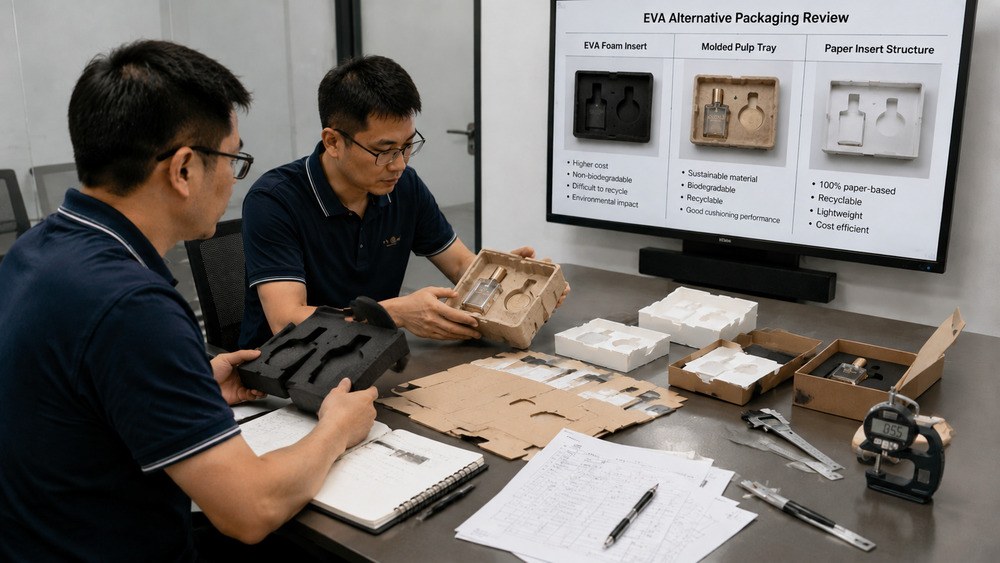
Removing EVA foam is easy. Replacing the protection function it provides is the real challenge.
Many brands move toward molded pulp and paper inserts for sustainability goals, but discover later that product movement, shipping impact, or structural weakness can create unexpected risks.
This article helps buyers evaluate EVA foam alternative packaging before making a plastic-free packaging transition.
Table of Contents
Why Replacing EVA Foam Is a Structural Challenge, Not Just a Material Swap
As brands transition away from plastics to align with evolving environmental standards—most notably the EU PPWR—replacing EVA foam has become a growing priority. However, replacing it with plastic-free packaging is not simply a material change.
EVA provides multiple protection functions, including cushioning, product fixation, and impact protection. When EVA is removed, these functions must be redesigned through new structures and materials. A DFM review helps confirm whether the new packaging concept is feasible before production.
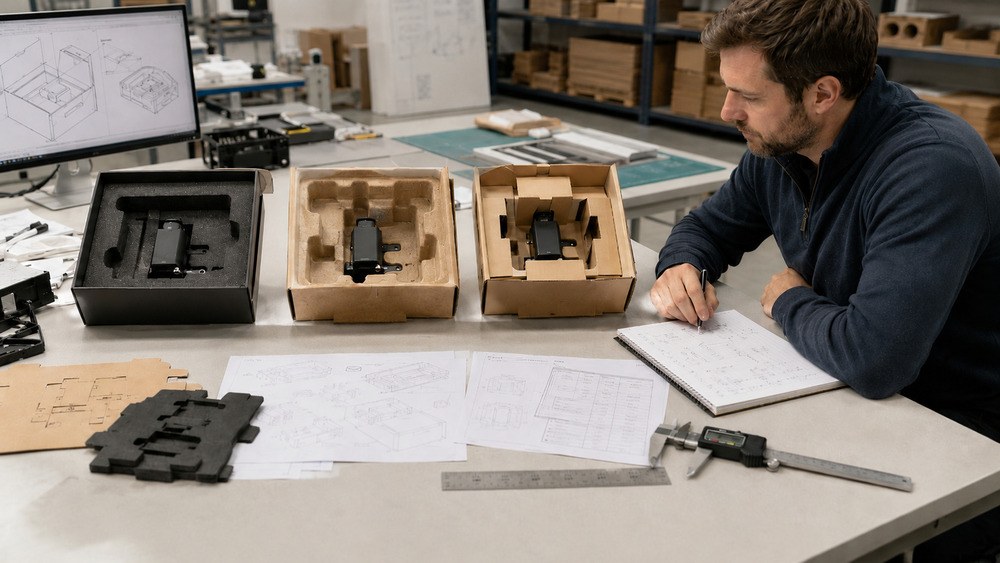
The Hidden Risks of Removing Plastic Protection
The biggest mistake in EVA replacement is removing the material before understanding its protection role.
EVA typically provides:
- Cushioning — reducing impact forces
- Fixation — preventing product movement
- Protection — reducing shipping damage risks
Without proper redesign, replacing EVA may create:
- Product movement inside the package
- Reduced internal stability
- Higher transportation damage risks
Buyer Decision Points
Before selecting an EVA foam alternative, buyers should define:
- Product fragility
- Shipping conditions
- Required protection functions
The right replacement starts with understanding what EVA was protecting, not simply choosing a plastic-free material.
EVA vs. Plastic-Free Alternatives Matrix
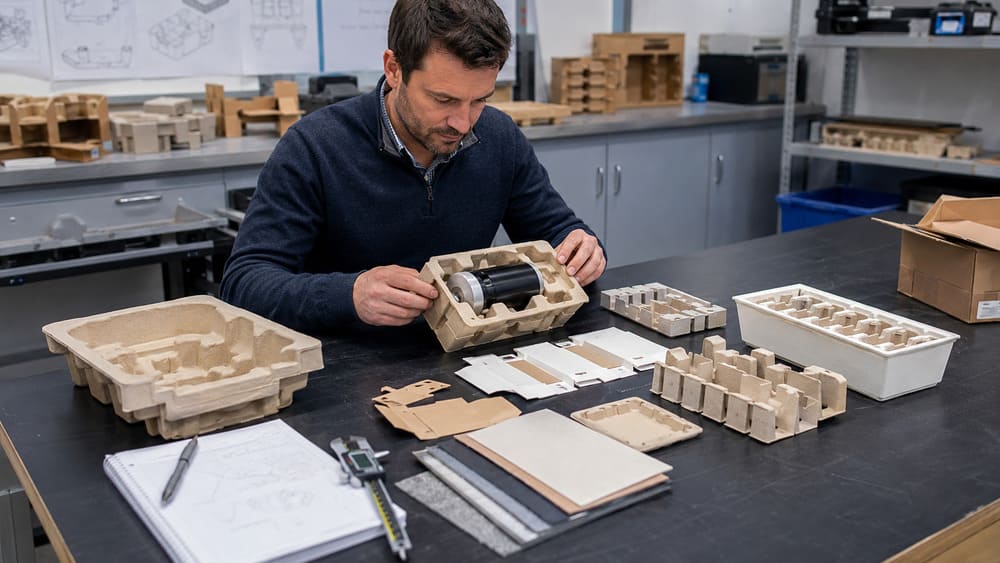
Different alternatives replace different EVA functions.
The goal is not to copy EVA, but to select the right protection approach for the product.
| Solution | Protection Logic | Sustainability Level | Suitable Application |
|---|---|---|---|
| EVA Foam | Cushioning protection | Low | Traditional protection needs |
| Molded Pulp | Structural support and product positioning | High | Custom-fit products |
| Paper Inserts | Separation and product positioning | High | Lightweight products |
| Paper T-Bar | Fiber-based fixing and retention | Very High | Products requiring plastic-free retention |
Explore how molded pulp trays and paper inserts can provide plastic-free structural support and product positioning solutions.
Buyer Decision Points
When comparing alternatives, buyers should evaluate:
- What protection function needs to be replaced?
- Can the structure keep the product stable during shipping?
- Is the solution suitable for commercial production?
Engineering Insight
EVA replacement is not a material substitution project.
It is a protection system redesign project — replacing the function EVA provides, not just the material itself.
Comparing Plastic-Free Packaging Alternatives: Materials, Protection and Hidden Plastics Risks
Replacing EVA foam requires more than choosing a sustainable material.
Different plastic-free packaging solutions replace different protection functions. The right choice depends on product protection requirements, project stage, cost considerations, and production feasibility. A DFM review helps confirm whether the selected structure can move from concept to production successfully.
Molded Pulp Packaging: Structural Protection Without Plastic Foam
Molded pulp replaces EVA protection through structural design rather than foam cushioning.
Its protection comes from:
- Structural geometry — creating custom-fit support around the product
- Product positioning — reducing movement inside the package
- Fiber-based support — providing plastic-free internal protection
Molded pulp is a strong option for products requiring custom-fit protection and complex internal support.
However, it is not always the best choice for every project. Compared with simpler paper-based solutions, molded pulp usually requires higher tooling investment and a longer development cycle.
For low-volume launches, frequent design changes, or cost-sensitive projects, a simpler paper-based solution may provide a more practical starting point.
Buyer Decision Points
Choose molded pulp when:
- Structural protection and custom fit are the priority
- The product requires complex internal positioning
- The project justifies higher development investment
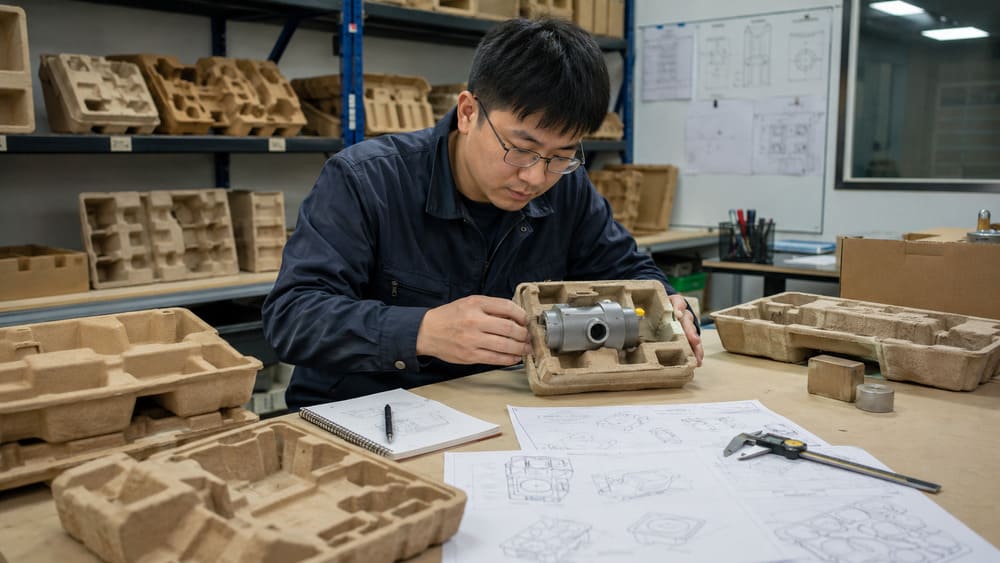
Paper Inserts: Lightweight Product Positioning Solutions
Paper inserts solve a different packaging challenge.
Instead of replacing foam cushioning, they mainly provide:
- Internal separation
- Product positioning
- Package organization
Compared with molded pulp, paper inserts usually offer faster development, lower tooling investment, and more flexibility during design changes.
They are suitable when products need stable positioning but do not require highly complex internal structures.
Buyers should also consider assembly efficiency, as folded paper structures may require additional forming or manual assembly depending on the design.
Buyer Decision Points
Choose paper inserts when speed, flexibility, cost control, and simpler internal organization are more important.
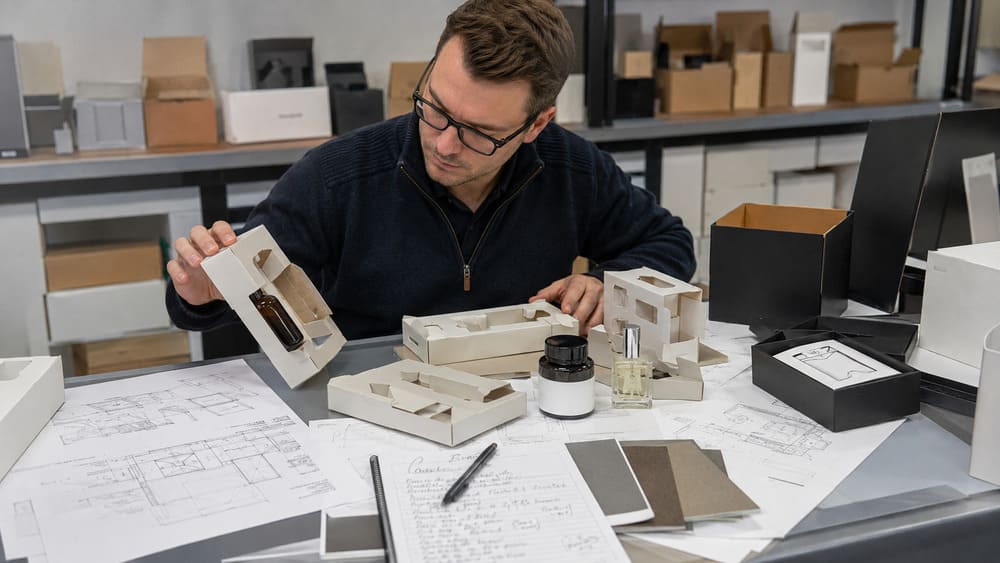
Simple decision rule:
Choose molded pulp when structural protection and custom fit are the priority.
Choose paper inserts when speed, flexibility, cost control, and simpler internal organization are more important.
Paper-Based Accessories: Eliminating Hidden Plastics in Packaging
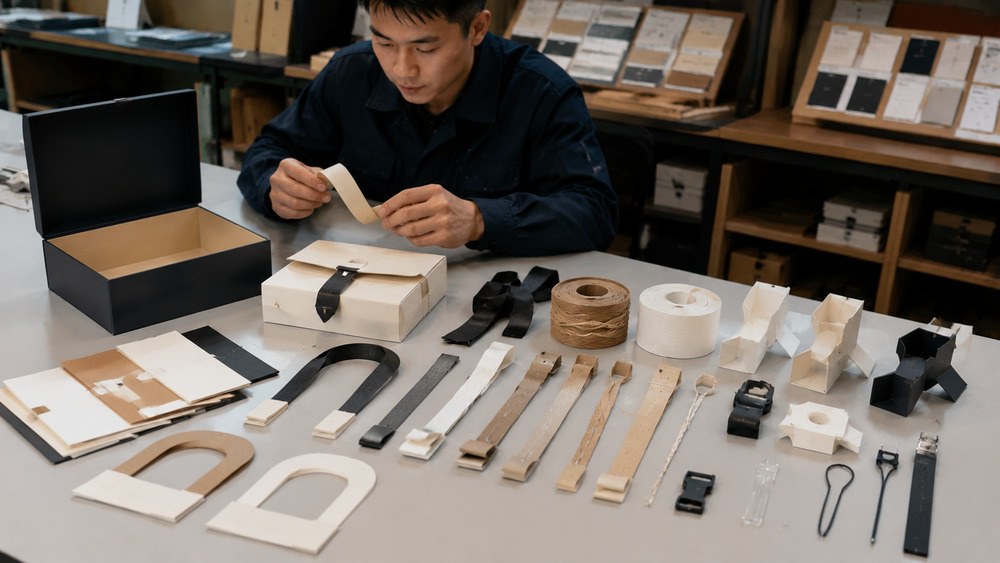
A truly plastic-free packaging solution requires reviewing every packaging component, not only removing visible plastic parts.
Hidden plastic elements may include:
- Plastic clips
- Poly-webbing straps
- Plastic end caps
- Synthetic fixing parts
A packaging solution cannot be considered fully plastic-free if hidden components are overlooked.
Paper-based accessories and fiber-based fixing components can replace hidden plastic elements through:
- Paper-based fixing components
- Fiber-based straps and supports
- Plastic-free packaging accessories
For sustainability-focused brands, every packaging component should be reviewed — not only the main structure.
Related considerations may include:
- FSC certified packaging
- REACH/RoHS compliance
- PPWR packaging compliance requirements
Buyer Decision Points
Before approving a plastic-free packaging solution, buyers should confirm:
- Are all internal components reviewed for hidden plastics?
- Do packaging accessories and fixing components meet the product’s functional requirements?
- Can the solution meet sustainability and production requirements?
Engineering Insight
True plastic-free packaging is not simply removing plastic materials.
It requires reviewing the complete packaging system — from protection structure to internal components — to ensure sustainability goals do not compromise product protection or production feasibility.
How to Validate Plastic-Free Packaging Protection Before Mass Production
Replacing EVA foam is not complete after selecting a plastic-free material.
Before mass production, buyers need to confirm one key question:
Can the new packaging structure protect the product as reliably as the original solution?
Buyers should confirm two things:
- Whether the product is properly supported inside the packaging
- Whether the structure can withstand transportation impacts
A DFM review can help identify potential structural risks before moving into production.
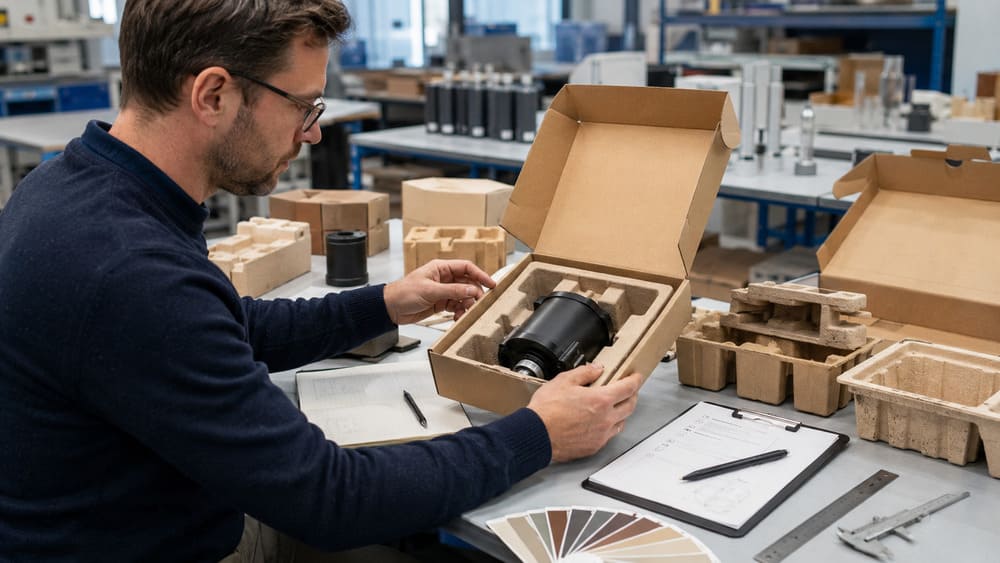
Product Fit and Internal Movement Verification
The first check is simple:
Does the new packaging hold the product securely?
Before testing, buyers should review:
- Product fit inside the package
- Internal movement during handling
- Structural support provided by the new material
A successful EVA replacement should maintain the same product stability required during transportation — not simply remove plastic foam.
Buyer Decision Points
Confirm:
- The product is properly positioned
- No unnecessary movement exists inside the package
- The structure provides sufficient support for the product
Drop Test Validation for Plastic-Free Packaging
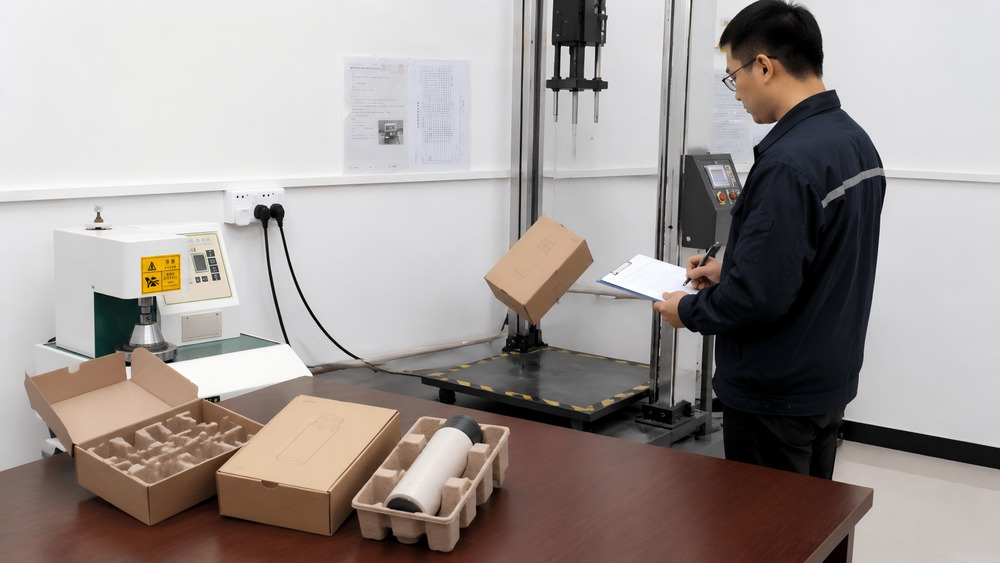
After the packaging structure is reviewed, drop testing provides an important protection validation before mass production.
Typical impact checks include:
- Corners
- Edges
- Faces
The goal is to confirm:
- The product remains protected after impact
- The packaging structure maintains its function
- Transportation damage risks are controlled
For fragile products, engineers may validate both:
Individual package performance
and, if needed:
Shipping carton configuration
This helps identify whether a failure comes from the internal packaging design or the overall shipping setup.
Buyer Decision Points
Before mass production, confirm:
- Has the packaging passed realistic impact validation?
- Does the product remain functional after testing?
- Is any issue caused by the structure design or shipping configuration?
Engineering Insight
Drop test failures are often not caused by insufficient material thickness.
The real issue is usually whether the packaging structure correctly supports the product and distributes impact forces.
EVA Foam Alternative Packaging Questions Buyers Ask
Choosing an EVA foam alternative is not only a material decision. Buyers also need to understand protection, cost, customization, and validation requirements before production.
What is the best alternative to EVA foam packaging?
There is no single best EVA foam alternative for every product. The right solution depends on protection requirements, product structure, shipping conditions, and production feasibility. Molded pulp, paper inserts, and other fiber-based solutions should be selected based on the function the packaging needs to replace.
Can molded pulp replace EVA foam packaging?
Yes, molded pulp can replace EVA foam in many applications where structural support and custom-fit protection are required. Instead of foam cushioning, molded pulp protects products through structural geometry, product positioning, and fiber-based support.
Is molded pulp packaging strong enough for shipping?
Yes, when properly designed, molded pulp can provide reliable shipping protection. Product fit, structural support, and impact validation determine whether the solution is suitable for transportation.
What are plastic-free alternatives to EVA foam inserts?
Plastic-free alternatives include molded pulp, paper inserts, honeycomb paper structures, and other fiber-based packaging solutions. The right choice depends on protection level, product complexity, development speed, and cost considerations.
Is molded pulp more expensive than EVA foam packaging?
Not necessarily. The cost depends on protection requirements, packaging structure, order quantity, and material selection. Traditional foam solutions such as high-density sponge and eco-friendly EVA can also involve significant costs, so the complete packaging solution should be evaluated rather than the material alone.
What information is needed to design an EVA foam alternative?
For existing products, the best reference is the original packaging with EVA insert, outer box, and product contents. If unavailable, product drawings, dimensions, weight, and protection requirements can help engineers develop a suitable customized alternative. For new products, buyers only need to provide the product, accessories, and packaging requirements.
How do brands validate plastic-free packaging protection?
Brands usually validate plastic-free packaging by checking product fit, internal movement, structural support, and impact performance before mass production. The process starts with structural evaluation and is confirmed through practical testing such as drop validation.
Avoid Packaging Failures Before Mass Production
Don’t let a failed drop test delay your plastic-free transition. Download the checklist to verify your internal structure and avoid mass production failures.
Product Fit → Protection Performance → Production Readiness