
Molded Pulp Trays and Paper Inserts
Molded Pulp Trays & Folded Paperboard Inserts
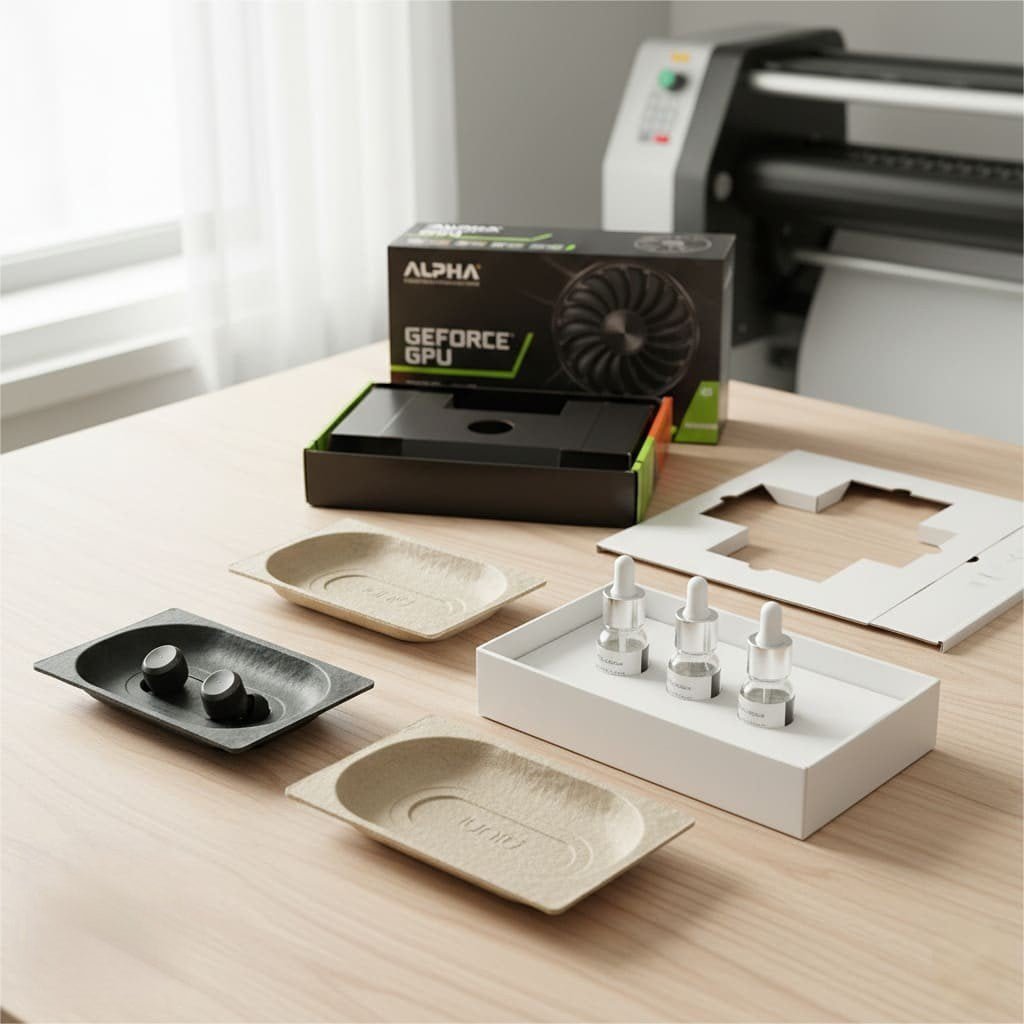
Paper Inserts are made from single-ply or laminated paperboard, commonly using materials like SBS, C1S, CCWB, or CCNB (greyback whiteboard). They are typically die-cut and manually folded to create inserts for separating, securing, and cushioning.
Folded paperboard inserts are suitable for pilot runs, frequently revised designs, and high-volume production. Their relatively low tooling investment makes them a practical option when flexibility and development speed matter. Typical die-cut tooling costs USD 50-100 per design and takes 24-48 hours to prepare. Standard structural samples using available materials generally take 5-7 days, while mass production schedules depend on order requirements.
Pulp Trays are molded from paper pulp or bagasse pulp, allowing complex cavity designs for custom protective packaging. They offer a fiber-based alternative to plastic inserts, with cushioning performance depending on material selection, structural design, and product-specific validation. Mold tooling requires higher upfront investment and longer development cycles than die-cut paperboard inserts.
Key Benefits
- Cost-effective solutions for all order sizes
- Fast turnaround times
- Eco-friendly plastic alternatives
- Engineered product protection
Materials & Options
Premium materials and flexible processing options for diverse packaging needs
Paper Inserts Materials
Materials:
C1S/SBS/CCWB, kraft paper, CCNB (greyback whiteboard), typically ranging from 250–400 gsm.
Process:
Typically laminated with E/F/B flute to enhance load-bearing capacity.
Features:
Printable with surface treatments (lamination, hot foil stamping) and foldable for easy shipping, reducing freight costs.
Pulp Trays Materials
Materials:
Paper pulp or bagasse pulp.
Process:
Dry pressing (economical with rough texture) / Wet pressing (smooth finish, suitable for high-end packaging).
Features:
Molded pulp offers a fiber-based alternative to plastic inserts where the required protection performance is validated. Moisture exposure during storage and sea freight must be considered, with appropriate protective packing selected for the project.
Material Comparison
See the difference in texture, finish, and sustainability between our paper insert materials and pulp tray options.
Request Material Samples
Structures & Styles
Flexible designs and customizable structures for optimal product protection
Paper Inserts Structures
Flexibility: The die-cutting mold is flexible and can be easily replaced for various packaging needs.

Die-cutting design flexibility for various structures
Pulp Trays Structures
Applications: Commonly used in electronics, cosmetics, and retail packaging.

Multi-cavity structures with custom mold designs
Need Custom Designs?
Get professional dieline designs for paper inserts or CAD files for pulp trays
Performance & QC
Rigorous testing and quality control ensuring reliable product protection
Paper Inserts Performance
Function
Keeps products fixed and reduces movement during transit and storage.
Tests
Project-specific drop testing can be used to evaluate structural integrity and product protection under agreed transport conditions.
Tolerances
Dimensional tolerances are defined according to board grade, structural design, folding method, and approved sample requirements.
Pulp Trays Performance
Tests
Drop testing and product-fit checks can be conducted according to the agreed protection requirements and actual packaging configuration.
Tolerances
Dimensional tolerances depend on cavity geometry, pulp material behavior, molding process, and drying conditions. Critical fit dimensions are checked against agreed specifications.
QC Focus
Removing burrs, dust control, and odor management for premium quality.

Comprehensive Testing
Product fit, structural stability, and transport protection can be evaluated through project-specific inspections and agreed testing procedures. Results are reviewed against the project requirements before mass production approval.
Sustainability Choices
Explore fiber-based packaging materials and FSC-certified paper options. Material suitability, recyclability, and compliance documentation depend on the specifications of each project.
Paper Inserts
FSC-certified paper options available
Subject to material sourcing and applicable certification requirements
Water-based ink and recyclable material options
Recyclability depends on material composition and finishing choices
Pulp Trays
Fiber-based alternative to plastic inserts
Protection performance must be validated for each product and shipping environment
Paper pulp and bagasse material options
Material selection depends on structural, performance, and sourcing requirements
Compliance & Certifications
RoHS/REACH supporting reports may be available for selected substrates, inks, and adhesives. Applicable requirements and documentation should be confirmed for each project.
- Fiber-Based Materials
- Material Documents
- Structural Layout
- Specification Review
- Engineering Parameters
- Packaging Structure
FSC Paper Options
FSC-certified paper options, subject to sourcing and documentation
RoHS/REACH Documentation
Material compliance evidence available for review, where applicable
Fiber-Based Materials
Material end-of-life performance depends on composition and disposal conditions
Replacing foam or plastic inserts? Review the protection risks involved in a plastic-free packaging transition before selecting a new structure.
Explore Our Sustainability PracticesSamples & Lead Time
Fast sampling and flexible production timelines to meet your project requirements
Paper Inserts
Fast TrackDie Mold Cost
50–100 USD per design
Die-Cut Tool Preparation
24–48 hours
Standard Structural Sample
5–7 days
Mass Production
10–30 days
Key Advantages:
Low tooling investment, flexible structural adjustments, and scalable production make paper inserts suitable for pilot runs and larger orders. Delivery schedules depend on approved specifications, order volume, and production planning.
Pulp Trays
PremiumEPS Concept Prototype (Free)
3-5 days
Computer-cut EPS prototype for initial geometry and fit checks
Single-Cavity Sample Tooling
650-1000 USD, 12-15 days
Production Tooling
Dry pressing: 1600-2500 USD
Wet pressing: 3000-5000 USD
Production Tooling to First Batch
20-25 days
The free EPS concept prototype is used to check basic geometry, dimensions, and product fit. It is not a molded pulp sample and cannot validate final pulp material or molding performance. Formal molded pulp samples require dedicated sample tooling. Actual development and production timelines depend on approved specifications, tooling, and order requirements.
Limitations:
High upfront mold cost, limited daily capacity per mold, so larger orders require multiple sets of molds, increasing cost and lead time.

Tooling Investment Comparison
Choose the right approach based on your volume, timeline, and budget requirements. Our team can help you make the optimal decision.
Typical tooling cost ranges are for reference only. Molded pulp sample tooling and production tooling are separate stages, with costs varying by structure, process, and mold configuration.
Before committing to a mold, review how packaging tooling costs differ between structural prototypes, formal samples, and mass production.
Get Tooling AdviceApplications of Pulp Trays & Paper Inserts
Versatile solutions across industries, providing superior protection and enhanced user experience
Electronics
Custom-fit inserts for headphones, accessories, and electronic products, designed to support secure positioning and project-specific transport protection requirements.
Cosmetics
Bottle, jars, and makeup sets with secure positioning and elegant presentation for premium beauty products.
Retail
Gift box inserts enhancing unboxing experience and creating memorable brand moments for customers.

Industry-Proven Solutions
Explore Other Packaging Solutions
Discover more custom packaging solutions designed for different products, branding needs, and logistics requirements.
Product Overview
Complete packaging portfolio
Rigid Boxes
Premium luxury packaging
Corrugated Boxes
Durable shipping protection
Folding Cartons
Lightweight retail packaging
Paper Bags
Sustainable retail bags
Need Custom Solutions?
Our experts can help you choose the perfect packaging for your needs