
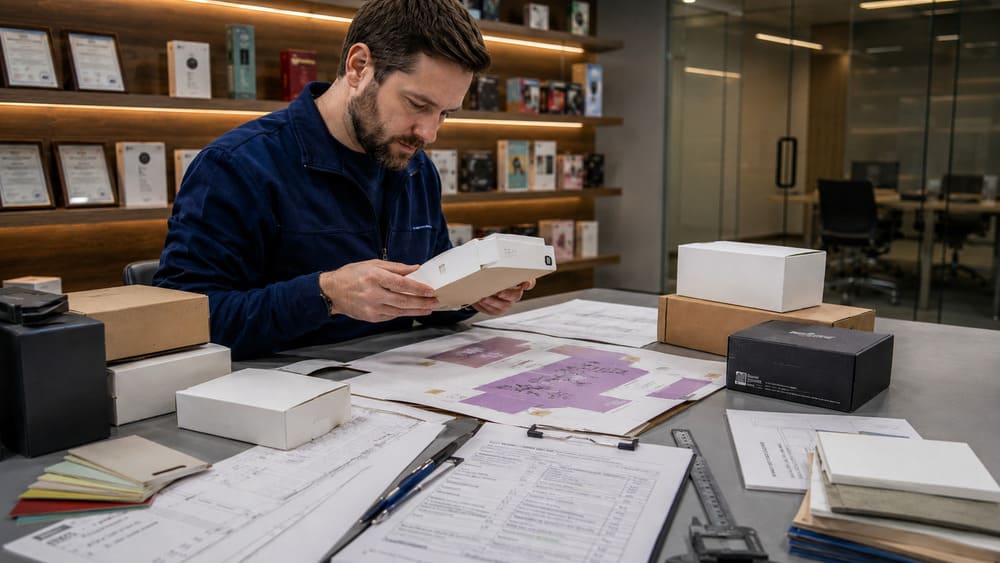
The most expensive packaging failures often happen after the sample is approved.
A successful sample proves that one approved version works — but it does not always prove that the same result can be reproduced during mass production. Buyers need to verify whether the approved structure, materials, and specifications are ready for production before making larger commitments.
This article explains the key checkpoints in the packaging sampling process that procurement teams should review before mass production, helping reduce unexpected quality issues and production risks.
Table of Contents
Why Approved Packaging Samples Can Still Fail During Mass Production
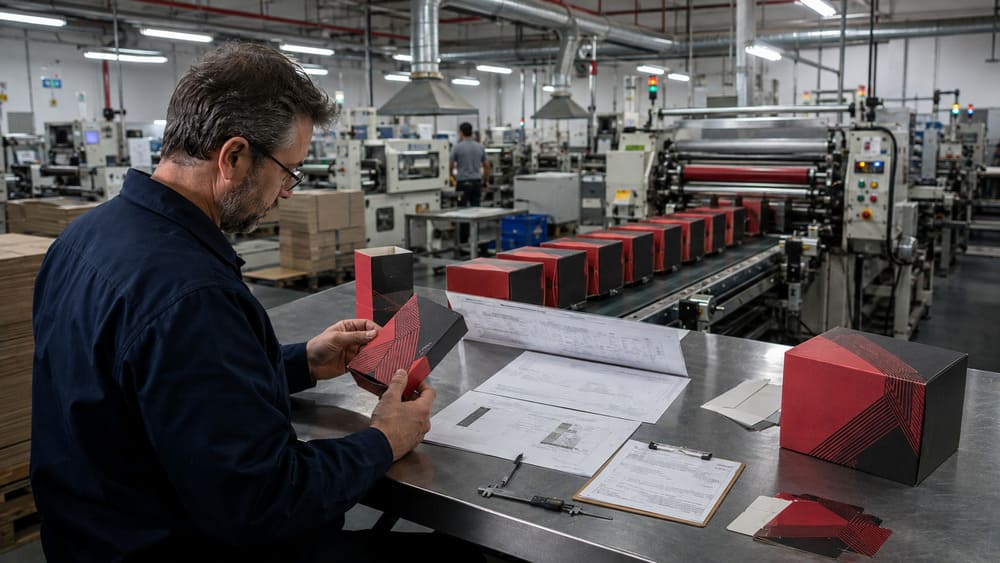
A packaging sample approval does not always mean the packaging is ready for mass production. One approved sample proves that a specific version works, but it does not prove that the same result can be reproduced consistently across larger production volumes.
For procurement teams, the key question is:
Can the approved packaging become a repeatable manufacturing solution, not just an acceptable sample?
Before approving production, buyers need to confirm that the approved structure, materials, appearance, and specifications can be consistently achieved during mass production.
Sample Approval vs. Mass Production Stability: Why One Sample Is Not Enough
A sample approval confirms that one packaging sample meets expectations.
Mass production requires something more:
- Repeatable manufacturing performance
- Stable production processes
- Consistent output quality
The difference is that a sample represents one approved result, while mass production must maintain the same result through repeated manufacturing.
A packaging structure, material choice, or visual standard may work in one sample but create problems when produced at higher volumes.
Before Approving a Packaging Sample, Buyers Should Confirm
Buyers should verify:
- The approved sample represents the expected production result.
- Structure and specifications can be reproduced consistently.
- Materials used in the sample match production requirements.
- Appearance standards are clearly defined before production begins.
Buyer Decision Point
Before approving a sample, ask:
“If we produce this packaging thousands of times, will the result remain consistent?”
Engineering Insight
A sample is a validation checkpoint, not a guarantee of automatic mass production success.
The purpose of sampling is to reduce uncertainty before production commitment by confirming that buyer expectations can be translated into repeatable manufacturing results.
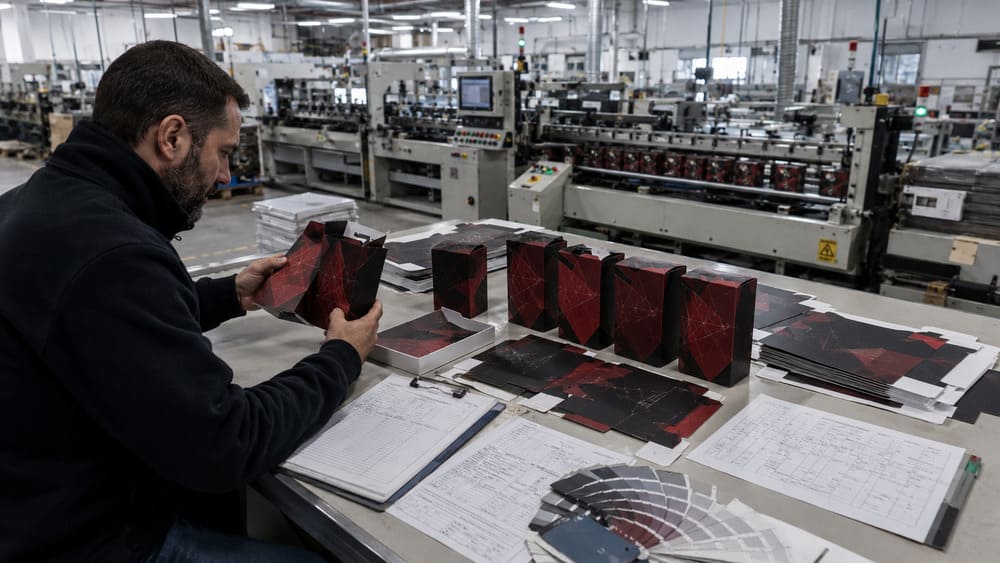
Common Risks Hidden Behind an Approved Sample
A sample can look correct and still hide risks that appear only after production begins.
The most common issue is that buyers approve what they see, but do not always define what the supplier must reproduce.
Structure May Work in One Sample but Fail at Production Scale
A packaging structure should not only fit the product correctly in one sample. It should also support consistent manufacturing.
Buyers should check:
- Whether the structure can be produced repeatedly.
- Whether folding, assembly, and handling remain stable.
- Whether the approved design creates production difficulties.
Material Performance May Change During Production
Materials affect more than appearance. They also influence packaging stability and production consistency.
Buyers should confirm:
- Material specifications are clearly defined.
- The approved material is the same standard used for production.
- Material performance supports both protection and appearance requirements.
Appearance Approval Needs Clear Production Reference
A sample may establish the expected look, but production requires a clear reference standard.
Buyers should confirm:
- Which sample version is approved.
- Which appearance requirements are critical.
- How quality expectations will be judged during production.
Approval Reference Risk Can Create Production Disputes
Many production issues happen because the approved sample is treated only as a visual example.
A stronger approval process creates a shared production reference between buyer and supplier.
Before production begins, confirm:
- Approved sample version
- Final specifications
- Material requirements
- Quality expectations
Buyer Decision Point
The goal of sample approval is not simply accepting one finished piece.
The goal is confirming that the approved sample can become a reliable reference for mass production.
Engineering Insight
Mass production problems often do not happen because the sample failed.
They happen when the approved sample is not clearly defined as the production reference that both buyer and supplier can consistently follow.
For deeper design manufacturability risks, buyers can evaluate the packaging through a DFM review.
What Buyers Should Check During the Packaging Sample Approval Process
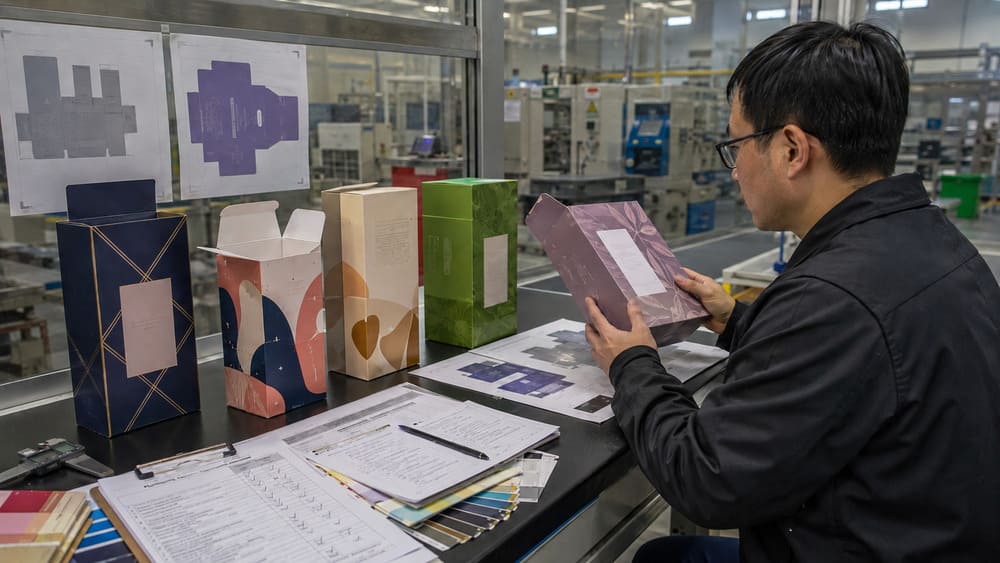
A packaging sample can look perfect and still create problems during mass production. Before approval, buyers need to confirm whether the supplier can reproduce the same result consistently at scale.
A reliable sample approval process creates a clear production reference, helping both buyer and supplier understand what must remain consistent during manufacturing.
Before approving a packaging sample, buyers should focus on four key areas:
- Structure: Can the packaging be produced reliably and used as expected?
- Material: Can the material maintain the required performance during production?
- Printing: Can the approved appearance be reproduced consistently?
- Specification: Are all important details clearly confirmed before production?
Structural Validation: Does the Packaging Work in Real Production Conditions?
A packaging structure may look correct in a sample, but that does not always mean it will perform well during production.
Before approval, buyers should check:
- Folding performance
- Assembly method
- Product fitting
- Opening and closing behavior
- Structural stability
A structural sample helps buyers verify fit, assembly, and handling before mass production.
Before approving the structure, buyers should ask:
“Can this packaging structure remain stable when produced at scale?”
A sample proves that the structure works once. Production requires the same result to be achieved repeatedly.
Material Validation: Does the Material Remain Consistent During Production?
A material can look acceptable in a sample but still create quality or production issues if its specifications are not clearly controlled.
Before approval, buyers should confirm:
- Material selection
- Thickness consistency
- Folding behavior
- Stiffness and protection performance
The approved material should support not only packaging appearance, but also product protection and stable production.
Before approving the material, buyers should confirm that it can maintain the expected performance throughout production — not only in the approved sample.
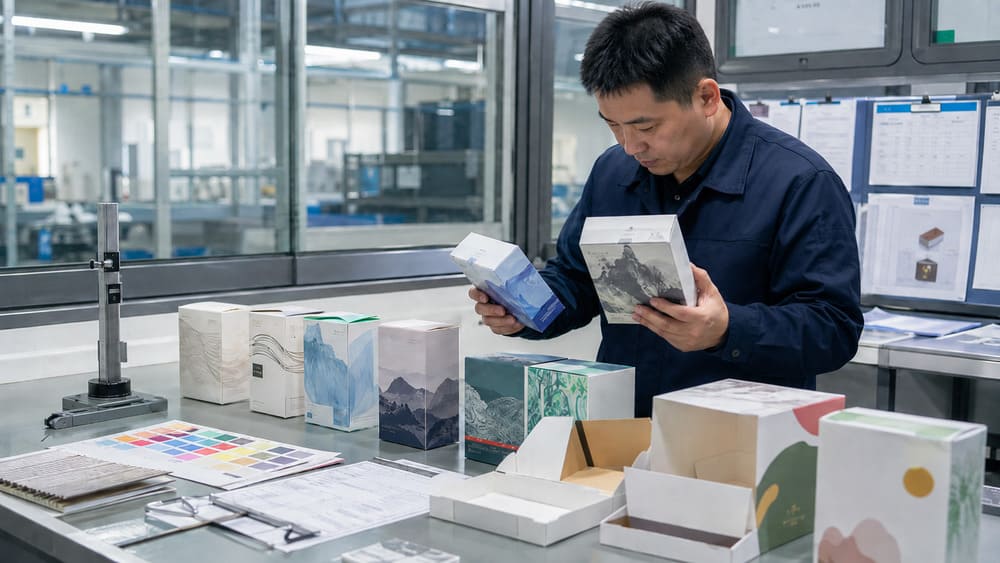
Printing Validation: Can Appearance Requirements Be Reproduced?
Visual approval is often one of the most subjective parts of packaging sampling. A printed sample establishes the expected appearance, but mass production requires clear standards to maintain consistency.
Before approval, buyers should confirm:
- Color expectations
- Artwork accuracy
- Print consistency
- Acceptable appearance range
The goal is not only to approve one good-looking sample, but to define what level of visual consistency is acceptable during production.
Buyer and supplier should agree on the appearance standard before production starts to avoid unnecessary quality disputes.
Specification Confirmation: Freeze the Approved Version Before Production
Many production differences happen because the approved sample is not fully defined before production begins.
Final approval should include more than the physical sample. It should also confirm the details that determine whether the same result can be reproduced consistently.
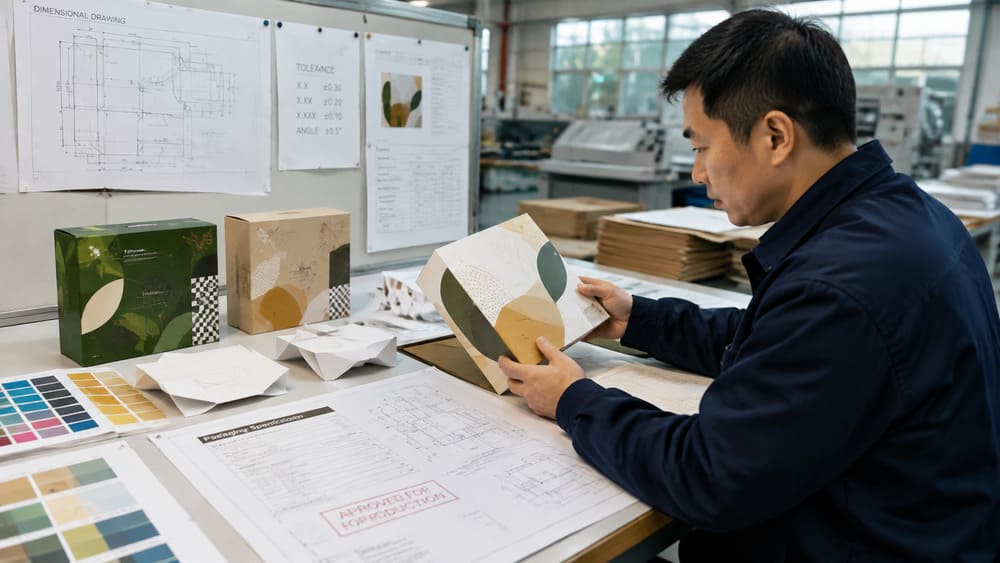
Buyers should confirm:
- Final dimensions and acceptable tolerance ranges
- Material specifications and thickness requirements
- Surface treatment requirements and production consistency
- Folding performance and surface consistency after repeated operations, especially for plastic-free packaging
- Appearance expectations during machine gluing and manual forming
- Customer-specific requirements or critical points that must be maintained during production
Production should only begin after both sides clearly understand what the approved version includes and what cannot change.
Clear specification alignment helps prevent avoidable differences between the approved sample and mass production output.
How a Packaging Sample Review Reduces Mass Production Risk
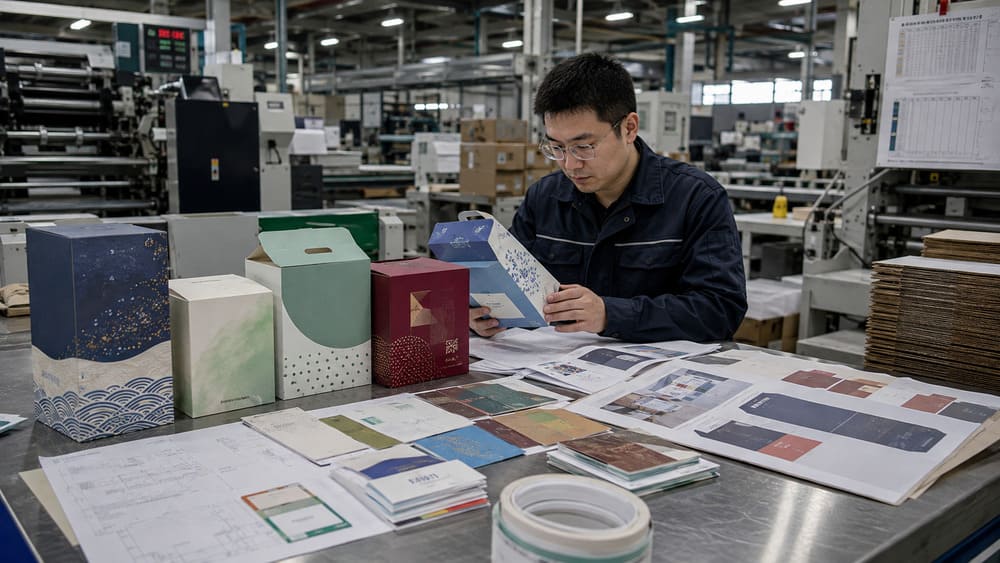
A packaging sample review is not simply a final approval step before production. Its real purpose is to identify potential risks early and confirm whether the approved sample can be translated into a realistic production standard. A sample may look perfect during review, but the key question for buyers is whether the same result can be achieved consistently when production volume increases. A structured review process helps reduce uncertainty before larger production commitments are made.
Sample Review as a Production Risk Gate
A well-managed sample review works as a risk control point between buyer expectations and manufacturing reality. The goal is not only to decide whether a sample is acceptable, but also to confirm that important requirements are clearly understood before they become production issues.
Without a proper review process, problems that appear small during sampling may later become:
- Production delays caused by unclear requirements
- Quality disputes caused by different approval expectations
- Rework costs caused by changes after production begins
Before moving forward, buyers should confirm that the approved sample defines not only what the packaging should look like, but also which requirements must remain consistent during manufacturing.
Review the Sample Against Manufacturing Expectations
Many buyers compare samples based on appearance alone, but mass production requires a deeper evaluation of whether the expected result matches the selected material and manufacturing conditions.
The approved sample should be reviewed against the expected production outcome:
Approved sample
vs.
Expected mass production result
Buyers should evaluate:
- Structure consistency
- Material behavior
- Appearance requirements
- Production feasibility
Engineering Insight
A common trap is approving a visually perfect sample without verifying its production method. If a sample was carefully assembled by hand, it might look flawless but fail on an automated folder-gluer due to tight machine tolerances. True sample validation must confirm that the structure can be seamlessly replicated at high-speed mass production conditions, not just crafted perfectly on a prototype table.
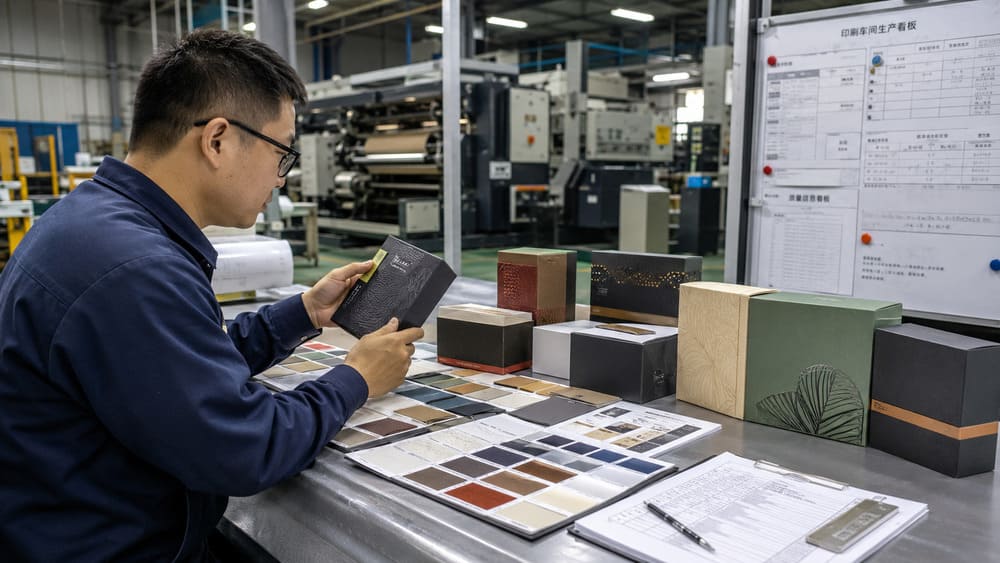
In real packaging projects, buyers sometimes compare the natural texture and feel of an uncoated paper material with the print brightness and coating effect achieved on smoother coated papers. However, different paper structures naturally create different results. Paper structures absorb ink and coatings differently, which can affect color vibrancy, coating smoothness, and surface gloss.
The key decision is not whether one material can completely imitate another, but whether the selected material can meet the required appearance and performance expectations for its intended use. Before final approval, buyers should confirm which characteristics are essential and which variations are acceptable based on the selected material.
A strong sample review connects buyer expectations with factory manufacturing reality, helping both sides agree on achievable production standards before mass production.
Move From Sample Approval to Production Confidence
Sample approval creates the reference point, but production confidence comes from knowing that the approved requirements can be carried forward consistently. Production confidence comes from alignment, not from approving a perfect sample.
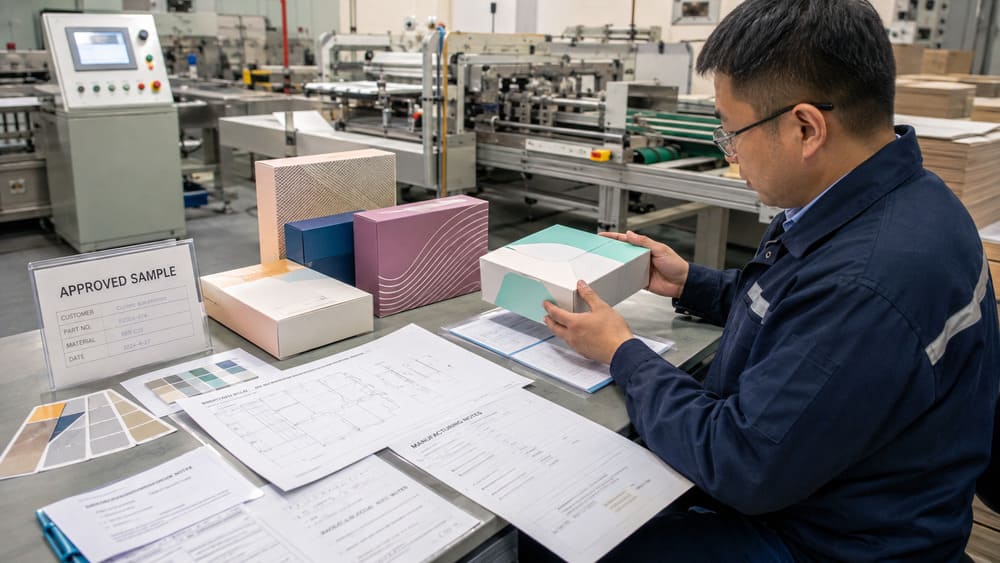
Before moving into production, buyers should make sure:
- The approved version is clearly defined
- Important requirements are understood by both buyer and supplier
- Critical details affecting production consistency are confirmed
A successful sample review does not eliminate every production risk, but it ensures both sides are working toward the same expected result. For buyers, the value of sample review is not only approving a packaging sample. A proper DFM review helps identify manufacturability risks earlier and improves confidence before production begins.
FAQ: Packaging Sample Approval Questions Buyers Ask
Packaging sample approval is an important decision point before mass production. These FAQs help buyers understand what should be verified, what risks may appear after approval, and how to make safer packaging decisions before moving forward.
What should buyers check during a packaging sample approval process?
Before approving a packaging sample, buyers should check the structure, material performance, printing requirements, and final specifications. The goal is not only to confirm that the sample looks correct, but also to ensure the approved result can be reproduced consistently during mass production.
Why can packaging samples pass but mass production fail?
A packaging sample can pass approval because one finished sample meets expectations, but mass production requires repeatable manufacturing performance. A packaging sample is a reference point, not a guarantee of identical mass production results. Problems often occur when approved requirements, material behavior, or production conditions are not fully aligned before manufacturing begins.
What does a packaging sample approval process include?
A packaging sample approval process usually includes sample review, requirement confirmation, and validation before production. The purpose is to confirm that the packaging design, materials, specifications, and expected results are realistic before making larger production commitments.
What should buyers confirm before approving a packaging sample?
Before approving a packaging sample, buyers should confirm not only the expected appearance and specifications, but also the acceptable production tolerance. A clear approval standard should define key requirements, material choices, and acceptable variations to reduce disputes between the approved sample and mass production results.
How many packaging samples should be approved before mass production?
There is no fixed number of packaging samples required for every project. The right approval approach depends on packaging complexity, production risk, material selection, and whether key manufacturing risks have been verified. The goal is not simply to review more samples, but to confirm that the approved sample represents the expected production outcome.
What is the difference between sample approval and pilot production?
Sample approval confirms that the packaging design, materials, appearance, and specifications meet expectations. Pilot production focuses on whether those approved requirements can be transferred into a stable manufacturing process. In simple terms, sample approval confirms the target result, while pilot production validates production readiness.
Conclusion: Don’t Authorize a Mass Production Disaster
A packaging sample is not just a visual reference—it is a binding contract for mass production. Approving a flawed Pre-Production Sample (PPS) means you are officially authorizing the factory to produce thousands of defective units. Once mass production starts based on a bad sample, the material waste and timeline delays are entirely on your shoulders.
Don’t let a missed structural detail turn into a warehouse full of unusable packaging.
Download the DFM & Sampling Checklist to verify critical engineering details, catch hidden defects, and confidently approve your samples before locking in mass production.